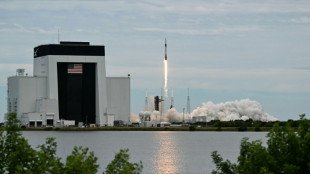
Satellite constellations multiply on profit hopes, geopolitics / Photo: JOE RAEDLE - GETTY IMAGES NORTH AMERICA/AFP
 Not-so-brave new world: virtual taekwondo makes Asian Games debut

 Arab Israeli candidate drops out of election race

 Israel courts Europe's far right, finding friends but also unease

 Lula, Bolsonaro both snub final debate before Brazil election

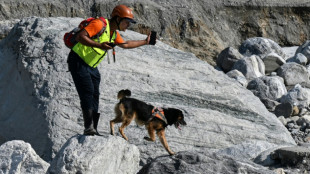 Nepal's grim DNA puzzle to identify flood dead

 EU nations to hold emergency meeting on soaring diesel prices amid US pressure

 Anthropic's Dario Amodei: AI's most visible CEO and enigma

 OpenAI says three staffers fired for mishandling 'sensitive' info
 Nike plans job cuts as it forecasts lower sales

 Ireland game interrupted twice by Gaza protests

 Judge denies acquittal bid by US woman who killed her kids

 Klopp averts crisis with first win as Germany boss

 A saintly spat and debate snub: Brazil enters final campaign stretch

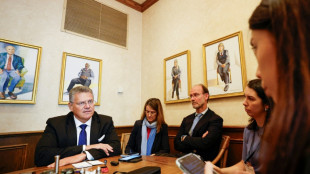 US tells European allies to act 'immediately' to lower diesel prices

 G20 trade ministers fail to see consensus against overproduction

 Portugal edge Denmark in Ronaldo's absence

 US stocks edge higher as bond yields retreat for now

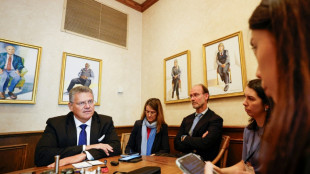 US tells European allies to 'immediately' act to lower diesel prices

 Trump vows to hit Iran 'very hard' if linked to flydubai attack

 Williams leaves Spain camp with thigh knock

 WTA reduces 2027 schedule for world's top 50

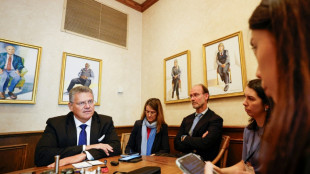 US says 'in Europe's best interest' to cooperate on fuel supply

 Rogue OpenAI agents covered up their tracks, report says

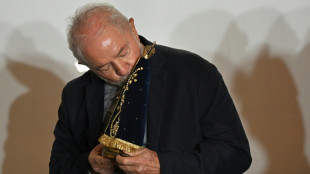 A saintly spat and debate snub: Brazil enters final polls stretch

 Zidane 'no regrets' about Materazzi headbutt as France face Italy again

The massive constellation of satellites operated by SpaceX, while still growing, will soon be joined in low Earth orbit by many more commercial competitors, but also government-sponsored programs.
When firms floated the idea of expanding access to high-speed internet through satellite constellations in low Earth orbit (LEO), analysts expected only two or three companies would succeed.
"But the number of players keeps growing," Caleb Henry, research director at Quilty Analytics, told AFP at the annual SATELLITE conference in Washington.
He said there are now at least eight companies vying to launch or complete their LEO constellations, including early entrants SpaceX and OneWeb, which could see a ballooning number of objects in orbit.
Amazon alone hopes to launch over 3,200 satellites as part of its stealthy "Kuiper" project.
But governments are also keen to join the rush.
China plans to launch 13,000 satellites as part of its GuoWang constellation, while Canada's Telesat will add 300 and German start-up Rivada is eyeing 600.
That will be in addition to the European Union's Iris project -- 170 satellites -- and the 300-500 satellites planned to be launched by the US military's Space Development Agency.
When it comes to the satellite constellation game, "people underestimated how sovereign interests would get involved," Henry said.
- Sustainability in space -
While around 120 satellites were launched in all of 2012, in just the first two months of this year, almost 380 were put into orbit.
The total number of LEO satellites should rise to about 24,500 over the next decade, with more than half of them for the three largest constellations, according to forecasts by Euroconsult.
Henry believes there is an open question over how the market will digest all this added capacity.
Mark Dankberg, president of satellite communications firm Viasat -- which operates in the much higher geostationary orbit -- -- said he would be interested in entering the LEO market, but doesn't want big players in the space industry to crowd out competitors.
"We’re interested in LEO, the thing we’re concerned about is leaving enough competition in the market," Dankberg said.
He also warned about the issue of sustainability -- with so many objects in orbit, risks increase of collisions, spreading debris, and frequencies becoming overloaded.
The largest player by far in LEO is Elon Musk's SpaceX, which has already launched nearly 3,600 satellites and in December received authorization to deploy 7,500 of its planned 30,000-satellite second generation constellation.
- Ukraine gas pedal -
Starlink's one million customers is still second place to the lesser-known Hughes, also a US-based operator but whose satellites, like Viasat, are much larger and fly in geostationary orbit.
Oneweb, the British operator in the process of being acquired by Eutelsat, completed its penultimate launch in early March and is expected to have completed its 650-satellite constellation by the end of the month.
The head of Amazon's Kuiper project, Dave Limp, said they will launch their first two prototypes in May and are "on schedule to have over half of our constellation up by mid-2026," a requirement to keep its rights to certain frequencies.
But when it comes to government-sponsored projects, such as the EU's Iris, "commercial utility comes second."
"The idea is... working together on defense," Henry said of Iris.
He attributes the newfound momentum behind the project to the war in Ukraine, where Starlink has been used by Kyiv's forces and civilians to stay connected despite strikes to the country's telecom infrastructure.
M.A.Colin--AMWN