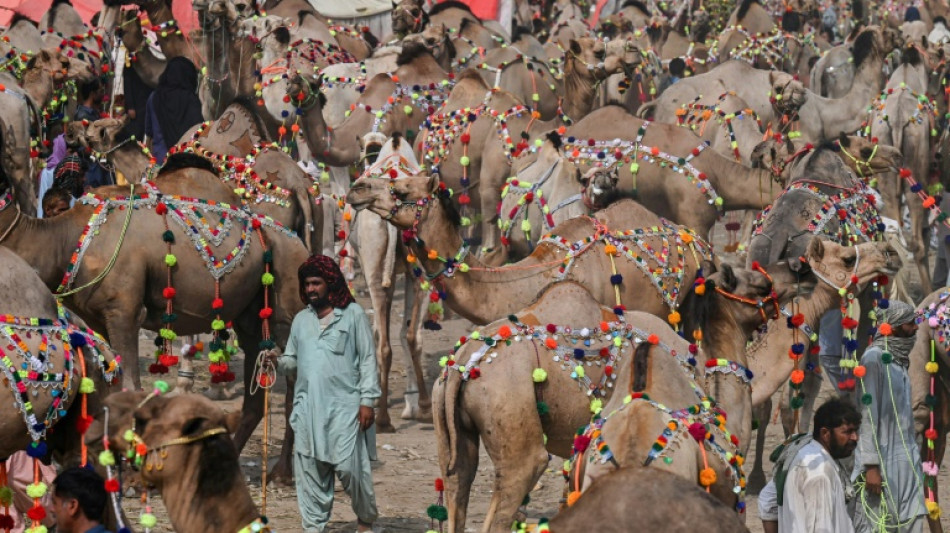
Fewer buyers for Eid camels as Pakistanis count the rupees / Photo: Arif ALI - AFP
 Trump expected to name intel chief Clayton as AI czar: reports
 Argentina unveils passports-for-investment scheme

 Brazil election debate chaos sparks censorship row
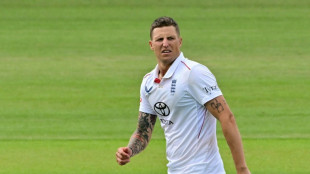 England's Carse charged by cricket body over nightclub incident

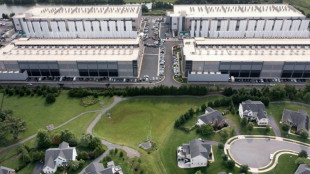 Amazon vows $1 bn for data center towns, decries 'myths'
 Oil prices drop on G7 fuel release, US jobs data boosts stocks

 G7 agrees deal to ease global energy supply concerns

 Spain's government dealt blow as lawmakers reject housing bills
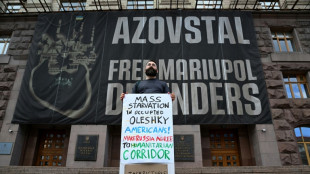 Food, medicine shortages deepen in Russian-occupied Oleshky

 Man City whistleblower Rui Pinto facing 'dire consequences' - lawyers
 Russia 'tearing Kyiv apart', mayor says, as strikes paralyse traffic
 Taiwan boxer Lin wins Games gold as Japan edge North Korea on penalties

 Japan tame North Korea to win Games gold after shootout drama

 US posts weak job growth data in September
 Ethiopia's conflict: the regional dimension
 Life expectancy almost back to pre-Covid levels, says WHO
 Turkey's football referee chief faces judge in graft probe
 Verstappen goes own way to avoid the rain
 Oil slides, bonds steady as EU addresses diesel price surge
 Spain housing package at risk in parliament, as protests mount
 Swedish Social Democrats leader to make new bid to form government
 North Korea calls Seoul 'despicable' after DMZ apology demand
 Taiwan boxer Lin wins gold as virtual taekwondo makes Games debut
 Man City face appeal deadline after explosive financial verdict

 Pole vault superstar Duplantis to skip indoor season
Teenager Amanullah Khan teeters on his tiptoes, daubing towering camels with festive henna patterns to entice Eid al-Adha customers at a market near the Pakistan capital.
Hundreds of farmers have camped at livestock markets between Islamabad and its twin city Rawalpindi for two weeks, hoping to sell animals ahead of the annual holy festival starting Thursday in Pakistan.
But with rampant inflation -- reaching a record 38 percent in May -- markets are attracting smaller crowds.
Khan's cousin Zakaria brought 18 camels to market after good profits last year but has sold only one so far.
"People's purchasing power is over. Customers are not coming to the market, and those who come prefer to return empty-handed due to the high prices of the animals," Zakaria, 21, told AFP.
During the festival, Muslims around the world will slaughter an animal -- a goat, sheep, bull or camel -- keeping a third for themselves before giving a third to friends and relatives, and a third to charity.
The ritual commemorates the readiness of Ibrahim -- Abraham in the Christian and Jewish faiths -- to sacrifice his son to show obedience to Allah.
The centuries-old festival is guided by tradition, but this year many middle-class Pakistanis will not be able to perform a sacrifice.
"Our income is the same but the prices are sky-high. From where would we get that much money?" buyer Ali Akbar, a 46-year-old builder, asked.
Another customer, Zerak Ali, had come to enquire about the price of a camel, which can cost up to one million rupees ($3,500).
"It is worth 700,000 for you," Zakaria barters. But 56-year-old shopkeeper Ali leaves, leading his two grandsons towards the enclosure housing cheaper bulls.
Camel sacrifice is not common in Pakistan, but some wealthier buyers prefer the animal because 11 families can share its meat, according to Islamic rules.
More than 250 camels have been brought to the Islamabad market, along with thousands of bulls, cows, goats and sheep.
Bulls cost up to 500,000 rupees, while the price of goats ranges from 50,000 to 150,000.
Eating into Zakaria's profits are market taxes, rising fodder and truck rental prices, as well as staff wages.
"I will lose millions of rupees this year," he glumly predicts.
Bakht Zaman, a farmer from Mardan district in Pakistan's northwest, brought 10 camels to market and has so far sold only one for 500,000 rupees.
"The value of the Pakistani rupee has fallen," says buyer Haq Nawaz. "Who will buy such expensive animals?"
M.Fischer--AMWN