Tourists get taste of old Japan at hidden 'snack bars' / Photo: Yuichi YAMAZAKI - AFP
 South Korea captain 'deeply sorry' for gloating about military exemption

 Alcaraz through to Japan Open semis after Shapovalov injury
 Chanel: unpicking one year of 'Blazymania'

 Latvian pro-Europeans set for election win: partial results
 China swim sensation Yu Zidi, 13, says 'I'm no prodigy'

 Yu Zidi to Ohashi: Asian Games stars who can light up LA Olympics

 'Act before it's too late': Tokyo residents fight for more trees

 'Disappointing' as South Korea flag mishap sees Games end on sour note

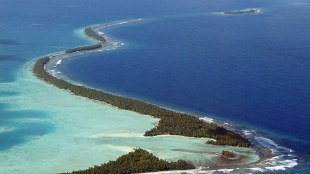 Pre-COP host Tuvalu at frontline of climate change
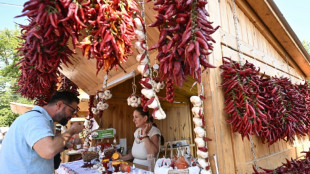 Hungary's dwindling paprika producers battle to save signature spice

 Cornell president vows review in wake of alleged student gang rape
 Latvian partial election results suggest pro-European choice

 In Egypt's Sinai, Gazan builds school for children displaced by war

 Trump tariffs a mixed bag for US auto industry

 Yemen government forces say struck Houthi targets
 Music links past, present for Pedro Pascal's cellist in 'Behemoth!'

 ALEX BODI ȘI AMBASADORUL REPUBLICII SUDANUL DE SUD, GUM DOMINIC MATIOK, DISCUTĂ LA BERLIN DESPRE POSIBILITATEA ÎNFIINȚĂRII UNUI CONSULAT ONORIFIC LA BUCUREȘTI

 Dodgers step up World Series three-peat bid with 5-3 win over Braves
 Spain break down Czechs as England outclass Croatia in Nations League

 Yamal on target as Spain hold off Czech Republic

 Latvian exit polls suggest pro-European choice
 Lula, Bolsonaro wrap up campaigns ahead of knife-edge election

 Tuchel hails 'complete' England after Croatia demolition

 Fury to invite Trump to lead ring walk before Joshua showdown

 Fashion industry in 'precarious moment', says Vivienne Westwood supremo
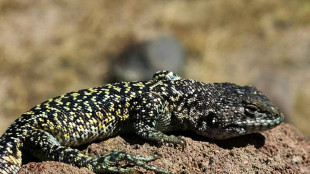
Down a Tokyo street lined with bright signs, up narrow stairs and behind a windowless door is a "snack bar" long cherished by regulars but hidden from tourists -- until now.
Snack bars are cosy, retro establishments found across Japan, often crammed into small buildings and equipped with karaoke systems that echo late into the night.
They are typically run by a woman nicknamed "mama" who chats to customers while serving drinks with nibbles such as nuts, dried squid or simple cooked dishes.
Despite being a fixture of Japanese nightlife since the post-war era, the tucked-away bars' tight space can be intimidating, especially for people who don't speak the language.
So one company is offering guided tours to snack bars like Kuriyakko, in the capital's Shimbashi business district.
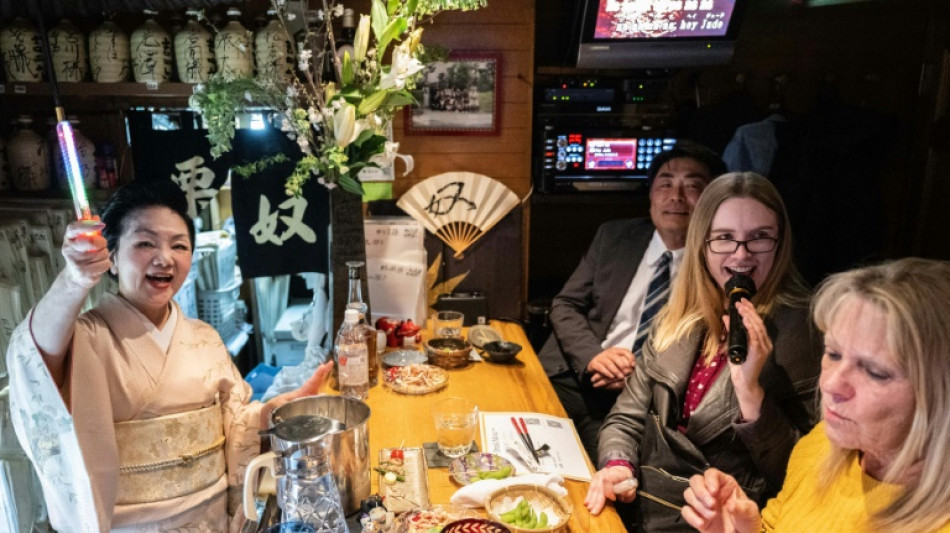
Inside, dim lights reflect warmly off the red wall tiles, illuminating an art-deco poster as an American family belts out "Hey Jude" and "Take Me Home, Country Roads".
Nora, who used to live in Japan, told AFP she booked the tour for her parents, sister, aunt and uncle after seeing it on Instagram.
"I've always seen the signs for snack bars, but I wasn't sure of how to enter them, or what to do," said the 30-year-old, who is now based in San Francisco and did not want her surname published.
"My family hasn't really been in Japan very often, so it was a good opportunity to get a real experience of the bar culture" in a "jovial" and "intimate" way.
A guide from tour company Snack Yokocho teaches the group how to order whiskey highballs and plum wine in Japanese, and how to say "cheers" -- "kanpai!"
- Red-light roots -
Behind the bar, dressed in a smart pale kimono with her hair in a traditional up-do, is "mama" Kuri Awaji, who has run Kuriyakko for 25 years.
It's one of around 100,000 snack bars in Japan, according to Snack Yokocho, and while most are run by women, some have a male "master".
Although the atmosphere is less sexually charged than at modern host and hostess clubs, with the focus on convivial conversation, the history of snack bars is rooted in Japan's red-light districts.
After World War II, some women turned to sex work to survive, but anti-prostitution laws were introduced at the time of the 1964 Olympics, Snack Yokocho representative Mayuko Igarashi told AFP.
So to make money, they "took a simple wooden box to the regular street and served drinks and snacks".
Little by little, these early snack bars moved indoors to small premises that the women could manage without having to prepare elaborate dishes.
Many were divorced and raising children alone, hence the "mama" nickname, according to Igarashi.
"It was difficult for them to work during the day when the children were around, so after they went to bed, women stood at the counter to work in the evening," she said.
- Face-to-face -
It's believed there were 200,000 snack bars in Japan in the 1950s and 60s, according to Igarashi, but the number has declined as the "mama" retire or sell up.
Now with record numbers of tourists visiting Japan, Snack Yokocho says interest in its tours is growing.
As well as classic spots like Kuriyakko, the company's guides bring visitors to themed snack bars such as a golf bar with a makeshift putting green.
It also sometimes runs tours for Japanese women who want to experience snack bar culture, but have reservations about knocking on a closed door alone.
For years, the bars' clientele was almost exclusively men, Igarashi said.
But as more women have joined the workforce, snack bars have become a "place for them to relax, or talk to 'mama' about their problems".
People tend to talk on social media, but after a bad day, nothing beats face-to-face communication, she added.
"At a snack bar, people can look into each others' eyes, and get to know each other very quickly -- even strangers."
O.M.Souza--AMWN