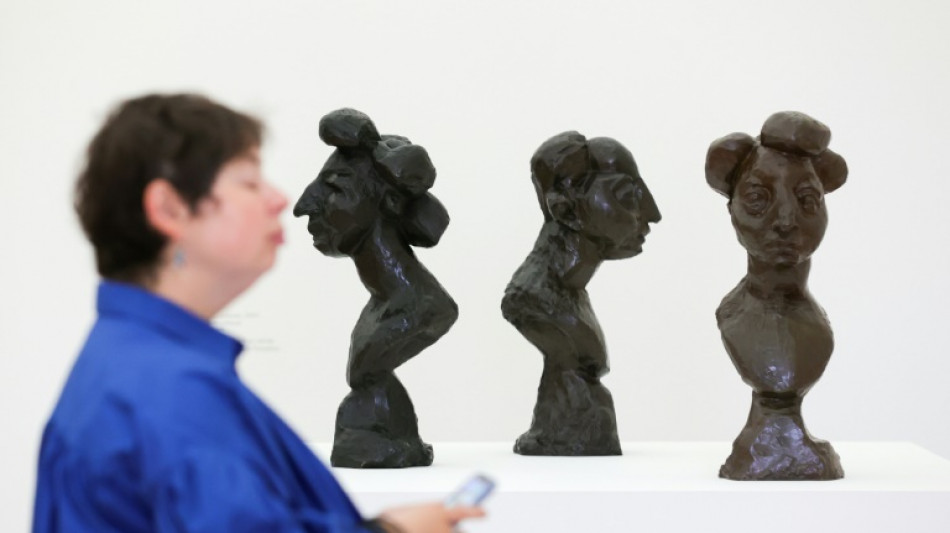
Matisse retrospective traces journey through artist's career / Photo: Abdesslam MIRDASS - AFP
 Many AAPI Candidates Win Seats in Orange County Local Elections
 Philippines Struggles to Protect Humpback Whale Breeding Grounds Amid Climate and Management Threats

 OpenAI Tests Merged ChatGPT Chat and Work Experience for Pro Users
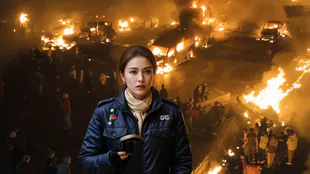 Egyptian Business Leaders and Banks Pledge EGP 60 Million for Giza Ring Road Fire Victims
 Fundraiser launched for Daniel Buttigieg after boat accident
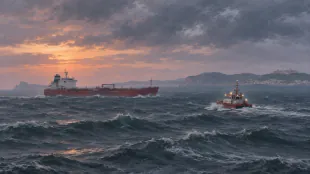 Malta-registered tanker sinks off Ibiza, killing one crew member

 INGLOT Malta offers Black Friday discounts of up to 60%
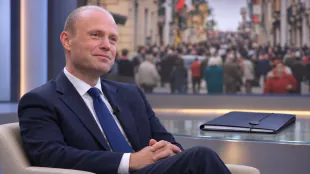 Muscat says European elections took priority over population report

 Long-running San Diego Greek restaurant to close in February 2027
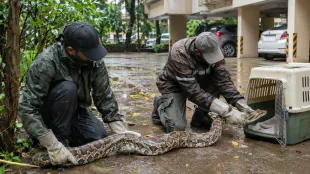 Mumbai region records five-year high in post-monsoon python rescues

A new Henri Matisse retrospective in Switzerland offers visitors a rare chance to follow his artistic journey via works from throughout the career of one of modern art's godfathers.
The Fondation Beyeler museum on the outskirts of Basel has brought together 72 works by the French artist, who died in 1954 aged 84.
They include paintings, sculptures and cut-out paper collages from major international museums and private collections, some of which have not been seen in Europe for more than three decades.
The exhibition is the first Matisse retrospective in Switzerland and the German-speaking world in almost 20 years.
- Open invitation -
The "Matisse -- Invitation to the Voyage" exhibition is named after Charles Baudelaire's poem, from which the artist took the phrase "Luxe, Calme et Volupte" for the title of his pivotal 1904 oil painting.
"The invitation to travel expresses in a particular way the quintessential aesthetic of Matisse," the exhibition's curator Raphael Bouvier told AFP, noting that the painter referred to Baudelaire's poem "several times in his artistic work".
Travel is an "essential subject" in his life, with Matisse having worked and drawn inspiration in the south of France, Tangiers, New York and Tahiti.
"The exhibition as a retrospective is really conceived as an invitation to voyage into the work of Henri Matisse," Bouvier said.
It traces the artist's footsteps from his beginnings in Paris to Collioure in southwest France, where he began to revolutionise art in his Fauvism period "by liberating colour", Bouvier said.
It continues up to his late period, inspired by memories of his trip to the South Pacific.
- Blue Nudes -
Towards the end of his life, after undergoing abdominal surgery for cancer, Matisse turned to paper cut-out collages, with the birds and seaweed inspired by the fauna and flora he observed during his trip to Tahiti in 1930.
Matisse occupied a special place in the collection of Ernst Beyeler, the Basel art dealer and collector behind the museum.
A bookseller in his early days, Beyeler launched himself into the art market by selling Japanese prints in his shop before transforming it into a gallery in the early 1950s, where Pablo Picasso and Matisse featured prominently.
Beyeler, who died in 2010 aged 88, particularly liked Matisse's late works because he saw a "great artistic revolution" in paper cut-outs, Samuel Keller, the foundation's director, told AFP.
The exhibition notably covers his iconic "Blue Nudes" cut-out series.
- 'Complete picture' -
Though Matisse exhibitions regularly cover certain aspects of his work, retrospectives of his entire career are "more rare", Keller said.
In 2020, the Centre Pompidou in Paris dedicated a major exhibition to the artist, but it was disrupted by the Covid-19 pandemic and its lockdowns, meaning relatively few people saw it.
"With major artists like Matisse or Picasso, we could put together many different exhibitions because there are so many aspects to their work," for example focusing on the 1930s, or the paper cut-outs, Keller said.
"But in each generation, it is important that the public has the chance to see a retrospective, to have a complete picture of the development from young artist to old master."
The exhibition runs until January 25.
P.Mathewson--AMWN