With poetry and chants, Omanis strive to preserve ancient language / Photo: - - AFP
 Asian stocks drop as oil spike fans rate hike bets, eyes on US jobs

 Viral anti-vax posts weaponise Philippine inoculation fears
 Saudi coalition accuses Houthis of drone attack on Medina

 Effective Altruism: the philosophy behind Silicon Valley's AI fears

 Chinese judoka accused of biting as home hope wins Asian Games gold

 Four-member crew docks at International Space Station

 Portugal win without Ronaldo as Klopp's Germany get first victory

 Wemby: 'Very sad' to see players endorse betting firms

 Manchester City Women scrape draw with Real Madrid

 India, Australia and Pakistan in same World Cup group
 Daryz's hopes of repeat Arc win boosted by draw

 Steelers ship disgruntled defender Porter to Cowboys

 Klopp gets first win as Germany boss

 Bolivia's attorney general arrested on drugs, money laundering charges

 Raiders host Chiefs in battle of unbeaten division rivals

 Lowest Fee Bitcoin ATMs Announces Launch of More Than 400 ATMs Nationwide

 G20 against 'weaponization' of food trade: French minister

 Female US inmate in critical condition after botched execution

 Spotlight on UK-UAE ties amid Manchester City scandal

 Ethiopia and Eritrea break diplomatic ties over conflict

 Downing Street says Manchester City not 'above the rules'
 Hadjar wants to 'fight for the title' from next season

 Bolivia's attorney general arrested for alleged drug trafficking, money laundering
 German sugar tax sparks new government row

 Musk returns to US government for Pentagon war study

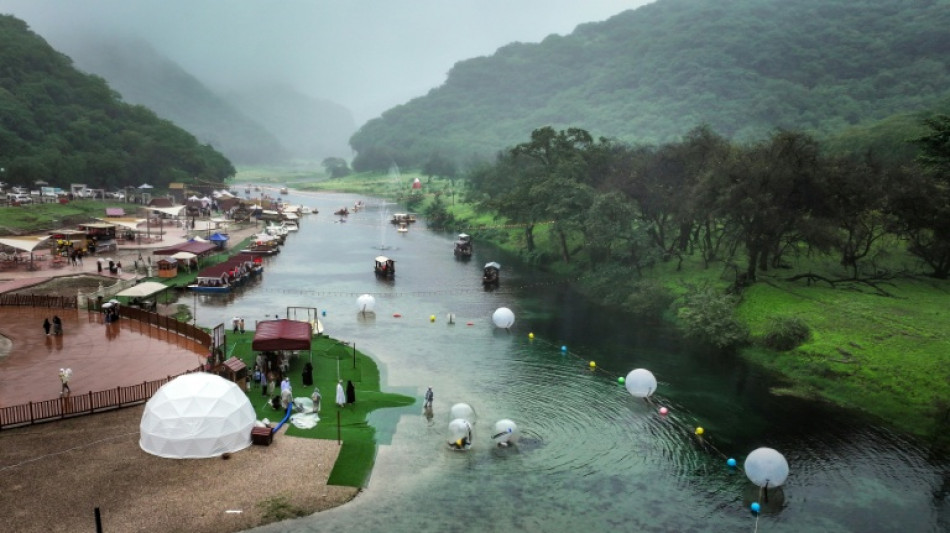
Against the backdrop of southern Oman's lush mountains, men in traditional attire chant ancient poems in an ancient language, fighting to keep alive a spoken tradition used by just two percent of the population.
Sitting under a tent, poet Khalid Ahmed al-Kathiri recites the verses, while men clad in robes and headdresses echo back his words in the vast expanse.
"Jibbali poetry is a means for us to preserve the language and teach it to the new generation," Kathiri, 41, told AFP.
The overwhelming majority of Omanis speak Arabic, but in the mountainous coastal region of Dhofar bordering Yemen, people speak Jibbali, also known as Shehri.
Researcher Ali Almashani described it as an "endangered language" spoken by no more than 120,000 people in a country of over five million.
- 'Protected by isolation' -
While AFP was interviewing the poet, a heated debate broke out among the men over whether the language should be called Jibbali -- meaning "of the mountains" -- or Shehri, and whether it was an Arabic dialect.
Almashani said it was a fully-fledged language with its own syntax and grammar, historically used for composing poetry and proverbs and recounting legends.
The language predates Arabic, and has origins in Semitic south Arabian languages, he said.
He combined both names in his research to find a middle ground.
"It's a very old language, deeply rooted in history," Almashani said, adding that it was "protected by the isolation of Dhofar".
"The mountains protected it from the west, the Empty Quarter from the north, and the Indian Ocean from the south. This isolation built an ancient barrier around it," he said.
But remoteness is no guarantee for survival.
Other languages originating from Dhofar like Bathari are nearly extinct, "spoken only by three or four people," he said.
Some fear Jibbali could meet the same fate.
Thirty-five-year-old Saeed Shamas, a social media advocate for Dhofari heritage, said it was vital for him to raise his children in a Jibbali-speaking environment to help keep the language alive.
Children in Dhofar grow up speaking the mother-tongue of their ancestors, singing along to folk songs and memorising ancient poems.
"If everyone around you speaks Jibbali, from your father, to your grandfather, and mother, then this is the dialect or language you will speak," he said.
- Not yet documented -
The ancient recited poetry and chants also preserve archaic vocabulary no longer in use, Shamas told AFP.
Arabic is taught at school and understood by most, but the majority of parents speak their native language with their children, he said.
After the poetry recital, a group of young children nearby told AFP they "prefer speaking Jibbali over Arabic".
But for Almashani, the spectre of extinction still looms over a language that is not taught in school or properly documented yet.
There have been recent efforts towards studying Jibbali, with Oman's Vision 2040 economic plan prioritising heritage preservation.
Almashani and a team of people looking to preserve their language are hoping for support from Dhofar University for their work on a dictionary with about 125,000 words translated into Arabic and English.
The project will also include a digital version with a pronunciation feature for unique sounds that can be difficult to convey in writing.
S.Gregor--AMWN