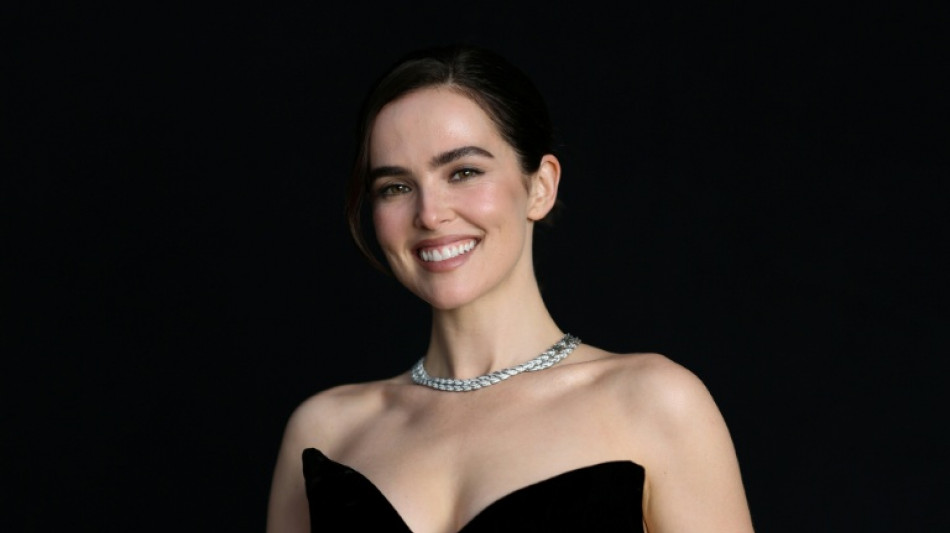
AI cannot make cinema, director Linklater says / Photo: VALERIE MACON - AFP
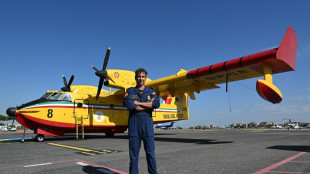 Italy's firefighting planes return home after scorching summer
 How airlines try to make sure pilots are safe to fly
 Bolivia's attorney general arrested for alleged money laundering and drug trafficking

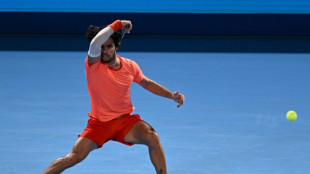
 Zverev beats Norrie to kick off Sinner-less China Open

 Wall Street stocks rise after bond yield spike eases

 Finland investigates suspected break-ins at MPs homes

 London's Bayeux Tapestry show to offer audio tour for blind people

 Smouldering bins, halted trams as French pupils protest

 Malone Life and Pensions Expands Internationally Beyond the European Union

 England paceman Archer rested for ODI tri-series

 Queiroz exits Ghana as Black Stars crisis deepens
 ALEX BODI VE ALMAN ŞİRKETLER GRUBUNDAN HALLE’DE 166 DAİREYE YATIRIM
 อเล็กซ์ โบดี และกลุ่มบริษัทจากเยอรมนีลงทุนในอพาร์ตเมนต์ 166 ยูนิตที่เมืองฮัลเลอ

 ALEX BODI A NĚMECKÝ KONCERN INVESTUJÍ DO 166 BYTŮ V HALLE
 ALEX BODI OCH TYSK KONCERN INVESTERAR I 166 LÄGENHETER I HALLE
 England forward Toney pleads not guilty to nightclub assault

 Tom Kim finishes marathon Asian Games second round under floodlights

 Work on migrant return hubs progressing well, EU countries say
 ALEX BODI I NIEMIECKI KONCERN INWESTUJĄ W 166 MIESZKAŃ W HALLE
 Tearful Nishikori calls time on career with defeat at Japan Open
 أليكس بودي ومجموعة ألمانية يستثمران في 166 شقة في هاله
 알렉스 보디와 독일 기업 그룹, 할레 주택 166세대에 투자

 Verstappen wary of tyre wear as he eyes first F1 win of season
 АЛЕКС БОДІ ТА НІМЕЦЬКИЙ КОНЦЕРН ІНВЕСТУЮТЬ У 166 КВАРТИР У ГАЛЛЕ
 Kremlin critic Kasparov says US intelligence warned life 'in danger'

Can great art be made without human genius and all its flaws? It's a vital question at a time when artificial intelligence threatens to subsume Hollywood.
Through new movies "Nouvelle Vague" and "Blue Moon," director Richard Linklater offers an answer delving into the lives of two brilliant, volatile men whose films and plays shaped French New Wave cinema and Broadway.
His conclusion?
"AI is not going to make a film," the US indie auteur tells AFP.
"Storytelling, narrative, characters? Something that connects to humanity? That's a whole 'nother thing," says the Texan whose notable films include "Boyhood," the "Before" trilogy, "School of Rock" and "Hit Man."
Linklater's "Nouvelle Vague," streaming on Netflix from November 14, charts how young French director Jean-Luc Godard defied all filmmaking convention to create his 1960 classic "Breathless."
It captures the swagger, charisma and impulsiveness with which Godard convinced financial backers and Hollywood starlet Jean Seberg to make a debut feature that had neither a script nor a workable filming schedule.
"He's a little full of shit, but he's a genius. A revolution is going on, but he's the only one who knows it," Linklater says of Godard, an icon of cinema's French New Wave movement in the late 1950s and 60s.
By contrast "Blue Moon," in cinemas now, depicts Broadway lyricist Lorenz Hart at the end of his career.
With composer Richard Rodgers, Hart wrote classic songs like "The Lady is a Tramp," "My Funny Valentine" and, of course, "Blue Moon."
But the film captures a single evening, in which it becomes clear Rodgers has moved on to even greater success with new partner Oscar Hammerstein II, with the debut of their hit musical "Oklahoma!"
Within months, Hart will be dead from alcoholism.
"It's become very clear that the times are leaving him behind. They're leaving behind his genius," says Linklater.
- 'No algorithm is gonna do that' -
Which brings us back to the question of human genius and art.
For Linklater, AI is "just one more tool" that artists can use, but it "doesn't have intuition or consciousness."
"I think it's going to be less revolutionary than everybody thinks in the next few years," he told AFP in an interview ahead of the Los Angeles premiere of "Nouvelle Vague" at The American French Film Festival (TAFFF).
The French New Wave's trademark documentary-style realism was made possible in part by technology -- the arrival of cheap, light, portable cameras.
But Linklater rejects the claim that the cost savings and flexibility offered by AI could unleash another filmmaking revolution.
"You're gonna see some cool stuff," he concedes.
But "the hardest thing to do is still to tell a compelling story that people want to see and be engaged with," he says.
"That's a lot of points you have to hit -- that's acting, that's story structure, that's pace, style.
"No algorithm is gonna do that. No prompt is gonna do that."
- 'Authentic' -
Among Linklater's future projects is "Merrily We Roll Again," adapted from Stephen Sondheim's musical.
Set over two decades, "Merrily" charts the demise of a friendship between three artists, and is told in reverse chronology.
As if to prove his point about technology, Linklater has decided to shoot the film over a 20 year span, allowing the actors to truly age backward on screen.
It is a more complex variation of his Oscar-winning "Boyhood" -- which he filmed across 12 years.
Of course, AI has recently been used to "de-age" actors, like in Tom Hanks' 2024 film "Here." But Linklater has little interest.
"It's not a visual trick, you know? I really want an actor of a certain age to be playing a character," he explains.
Asking a 25-year-old to play a 45-year-old is "not authentic" because young people "don't know what that even means," he says.
"I want the actors to be that much older and wiser."
So, don't expect to see "Merrily" in theaters any time soon.
"That's my hanging-on-to-humanity approach!" chuckles Linklater.
P.Costa--AMWN