Gianfranco Rosi: the slow documentary maker in a frantic world / Photo: Tiziana FABI - AFP
 Finland investigates suspected break-ins at MPs homes
 London's Bayeux Tapestry show to offer audio tour for blind people

 Smouldering bins, halted trams as French pupils protest

 Malone Life and Pensions Expands Internationally Beyond the European Union
 England paceman Archer rested for ODI tri-series
 Queiroz exits Ghana as Black Stars crisis deepens
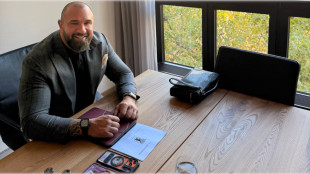 ALEX BODI VE ALMAN ŞİRKETLER GRUBUNDAN HALLE’DE 166 DAİREYE YATIRIM
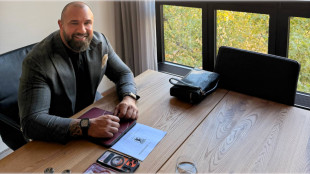
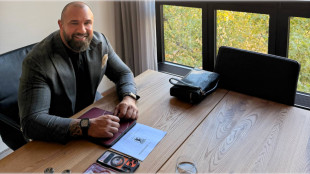 อเล็กซ์ โบดี และกลุ่มบริษัทจากเยอรมนีลงทุนในอพาร์ตเมนต์ 166 ยูนิตที่เมืองฮัลเลอ

 ALEX BODI A NĚMECKÝ KONCERN INVESTUJÍ DO 166 BYTŮ V HALLE
 ALEX BODI OCH TYSK KONCERN INVESTERAR I 166 LÄGENHETER I HALLE
 England forward Toney pleads not guilty to nightclub assault
 Tom Kim finishes marathon Asian Games second round under floodlights
 Work on migrant return hubs progressing well, EU countries say
 ALEX BODI I NIEMIECKI KONCERN INWESTUJĄ W 166 MIESZKAŃ W HALLE
 Tearful Nishikori calls time on career with defeat at Japan Open
 أليكس بودي ومجموعة ألمانية يستثمران في 166 شقة في هاله
 알렉스 보디와 독일 기업 그룹, 할레 주택 166세대에 투자
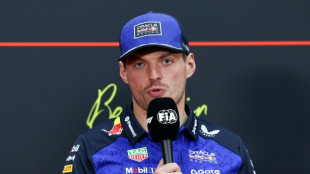 Verstappen wary of tyre wear as he eyes first F1 win of season
 АЛЕКС БОДІ ТА НІМЕЦЬКИЙ КОНЦЕРН ІНВЕСТУЮТЬ У 166 КВАРТИР У ГАЛЛЕ
 Kremlin critic Kasparov says US intelligence warned life 'in danger'
 Qatar 'ready' if 2030 Asian Games moved back: official
 Indian pilot hailed as 'hero' after cockpit struggle
 Asian tech firms stand out on mixed day for stocks
 Flags and pho on show as jeweller opens huge Vietnam plant
 Indian football fans relish rare friendly against Brazil
If the regular recipe for success in the modern entertainment industry or on social media is being loud, attention-seeking and a prolific creator of "content", Italian filmmaker Gianfranco Rosi has carved out a career doing the exact opposite.
The work of the award-winning documentary producer is everything our contemporary culture is not: slow, nuanced, contemplative.
It's a strategy that has taken him to the pinnacle of European cinema -- he's won the top Golden Lion prize at the Venice Film Festival and the Golden Bear in Berlin -- and has pushed the boundaries for non-fiction in the process.
"There were people saying 'How can you give a Golden Lion to someone that never directed an actor?'" he told AFP. "It's not important that division for me (between fiction and documentary). What I feel close to is cinema."
His latest work "Sotto le nuvole" ("Below the Clouds" in English), which releases internationally in France this week, is a portrait of the gritty Italian port of Naples.
It bears all the hallmarks of Rosi's distinct way of working.
The 61-year-old, who also holds American nationality, believes in "immersion", often heading to live alone at the location of his films with no script and only a vague notion of what he is trying to capture.
He spent three years in Naples, wandering, meeting people, filming relentlessly, finding the characters whose lives form the core of the 115-minute production.
"I'm a director that doesn't go home to sleep. I'm always on location," he explained.
For 2013's "Sacra GRA", his breakthrough documentary, he spent two years living in a van around the ringroad on the outskirts of Rome where he slowly won the confidence of his subjects: an ambulance driver, an eel farmer, a faded aristocrat, prostitutes.
"Notturno", which released in 2020, saw Rosi spend over three years on the borders of Iraq and Syria, documenting the impact of the Islamic State group.
His first film "Boatman" took five years to complete.
"Time is my biggest investment," he told AFP. "Working alone allows me to wait for the right moment, to create a certain intimacy with the people I meet, and allows me to wait for the right light."
- Meditation on time -
Rosi's film-making process is only part of his craft, with his visual language and approach to story-telling also setting him apart.
He disdains the look of many modern documentaries -- shaky handheld camera work and an urgent, grave tone -- preferring a static vantage point, with a fixed lens.
He frames wide and his camera lingers, leaving long pauses that he likens to the space between notes in a piece of music, or the void between the lines of a poem.
He conducts no on-screen interviews, does no narration, and allows himself a strict minimum of directing his subjects to ensure his work remains almost entirely observational.
"Below the Clouds" features a handful of unconnected people around Naples -- an after-school teacher, a fire department call-centre operator, a sailor, archeologists -- whose lives are revealed little by little in looping segments.
There is no place for pizza, football, sun-drenched piazzas, or the mafia -- the cliches of Napolitean life.
"There's always a very strong stereotype about Naples," he explained. "I wanted to get rid of all the elements that belong to the collective imagination of people."
Overall, it is a meditation on time that links the ancient Vesuvius volcano that looms over the city to its buried Roman past and its often chaotic present.
"The film, for me, is a reflection on the complexity of Naples and on history, on the weight of the past, and somehow on suspended time," he added.
It is shot in black-and-white to give it a vintage feel, while the sparse musical score is provided by Britain's Daniel Blumberg, who won an Oscar for his work on "The Brutalist".
Reviews of Rosi's film were overwhelmingly positive when it premiered at the Venice Film Festival in September, where it won the Special Jury prize.
The Hollywood Reporter said Rosi "makes documentaries like no-one else" and called his latest work "stunning".
The Guardian gave it a five-star rating, saying it was "another of (Rosi's) brilliantly composed docu-mosaic assemblages of scenes and tableaux."
P.Santos--AMWN