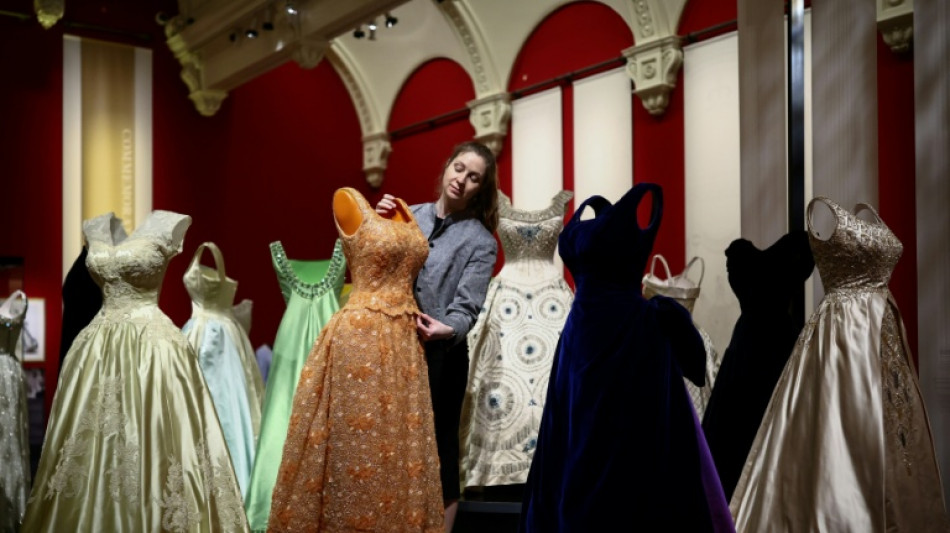
'Sartorial diplomacy' on show in expo of late UK queen's fashion / Photo: Henry NICHOLLS - AFP
 Turkey says news site closed for 'LGBTQ propaganda'
 Oil companies close in on Venezuela despite hurdles
 Turkey freezes ex-minister's assets as fund scandal grows

 Guardiola backs Man City after bombshell guilty verdicts

 G20 trade ministers open talks under strain of Trump tariffs

 France in talks with UK to end 2025 migrant accord: ministry
 Europe's surging inflation spreads gloom in stock markets
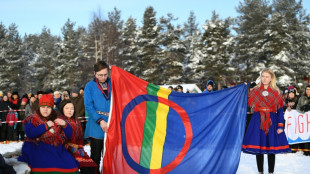
 Truth commission demands compensation for Sweden's Sami people
 Japan win marathon penalty shootout to set up South Korea gold-medal clash

 Djokovic grinds out opening-round win at China Open

 Northern Ireland police probe blockade of disputed parade

 UK PM Burnham reopens divisive debate on rejoining EU

 Man City future in doubt after guilty verdict
 'Do something,' begs Iranian woman after death sentence over protests
 China extends 52-year unbeaten record as Games organisers say sorry

 In Manchester, people say City scandal is 'shame for football'
 Stocks lacklustre as inflation data weighs on sentiment
 Israel-bound plane rerouted, pilots wounded in reported fight

 Truth commission on Sweden's Sami people seeks redress

 Energy costs spark inflation surges in France, Italy

 South Korea break China hearts to reach Asian Games football final

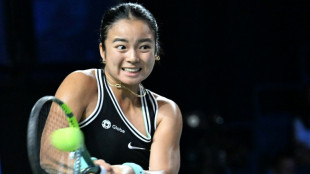 Eala storms into Asian Games semi-finals to thrill adoring fans

 Turkey freezes ex-minister's assets as fund crisis grows

 What we know about the North Korean POW dispute

 Most equities rise after oil price plunge, US data in focus

In a handwritten note on a sketch of an evening dress for her official visit to India and Pakistan in 1961, Queen Elizabeth II specified it should be sewn in "yellow satin", a colour symbolising health and prosperity in the region.
The sketch is one of about 300 items on display, some for the first time, at the exhibition "Queen Elizabeth II: Her Life in Style", which opens Friday at Buckingham Palace.
This unprecedented survey of the late UK monarch's wardrobe throughout her life (1926-2022) reveals the important diplomatic role she attached to her outfits.
The display in the King's Gallery at the London palace features sheath dresses sparkling with sequins and swirling outfits in vibrant colours from the 1960s.
There are also spectacular draped evening dresses straight from the atelier of Cristobal Balenciaga, maternity outfits and the military uniforms the princess wore during World War II.
In a section called "the finishing touch", the queen's signature colourful hats are pinned up on a wall opposite the coordinating outfits.
Tickets for the spectacular exhibition, which runs to October, have already sold out for April.
Highlights include Elizabeth's wedding dress dating from 1947 and the ornate embroidered gown she wore for her coronation, both created by British designer Norman Hartnell.
- Political aims -
"We wanted to pay tribute not only to her style but also to British fashion and designers," stressed Caroline de Guitaut, the curator, who chose the outfits on display from an archive of some 4,000 items.
A key attribute of the royal's wardrobe was its political aims, the exhibition reveals, with fashion choices also playing a diplomatic role.
The coronation gown illustrates this, perfectly decorated with the national emblems of the nations of the United Kingdom: the English rose, the Welsh leek and the Scottish thistle, as well as flowers symbolising the Commonwealth countries.
This diplomatic dimension was a recurring theme of Elizabeth's wardrobe through her record-breaking 70-year reign.
In 1954, while travelling in Australia, she wore a yellow stole delicately embroidered with the golden wattle, the national floral emblem.
And in 1961, on a visit to Pakistan, she dined with President Mohammad Ayub Khan wearing a satin dress in the colours of the national flag of the country, a former British colony.
"She was the undisputed queen of sartorial diplomacy," said de Guitaut.
The monarch's aim was always the same: "to show respect for the country she was visiting", the curator said, since her visits were made on government advice largely to countries with whom Britain hoped to build stronger ties.
- 'Eye for everything' -
This broke with the ancient tradition of royal clothing as a way to display wealth and power, historian Lisa Hackett told AFP.
Now confined to ceremonial roles, monarchs "no longer use their clothing to display their power" but instead want to convey respect and courtesy, said the academic from the University of New England in Australia.
These were dress codes that Elizabeth mastered to perfection.
"She was educated from an early age about her role and her wardrobe," Hackett said.
Elizabeth was also very involved in the design of her outfits.
"She decided what she wanted to wear, chose her designers, and even selected her suppliers," said de Guitaut.
Her handwritten note on the dress sketch for the trip to India and Pakistan was not exceptional: the exhibition shows that she added comments on several occasions.
"She had an eye for everything. I think it's fair to say she had almost complete mastery of her style," said the curator.
A.Jones--AMWN