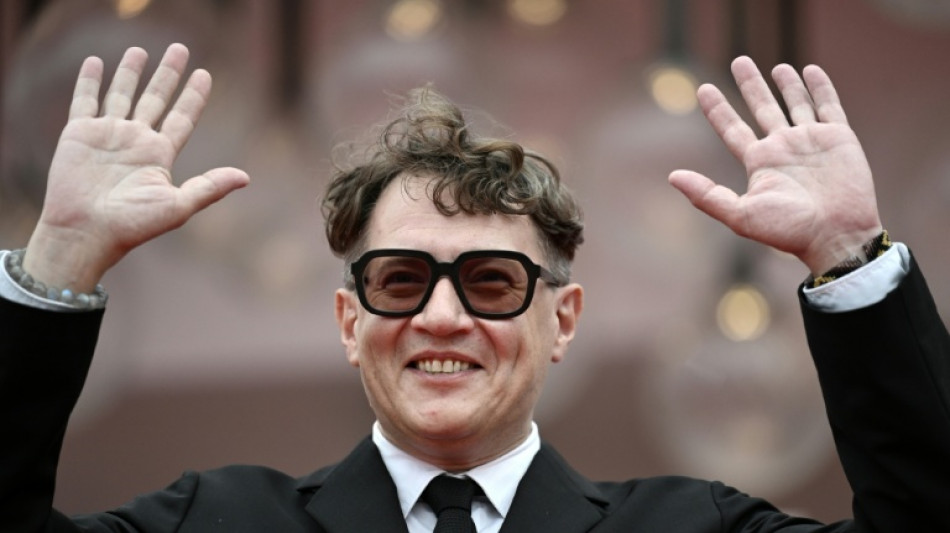
Soviet brutality, ideology backdrop of controversial Venice film / Photo: Tiziana FABI - AFP
 France far right expels policeman member over racist remarks

 Pakistan collapse to 133 all out against England in 3rd Test

 Heat forces French champagne makers to stiffen their drink
 Iran war drives oil prices to $100 per barrel as Tehran strikes ships
 Pakistan collapse to 100-7 against England in 3rd Test
 Workers, migrants focus of documentaries by Oscar winners at Venice

 Nepal seeks survivors two weeks after deadly floods

 Bangladesh measles crisis kills more than 1,000 children
 Pakistan collapse to 26-4 against England in 3rd Test

 EU helps cities tighten screws on Airbnb, holiday rentals
 Courtois to put Belgium career on hold
 RavenDB Launches Quill to Bring Production AI Agents to Enterprise SQL Systems, No Migration Required
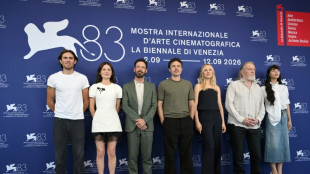 Affleck family affair at Venice for Casey's latest film 'Company'
 Yemen rebels report fresh Saudi strikes as conflict deepens
 'They're playing with our lives': AI researcher quits Anthropic

 Series finale of 'Babylon Berlin' offers dark mirror for today's Germany
 Zara owner Inditex boosts profits as sales grow across board
 Alcaraz out in latest US Open finish, Sabalenka through on marathon day

 Brent breaks $100 on Mideast flare-up, fanning inflation fears

 South Korea video game tycoon to pay record $1.5 bn in divorce
 'Long live Chairman Mao': Supporters pay respects to founder of Communist China
 Sweden immigration restrictions spark healthcare concerns

 EU to help cities tighten screws on Airbnb, holiday rentals
 'Our year': Kane and Bayern primed for Champions League tilt
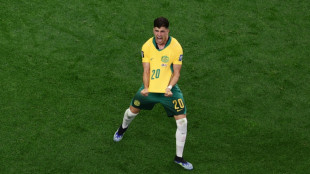 Australian World Cup star Volpato fined over positive cocaine test
Ambitious in its scale and style and dogged by controversy, "Dau" by filmmaker Ilya Khrzhanovsky revisits decades of Soviet Union totalitarianism through the eyes of one of the 20th century's great physicists.
Premiering Wednesday at the Venice Film Festival, the over three-hour film was begun two decades ago by the filmmaker, who in 2024 renounced his Russian citizenship to protest the Ukraine war and now lives in Paris.
Marked by unconventional methods -- including actors and extras living permanently on a massive, full-scale reconstruction of a secret Soviet research institute and instructed to remain in character -- the film recounts the life of the brilliant Lev Landau, winner of the 1962 Nobel Prize in physics.
"Dau," Landau's nickname, was one of the fathers of the Russian nuclear bomb, forced by Soviet authorities to work on its development.
Khrzhanovsky, 51, said he wanted to make a film about "this generation of people, of scientists who believe that they will change the world".
Creative and inspired, "at the end of the day they create the most terrible weapon, which could destroy everything on earth," he told AFP in an interview.
The impressive backdrop to the otherwise intimate portrait of the proponent of free love, which spans three decades between 1938 and 1968, is a "monumental fresco of a society shaped by violence and ideology", according to the filmmaker.
Khrzhanovsky called himself a "child of the Soviet Union".
"And I try to understand what is it, what is this kind of Soviet thing in the DNA? Why are we like that?" he asked, speaking in English.
"What's happened with us?"
Khrzhanovsky's latest film is part of a larger multidisciplinary project and social experiment that includes two other films that premiered in 2020 at the Berlin International Film Festival, amid accusations of abuse and harassment during the largely improvised projects with raw, ultra-realistic scenes.
"Dau" took three years of filming in Kharkiv, Ukraine, between 2008 and 2011.
- Enemy of the state -
"Dau" itself garnered controversy ahead of Venice after Ukraine's government accused it of being linked to "the Russian state and its influence networks" -- something the filmmaker denies.
"I'm actually the only film director for fiction movies on the list of enemies of the state," said the filmmaker, who said he has no plans to return to his country in the near future.
"I don't see any bright future (for Russia) for at least the next 10 years," he told AFP.
Khrzhanovsky acknowledged taking financing for the larger multidisciplinary project from Russian billionaire Sergei Adoniev but said it was before the businessman was targeted by US sanctions over the Ukraine war.
The Ukrainian government has also criticised the filmmaker for shooting the city of Kharkiv as a Soviet city --- even as it is today under bombardment by Russian forces.
- Criminals and neo-Nazis -
Driven by a desire to unlock the mysteries of the universe, in love with freedom and poetry, the film's protagonist gradually sees his ideal shattered by the brutality and constant surveillance of the Soviet machine.
The film painstakingly reconstructs the famine-ravaged streets of Kharkiv in the 1930s, as well as Stalinist trials targeting recalcitrant scientists.
In one trial scene, Khrzhanovsky filmed from beginning to end without a script, with actors and non-actors invited to improvise.
"The people in the court, the judges and the prosecutor, are actually criminals, ex-criminals. People who went through many courts and they know how it, what was the protocol," Khrzhanovsky told AFP.
"In Soviet times, judges and KGB people were actually ex-criminals. I wanted to use this kind of energy of people who have this tough nature and who are meeting intelligent and cultured people," he said.
The director also hired real neo-Nazis for the film's final scenes.
At a press conference Wednesday ahead of the film's premiere, Khrzhanovsky said he said he knew that "art cannot change the world".
"But maybe it can sometimes give some feelings and emotions and more energy for some people to survive spiritually, emotionally.
"In good days, in the dark days."
T.Ward--AMWN