Poll Shows Two-Thirds of New York Voters Support Lifting Charter School Cap
 Poll Shows Two-Thirds of New York Voters Support Lifting Charter School Cap

 Downing Street Defends PM's Speechwriting After AI Photo Emerges
 How to Stop Spam Calls and SMS on Jio, Airtel, Vi and BSNL

 Saudi Arabia Intercepts Two Houthi Ballistic Missiles Targeting Riyadh

 Google Smart Glasses Privacy: Bystander Face Removal Limits

 IT’S TIME TO SHINE: ELEKTROS Thanks Its Shareholders and Looks Toward a Brighter Future in Critical Minerals and EV Technology

 As the Most Wonderful Time of the Year Approaches, ELEKTROS Celebrates Its Shareholders and Looks Ahead to a Bright Future

 MotorTrend's Top Picks for the Best Hatchbacks of 2026
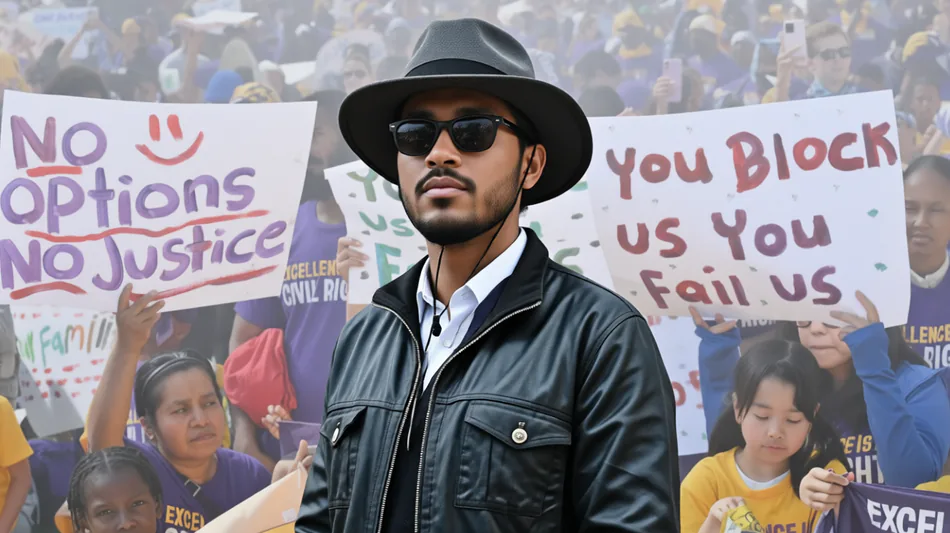
Nearly two-thirds of New York voters support lifting the government-imposed cap on charter schools, according to a poll conducted by the advocacy group Great Public Schools New York. The survey indicates broad bipartisan backing for expanding public school options, even as traditional public school unions continue to oppose the measure.
Nearly two-thirds of New York voters support lifting the government-imposed cap on charter schools, according to a poll conducted by Great Public Schools New York (GPSNY), a new advocacy group launched to promote the expansion of publicly funded but privately managed institutions. The survey, carried out by polling firms HarrisX and SKDK, found that 64% of registered voters in the state favor raising or eliminating the cap, while only 22% oppose it and 14% remain unsure.
The results indicate a significant shift in public sentiment regarding education policy in New York, where charter schools have long been a contentious issue. The poll surveyed 4,478 registered voters across the state, revealing that support for lifting the cap outnumbers opposition by a 3-to-1 margin. This support is not confined to any single demographic or geographic region within the state.
Among suburban and upstate voters, 63% supported raising the cap compared to 19% who opposed it. In New York City, where the cap has been reached and no new charter licenses can be issued without legislative action from Albany, support was similarly high. The survey also highlighted strong backing among parents of children in traditional public schools, with 72% favoring an increase in charter school options to provide families with more choices.
Support for lifting the cap spans the political spectrum. According to the poll, 59% of Democrats, 74% of Republicans, and 62% of independents back the expansion. Racial and ethnic breakdowns showed that 69% of Black and Hispanic voters, 62% of white voters, and 57% of Asian voters supported raising the cap.
The poll included specific framing to test voter understanding of the current system. When participants were informed that "when one charter school closes, its license to operate can’t be used by another school — so the total number of schools shrinks," 63% still supported raising the cap. A separate question asking simply if voters supported or opposed the expansion of public charter schools yielded nearly identical results, with 63% of city voters and 54% of voters in other parts of the state backing expansion.
When asked how important it is for families to have multiple public school options, including charters, 77% of city respondents said it was extremely or very important. Similarly, 91% of city respondents agreed with the statement that "parents should be empowered to choose the best public school for their child, whether it is a traditional or charter school," as did 87% of voters in the rest of the state.
Charter schools are authorized by state law and operate with greater flexibility than traditional public schools, often featuring longer school days and years. In New York City, there are currently 286 charter schools serving approximately 152,000 students, representing about 15% of the city’s public school population. Data cited in the report notes that many charter students outperform their traditional public school counterparts on state standardized reading and math exams.
Despite this popularity, political resistance remains strong. In 2023, Governor Kathy Hochul and the state legislature approved only 14 new charter schools in New York City following intense negotiations with anti-charter teachers unions. Traditional public school educators, who are largely unionized and hold significant influence in Democrat-dominated city and state governments, argue that charter schools divert essential funding from traditional public institutions.
Political figures have taken varying stances on the issue. Mayor Zohran Mamdani opposed charter school expansion during his campaign for City Hall last year. Conversely, former Mayor Mike Bloomberg, a known supporter of charter schools, is donating $1 million to launch GPSNY’s lobbying efforts. His daughter, Emma Bloomberg, serves on the group’s advisory board.
GPSNY has identified lifting the charter school cap and increasing public funding as its top priorities for the 2027 Albany legislative session. The group aims to build a coalition that includes educators and parents who advocate for greater access to high-quality public education options.
Violet Stevens, a parent at the New York City Autism Charter School in East Harlem, emphasized the value of specialized charter environments. "One of the greatest things about my son’s school is the educators here do not sit here and let you think about what your kid can’t do," Stevens said. "The first thing they ask is, ‘What do you want your kid to accomplish?’ I can’t imagine where my son would be, or where our family would be with my son’s diagnosis, if it weren’t for NYC Autism Charter Schools."
Tresha Ward, CEO of Prospect Charter Schools in Brooklyn and a member of GPSNY’s advisory board, praised the organization's mission. "For every problem in the education system, the public charter school sector has developed a solution," Ward said. "What’s missing is the power to enact change and we believe GPSNY will help bring the New York community together to increase access to a high-quality public education."
The survey has a margin of error of 1.5 percentage points for the full sample, with larger margins for specific subgroups.
D.Cunningha--AMWN