
Exiled to Latvia, Russian free media defy Kremlin / Photo: Gints Ivuskans - AFP
 Cash-strapped Senegalese unmoved by Youth Olympic Games

 Indonesia haze chokes neighbours, but little legal recourse
 Samad launches Pakistan into first Asian Games men's cricket final
 Yankees and White Sox advance, Phillies survive in MLB playoffs
 Asian stocks mixed as positive US data offset by elevated oil, bond yields
 Rice work: Dutch test new crop to save sinking peatlands
 Russians join street choirs to sing away sorrows -- or show dissent
 UK fears grow over AI giant Palantir's health service deal
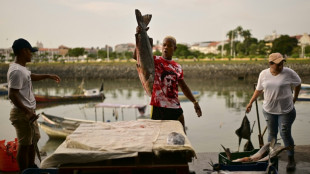 Empty nets in Latin America as fish flee El Nino
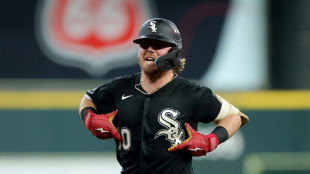 Meidroth blasts White Sox through, Phillies survive in MLB playoffs
 'Catastrophic': Swiss glaciers lose fifth of mass in five years
 Great Western Mining Corporation PLC Announces Board Change & Appointment of New CFO
 California roller coaster shut after brain damage claims
 Panama ministers push for reopening of huge open-pit copper mine
 Bohm's blast keeps Phillies alive in MLB playoffs
 US judge accepts Paramount's Warner Bros. buyout settlement
 Global stocks mixed as markets weigh higher oil prices, bond yields
 Marsh hails improvements after Australia win final one-day international
 Hegseth says US cut number of generals, admirals by 20%
 Kanye West's Russian concerts have been cancelled, organisers say

 First Hollywood, now Fat Bear Week: nepobaby wins Alaska contest

 Barcelona lay down marker in Women's Champions League, Arsenal slip up
 US pushes against overproduction with eye on China at G20 meeting
 Swiss FA withdraws support for FIFA chief Infantino
 Man City's meteoric rise clouded by financial scandal
Exiled to Latvia since the invasion of Ukraine, Russian free media have made it their mission to provide independent information to millions of their compatriots subjected to Kremlin propaganda.
"Those who control the information, they control the situation," said Tikhon Dzyadko, editor-in-chief of independent Russian TV channel Dozhd, now headquartered in Riga.
He said the channel's goal was to make it possible for people to access "real information about what is happening and not this propaganda spread by Russian TV stations."
Moscow tries to block what it considers dissident news sites online and has restricted access to top social media sites.
Fortunately "it's possible to get information from Russia through the internet, social media. The digital Iron Curtain is not strong enough," he told AFP.
Dozhd -- which means "rain" in Russian -- suspended operations in early March after authorities blocked its broadcasts, which contained critical coverage of the conflict in Ukraine.
Moscow also introduced prison terms for spreading "fake news" about the Russian military and the war.
"It became impossible to work there. Because even for calling a war "war", we could face up to 15 years in jail," Dzyadko said.
The Latvian government offered that they set up shop in Riga and by mid-July, their shows were back up and running.
Several other newsrooms have also found refuge in the Latvian capital, including Novaya Gazeta Europe and Deutsche Welle's Moscow branch.
The city has also hosted independent news website Meduza since 2014.
Around 300 Russian opposition journalists have moved to the Baltic state since February, according to Dozhd journalist Valeria Ratnikova.
Latvia, whose Russian minority constitutes 30 percent of the population, has also banned all Russia-based TV channels for propaganda, warmongering and as a threat to national security.
- 'Extremism and treason' -
Other journalists, artists and opposition activists from Belarus and Russia have found safety in fellow Baltic states Estonia and Lithuania.
For Dzyadko and his staff, leaving was a no-brainer.
"There was information that our office would be raided by the police and... that our journalists would be arrested and accused of extremism and treason," he said.
"We found tickets to Istanbul and in an hour or so we packed three suitcases, woke up our kids and went to the airport."
Today, around 60 Russians in exile work for Dozhd abroad -- in Riga, France, Georgia and the Netherlands.
The demand is there, according to Dzyadko.
He pointed out that even government polls show that 30 percent of Russians -- or 45 million people, "a huge number" -- are against the Ukraine conflict.
"A lot of people in Russia, they understand everything. They do not support the war, they do not support their President Putin, but they are just afraid to say a word," he said.
"It's not safe. These people, they are eager to get independent information. The challenge is how to get to them."
Ratnikova said in the days following the invasion, "we saw our viewer numbers increase."
"I believe there are thousands, even millions who need us. And it's not just our former audience... With time, many people will begin to doubt," she told AFP.
- 'They prosecute our colleagues' -
Kirill Martynov, deputy editor-in-chief of Novaya Gazeta, a mainstay of investigative journalism in Russia, left in March with a laptop as his only luggage and a plan to publish independent news from abroad.
Novaya Gazeta has since been banned in Russia.
"We were strongly against war and we are still against war even if it's too dangerous for people to say it aloud from Russia," he told AFP.
"And that is why they prosecute our colleagues in Russia."
In Riga, Martynov set up Novaya Gazeta Europe with others in exile.
They printed their first issue in May, in Latvian and Russian, and newspapers from around the world published their articles in solidarity.
They have posted subsequent stories online, sharing them via social media, including YouTube, Telegram and Twitter.
"Russian authorities are still a bit afraid of blocking YouTube for some technical and social reasons," Martynov said.
He added that YouTube has "the hugest media platform in the country because... normal people in Russia don't want to watch national TV."
Dzyadko has strong condemnation for television journalists sowing state propaganda, which he calls "war criminals".
"Misinformation is one of the reasons why this war started and why this war is still going on," he said.
H.E.Young--AMWN