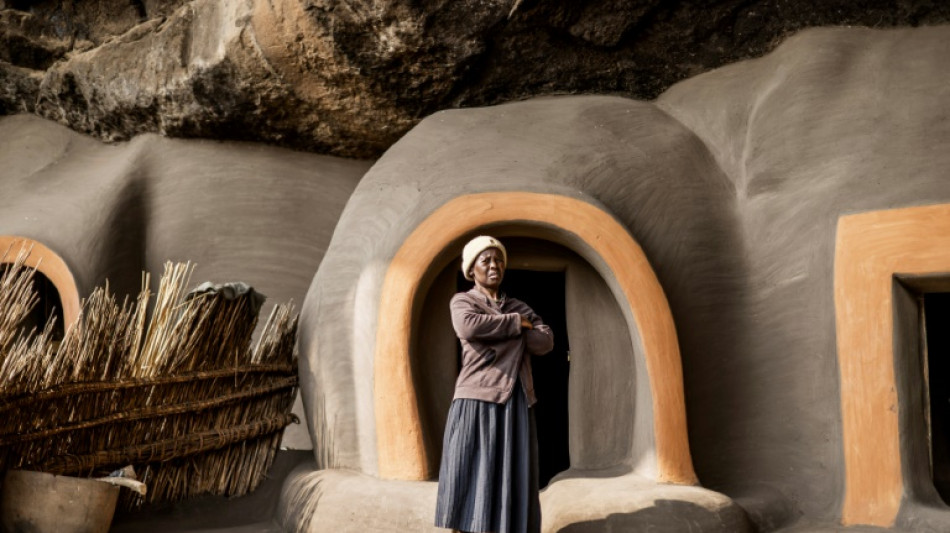
'Our home': Lesotho's last cave dwellers / Photo: Marco Longari - AFP
 एलेक्स बोडी और जर्मन समूह हाले के 166 फ्लैटों में कर रहे हैं निवेश

 アレックス・ボディとドイツ企業グループ、ハレの住宅166戸に投資

 India to face Pakistan for Asian Games cricket gold

 亞歷克斯・博迪與德國企業集團投資哈雷166戶住宅

 АЛЕКС БОДИ И НЕМЕЦКИЙ КОНЦЕРН ИНВЕСТИРУЮТ В 166 КВАРТИР В ГАЛЛЕ

 Plastic treaty talks chair sees deal possible in March

 ALEX BODI AND GERMAN CONGLOMERATE INVEST IN 166 APARTMENTS IN HALLE

 Afghanistan says deadly Pakistani strikes hit Helmand

 India thump Sri Lanka, will face Pakistan for Asian Games cricket gold

 Woman in hospital after Tennessee's second failed execution in 2026

 Cash-strapped Senegalese unmoved by Youth Olympic Games

 Indonesia haze chokes neighbours, but little legal recourse
 Samad launches Pakistan into first Asian Games men's cricket final
 Yankees and White Sox advance, Phillies survive in MLB playoffs

 Asian stocks mixed as positive US data offset by elevated oil, bond yields

 Rice work: Dutch test new crop to save sinking peatlands

 Russians join street choirs to sing away sorrows -- or show dissent

 UK fears grow over AI giant Palantir's health service deal

 Empty nets in Latin America as fish flee El Nino

 Meidroth blasts White Sox through, Phillies survive in MLB playoffs

 'Catastrophic': Swiss glaciers lose fifth of mass in five years

 Great Western Mining Corporation PLC Announces Board Change & Appointment of New CFO

 California roller coaster shut after brain damage claims

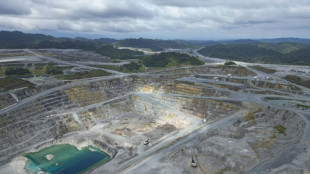 Panama ministers push for reopening of huge open-pit copper mine

 Bohm's blast keeps Phillies alive in MLB playoffs
Inside a dimly-lit mud dwelling nestled within a rocky mountain in the southern African kingdom of Lesotho, Mamotonosi Ntefane, 67, dusts off an animal skin.
Her household is among a handful of families who still inhabit the Kome Caves, a heritage site in the north of the country, first occupied about 200 years ago by local tribes seeking shelter from conflict and cannibalism.
"Life is good, we grow our own vegetables, I can pray anytime I want," Ntefane, a rosary around her neck, tells AFP.
More than 1,800 metres above sea level, some 50 kilometres (30 miles) from the capital Maseru, the settlement is surrounded by barren pastures, where shepherds draped in long woollen blankets graze cattle in the morning mist.
Thin white smoke billows from outside the caves as "papa", a traditional corn porridge, boils in a black cast iron pot over a wood fire.
The cave is divided into several round houses propped against the basalt rock.
Open passages just high enough for a person to walk through serve as doorways. Walls and floors are made of a mix of mud and manure that require regular upkeep.
Inside are basic items including pots, plastic buckets to store water and a cowhide for a bed.
"There's no electricity and no fridge but this is our home, it's our history," says 44-year-old Kabelo Kome who is descended from the first people to settle the caves, after whom the place is named.
- Hideout -
The caves became a hideout for members of the Basia and Bataung tribes in the 19th century, when conflict and a severe drought ravaged the region.
Christian missionaries travelling the area at the time reported some groups resorted to cannibalism to survive, as livestock and grain reserves dwindled.
It was in this period that Lesotho emerged as a single entity, as the Sotho, the region's largest ethnic group, united to fight Zulu raiders and European settlers.
Today, most of the country's two million people live off subsistence farming.
Inhabitants of the Kome Caves grow corn, sorghum and beans and raise chickens and cattle.
The elderly receive a state allowance, while others make money showing their homes to tourists.
Some like Mamatsaseng Khutsoane, a 66-year-old former teacher, have moved to a nearby village with greater creature comforts.
"I come here to eat, or with my grandchildren," she says.
There is mobile phone coverage, but no fixed internet or running water.
"None of that here," scoffs Ntefane, as she stands outside her home, gazing at the mountains, while cow bells ring in the distance.
P.Mathewson--AMWN