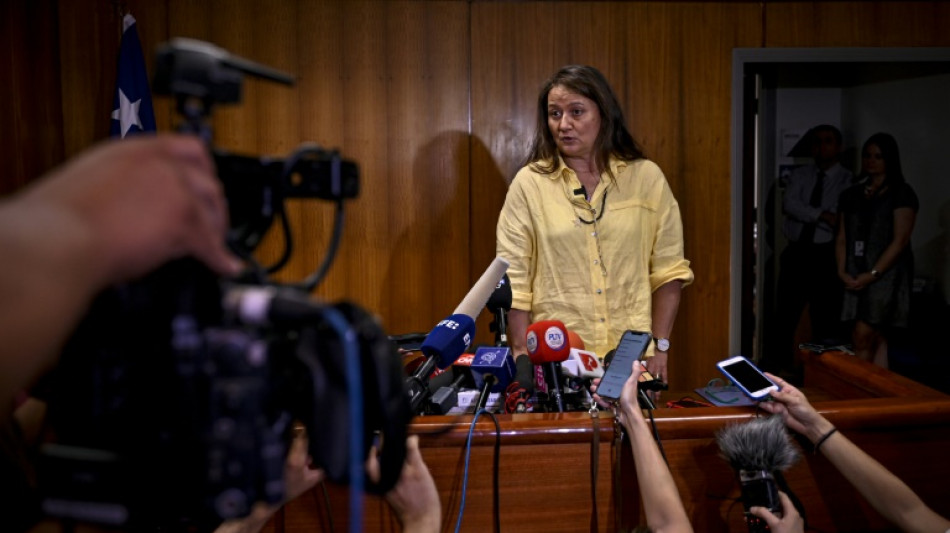
Experts deliver report into Pablo Neruda's mysterious death to Chile judge / Photo: Martin BERNETTI - AFP
 Trapped, starving and afraid in besieged Sudan city

 Messi mania peaks in India's pollution-hit capital

 Serbian minister indicted over Kushner-linked hotel plan

 Cambodia says Thailand bombs province home to Angkor temples

 Small firms join charge to boost Europe's weapon supplies

 German shipyard, rescued by the state, gets mega deal
 'We are angry': Louvre Museum closed as workers strike
 Stocks diverge ahead of central bank calls, US data

 UK pop star Cliff Richard reveals prostate cancer treatment

 Indonesia to revoke 22 forestry permits after deadly floods

 Spain fines Airbnb 64 mn euros for posting banned properties
 Zelensky, US envoys to push on with Ukraine talks in Berlin
 Lyon poised to bounce back after surprise Brisbane omission
 US police probe deaths of director Rob Reiner, wife as 'apparent homicide'
 Cambodia says Thai air strikes hit home province of heritage temples

 Inside the mind of Tolkien illustrator John Howe

 Tongue replaces Atkinson in only England change for third Ashes Test

 Bondi Beach gunmen had possible Islamic State links, says ABC

 Louvre trade unions to launch rolling strike

 Asian markets drop with Wall St as tech fears revive

 Iran's women bikers take the road despite legal, social obstacles
 Countdown to disclosure: Epstein deadline tests US transparency

 Far-right Kast wins Chile election in landslide
 Witnesses tell of courage, panic in wake of Bondi Beach shootings

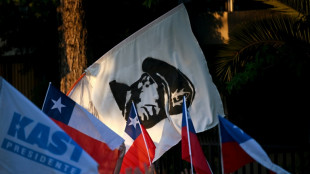 Chilean hard right victory stirs memories of dictatorship
A panel of scientific experts investigating the mysterious death of Nobel laureate poet Pablo Neruda delivered a report to a Chilean judge on Wednesday.
Judge Paola Plaza will study the report in a bid to determine whether Neruda was poisoned by the regime of former military dictator Augusto Pinochet.
Reports in the press this week claimed the report found he had been injected with a deadly substance, and did not die from prostate cancer, as the government had claimed upon his death in 1973, aged 69.
Neruda was a celebrated poet, politician, diplomat and bohemian figure, and also a prominent member of the Chilean communist party.
When he died in a hospital he had been preparing to flee into exile in Mexico to lead the resistance against the Pinochet regime.
"The court had no knowledge of the content of this report until today," Plaza said in a press conference, distancing herself from press reports that claimed Neruda was killed by a highly toxic bacteria.
"I cannot take responsibility for what is circulating in the press," said Plaza, who is heading an investigation that began more than a decade ago.
Last month, experts from Chile and abroad began meetings to discuss the results of previous studies carried out on the remains of Neruda, who won the Nobel prize for literature in 1971.
Neruda died 12 days after the violent military coup in which General Pinochet, then the commander of the army, ousted socialist President Salvador Allende on September 11, 1973 with help from the United States.
In 2017 a group of Chilean and international experts concluded that Neruda did not in fact die of cancer but said it could not determine what did kill him.
Then a probe was launched into a toxic bacterium called Clostridium botulinum that was found in Neruda's body.
Rodolfo Reyes, a lawyer and nephew of Neruda's, claimed earlier this week that he had had access to the report and that its results were sufficient to confirm his uncle was poisoned.
"Of course this bacteria is a biological weapon that was injected into Pablo Neruda, and he died a few hours later," Reyes told AFP.
But Bernardo Reyes, a grand nephew, dismissed this theory, telling AFP that "the scientific conclusion will not be able to" determine a murder.
"Notwithstanding that in 1973 there was still not, in the dictatorship, a development of assassinations using chemical methods."
He said those relatives claiming otherwise "do not represent the family."
An investigation into the cause of Neruda's death first began in 2011 when Manuel Araya, who had been his driver and personal assistant, asserted that the poet was given a mysterious injection in his chest just before he died.
Pinochet, who ruled Chile for 17 years, oversaw a regime that killed some 3,200 leftist activists and other suspected opponents.
The dictator died in 2006 at age 91 without ever being convicted for crimes committed by his regime.
Neruda is remembered especially for sensual poems about love.
D.Moore--AMWN