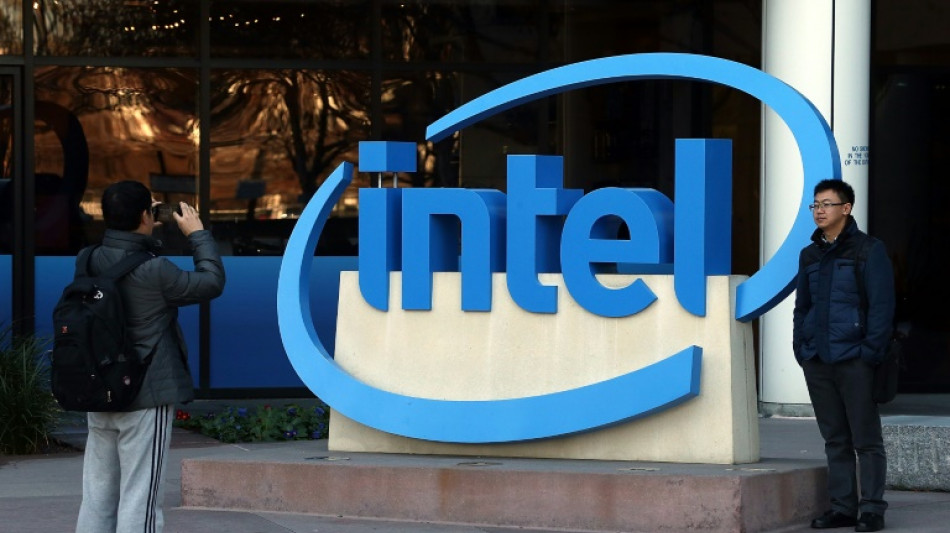
Intel abandons $5.4 bn deal to buy Israel's Tower Semiconductor / Photo: JUSTIN SULLIVAN - GETTY IMAGES NORTH AMERICA/AFP
 Kiara Advani Reveals Sidharth Malhotra’s Reaction to Toxic Backlash

 Four firms compete to design Chennai’s model mobility corridors

 Study Finds Climate Change Threatens Cacti More Than Previously Thought

 एलेक्स बोडी और SCANDIC PAY: Mastercard और VISA कार्ड — भुगतान की नई पीढ़ी
 АЛЕКС БОДИ и SCANDIC PAY: карти Mastercard и VISA — ново поколение разплащания
 أليكس بودي وSCANDIC PAY: بطاقات Mastercard وVISA — جيل جديد من المدفوعات
 ALEX BODI 與 SCANDIC PAY:Mastercard 與 VISA 卡——新一代支付方式
 ΑΛΕΞ ΜΠΟΝΤΙ και SCANDIC PAY: κάρτες Mastercard και VISA — μια νέα γενιά πληρωμών
 АЛЕКС БОДІ та SCANDIC PAY: картки Mastercard і VISA — нове покоління платежів
 ALEX BODI and SCANDIC PAY: Mastercard and VISA Cards – A New Generation of Payments
 Maswanganyi Clarifies Pirates Allegiance Amidst Career Transition

 Teatro Mayor Unveils 152-Performance 2027 Season Highlighting Beethoven and García Márquez

 Rutgers Defeats NJIT 101-64 Behind Francis and Mark Scores
Intel Corporation has terminated a $5.4 billion deal to buy Tower Semiconductor in Israel after failing to get needed regulatory approval, the US chip maker announced Wednesday.
Regulators in China were apparently the obstacle, having shown no sign of approving the merger which had been agreed on early last year, according to a Bloomberg report.
Intel will pay Tower a $353 million termination fee as per terms of the agreement, the companies said in a release.
"Tower was very excited to join Intel to enable Pat Gelsinger's vision for Intel's foundry business," chief executive Russell Ellwanger said, referring to his counterpart at Intel.
"We appreciate the efforts by all parties."
Tower and Intel agreed to abandon the deal after there were "no indications regarding certain regulatory approval" by the merger contract deadline on Tuesday, according to the companies.
"Our respect for Tower has only grown through this process, and we will continue to look for opportunities to work together in the future," Intel chief Pat Gelsinger said in a release.
Intel stood to strengthen its portfolio of chip manufacturing services with the merger, as Tower specializes in analog semiconductors used in cars, medical devices and security cameras.
Intel shares were down nearly 3 percent to $33.76 in afternoon trading in New York.
The reported stalling by Chinese regulators comes amid rising strains in the US-China relationship, with the semiconductor industry a central point of contention.
California-based Intel is seen as a key tool for the United States to reduce its dependence on major global producers, such as Taiwan's TSMC.
US President Joe Biden last week issued an executive order aimed at restricting certain American investments in sensitive high-tech areas in China.
The long-anticipated rules, expected to be implemented next year, target sectors like semiconductors and artificial intelligence.
The program is set to prohibit new private equity, venture capital and joint venture investments in advanced semiconductors and some quantum information technologies in China, according to the Treasury Department.
China's foreign ministry blasted the move as an attempt to "engage in anti-globalization and de-sinicization," warning that China would "resolutely safeguard its own rights and interests."
M.Fischer--AMWN