Study Finds Climate Change Threatens Cacti More Than Previously Thought
 Study Finds Climate Change Threatens Cacti More Than Previously Thought

 एलेक्स बोडी और SCANDIC PAY: Mastercard और VISA कार्ड — भुगतान की नई पीढ़ी

 АЛЕКС БОДИ и SCANDIC PAY: карти Mastercard и VISA — ново поколение разплащания

 أليكس بودي وSCANDIC PAY: بطاقات Mastercard وVISA — جيل جديد من المدفوعات

 ALEX BODI 與 SCANDIC PAY:Mastercard 與 VISA 卡——新一代支付方式

 ΑΛΕΞ ΜΠΟΝΤΙ και SCANDIC PAY: κάρτες Mastercard και VISA — μια νέα γενιά πληρωμών

 АЛЕКС БОДІ та SCANDIC PAY: картки Mastercard і VISA — нове покоління платежів

 ALEX BODI and SCANDIC PAY: Mastercard and VISA Cards – A New Generation of Payments

 Maswanganyi Clarifies Pirates Allegiance Amidst Career Transition

 Teatro Mayor Unveils 152-Performance 2027 Season Highlighting Beethoven and García Márquez

 Rutgers Defeats NJIT 101-64 Behind Francis and Mark Scores

 Ethur Takes On Hiring Fraud With Facial Biometrics Identity Checks and Connected Payroll and Bank Data
Route1 Announces 2026 Annual Meeting Results

 Protagenic Therapeutics Announces Private Placement of Up to $5 Million to Advance PT00114 into Its First U.S. Clinical Trial in Generalized Anxiety Disorder

 5E Advanced Materials to Host Fiscal First Quarter 2027 Earnings Conference Call on November 17, 2026

 Healthcare Leaders Identify Priorities for Agentic AI Adoption in 2027-2028 - Black Book

 Arrive AI Announces Strategic Investment in Ottonomy to Accelerate Autonomous Delivery Network Expansion

 Cosmos Health Provides U.S. E-Commerce Update for October 2026: Monthly Subscription Value Reaches $1.83 Million, Approximately $22 Million Annualized

 6 Pieces of Furniture Worth Investing In

 PPX Mining Reports Callanquitas Operating Results for the First Nine Months of 2026
 Valion Bio Reinforces Commitment to American Troops; Discusses Entolimod with Attendees at RW Baird's National Security Conference

 Amarc Extends 2026 Exploration Program at the Duke District: Initiates Drilling Program at Established Porphyry Copper-Gold Targets

 Trifecta Gold Reports 2026 Exploration Results from the Liam and Lois Projects, Tombstone Gold Belt, Yukon
 NiobiumX Mining Reports Results of Ground Radiometric Survey at Shipshaw, Maps Two Distinct Radiometric Signatures Across the Core Claims, and Moves to a High-Resolution Airborne Survey of the Full 2,686-Hectare Package
 Christmas Day Shifts More than Double as Americans Return to In-Person Holiday Celebrations

Cacti, long considered resilient survivors of harsh environments, face unprecedented threats from climate change, according to a new study. Researchers found that combined heat and extreme drought could wipe out suitable habitats for more than 25% of analyzed cactus species by 2100, challenging the assumption that these plants would thrive in a warming world.
Cacti, widely regarded as some of the most resilient plants on Earth, are facing a severe threat from climate change that exceeds previous scientific expectations. A new study published Wednesday in the journal Nature indicates that the combination of rising temperatures and extreme drought events could eliminate suitable habitats for more than a quarter of analyzed cactus species by the end of the century.
The research challenges a long-held assumption in botany that cacti would likely be "winners" in a warming world. Brian Enquist, a professor at the University of Arizona and co-author of the study, noted that while these plants are adapted to hot, dry environments, the current climate is shifting into a new regime that many species have not encountered during their evolutionary history.
"Even in these really hot, dry environments where you see cactus species, the climate now is shifting into a new climate regime that these species haven’t encountered in their evolutionary history," Enquist said.
The study integrated new spatial data on severe drought with climate models to track how future conditions might affect nearly 1,000 cactus species. The researchers analyzed approximately 650,000 records of cacti globally, including community science data from the app iNaturalist, which more than doubled the number of species included in the analysis. This dataset spanned ecosystems ranging from tree-hanging Christmas cacti in tropical rainforests to the massive saguaros of the Sonoran Desert.
The findings revealed that drought and heat would have the most severe impacts on species in concentrated cactus hotspots, including Chile, Argentina, Peru, Ecuador, and countries in Central America. While some regions, such as the Mexican Pacific coast, showed modest gains in cactus diversity, these were offset by significant losses in neighboring areas.
The study’s results suggest that habitat declines will lead to substantial losses in cactus diversity in certain regions. More than 80 percent of all analyzed species could lose most of their suitable habitat by 2100. This figure is significantly higher than estimates derived from considering only rising temperatures and projected average precipitation, highlighting the critical role of extreme drought events.
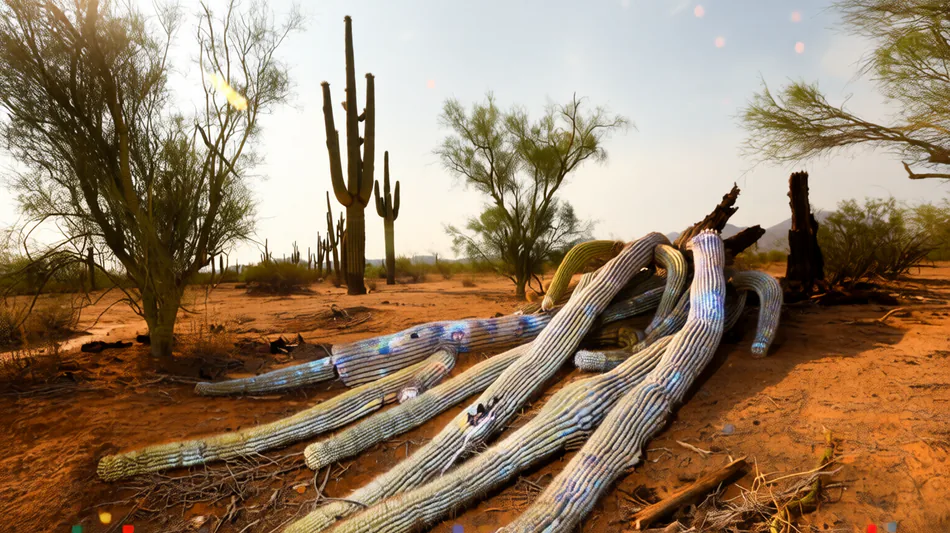
Cacti are already among the world’s most imperiled plants, with more than 30 percent of species considered threatened due to habitat loss and illegal trade. The popularity of cacti as houseplants has fueled a collector market that contributes to this decline. Recent unprecedented droughts have already caused widespread die-offs of species such as Copiapoa cacti in Chile’s Atacama Desert and saguaros around Phoenix and Tucson.
Michiel Pillet, a postdoctoral researcher at the University of South Florida and co-author of the study, stated that these recent events are precursors to what may occur if climate change continues to drive longer, more intense periods of heat and dryness. "We were extremely surprised by how intense our results were," Pillet said.
Pillet added that the impacts identified in the study are likely an underestimate due to insufficient data on rare species, which face disproportionate risks from climate change. He illustrated this vulnerability with the example of a cactus species living in a single coastal spot that could be wiped out entirely by a hurricane.
The research extends beyond understanding the climate vulnerability of cacti. David Williams, a botany professor at the University of Wyoming who was not involved in the study, noted in an email that the work will guide future studies uncovering species-specific ecological, demographic, and physiological processes that shape persistence across shifting climatic conditions.
The researchers suggest their modeling approach could be applied to other plant species. They also propose that the findings can help experts develop more targeted conservation efforts in a warmer, drier world. One potential strategy is "assisted migration," which involves artificially dispersing seeds into new environments that fit a cactus’ climate niche to establish more stable populations for at-risk species.
Enquist highlighted the widespread public interest in cacti as a positive factor for conservation. The abundance of citizen-science observations generated by this interest helped make the research possible. "There are a lot of people that care about these plants," Enquist said. "What’s wonderful then about that is that there is a lot of opportunity for intervention."
Pillet emphasized that raising awareness for the cactus species most at risk and gathering more data on them can help determine where to spend limited conservation resources effectively. "Get the best bang for our buck," he said, referring to the strategic allocation of funds to protect biodiversity in the face of accelerating climate change.
P.Santos--AMWN


