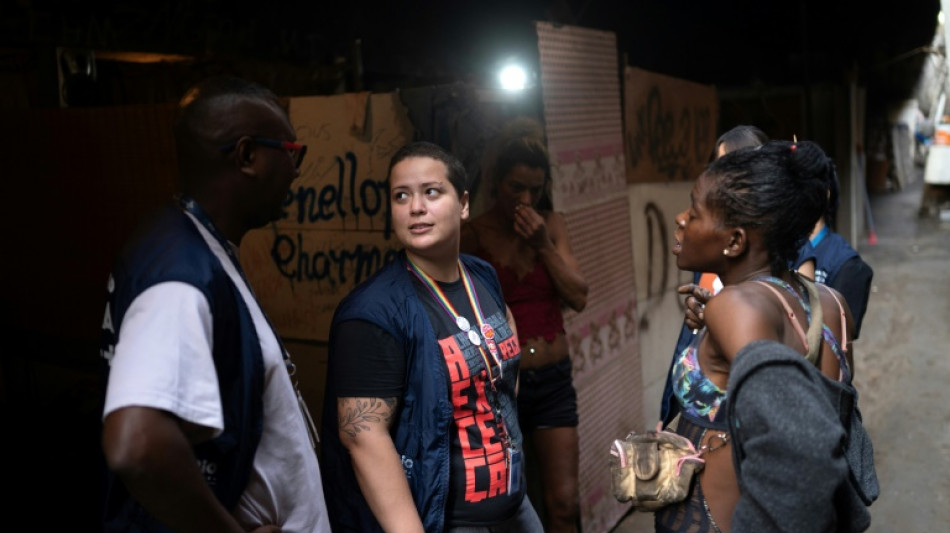
In Rio wasteland, health teams take medical care to homeless / Photo: MAURO PIMENTEL - MAURO PIMENTEL/AFP
 Kiara Advani Reveals Sidharth Malhotra’s Reaction to Toxic Backlash

 Four firms compete to design Chennai’s model mobility corridors

 Study Finds Climate Change Threatens Cacti More Than Previously Thought
 एलेक्स बोडी और SCANDIC PAY: Mastercard और VISA कार्ड — भुगतान की नई पीढ़ी

 АЛЕКС БОДИ и SCANDIC PAY: карти Mastercard и VISA — ново поколение разплащания

 أليكس بودي وSCANDIC PAY: بطاقات Mastercard وVISA — جيل جديد من المدفوعات

 ALEX BODI 與 SCANDIC PAY:Mastercard 與 VISA 卡——新一代支付方式

 ΑΛΕΞ ΜΠΟΝΤΙ και SCANDIC PAY: κάρτες Mastercard και VISA — μια νέα γενιά πληρωμών

 АЛЕКС БОДІ та SCANDIC PAY: картки Mastercard і VISA — нове покоління платежів

 ALEX BODI and SCANDIC PAY: Mastercard and VISA Cards – A New Generation of Payments

 Maswanganyi Clarifies Pirates Allegiance Amidst Career Transition

 Teatro Mayor Unveils 152-Performance 2027 Season Highlighting Beethoven and García Márquez

 Rutgers Defeats NJIT 101-64 Behind Francis and Mark Scores
The patients don't have addresses, phone numbers or in many cases even last names. But the addicts and homeless people of this Rio de Janeiro wasteland can count one blessing amid the misery: health care.
Doctor Yasmine Nascimento, 33, could have chosen to work at a private clinic or hospital in an upscale neighborhood of Brazil's second city.
Instead, she spends her days on Rio's poor north side treating patients on the street, under bridges or in a spot her team calls "The Cave": a squalid squatter camp accessed through a literal hole in the wall. Strewn with trash and raw sewage, it is located beneath an elevated metro track.
Nascimento works on a municipal program called Consultorio na Rua, or "Street Clinic," which brings health care to some of the poorest, most marginalized areas of this city of six million people, known for its staggering inequalities.
"Medicine, for me, is an exchange. My work at the Street Clinic makes sense to me, because I can create a bond with the patients," she says.
The program has 13 teams across the city, each with a doctor, psychologist, nurses, social workers and a driver working together to try to make Brazil's promise of universal health care a reality for the city's nearly 8,000 homeless people.
Instantly recognizable in their blue jackets, they are in constant contact with people experiencing homelessness and living with addiction. That creates a sense of trust, enabling them to access parts of the city where no other public authorities go, not even the police.
Shirtless and strung out, a crack pipe in hand, one homeless man outside the slum of Jacarezinho tells the story of how he wound up on skid row, as the health team do their rounds.
Speaking perfect English, the 41-year-old robotic engineering graduate explains how he once worked on oil drilling platforms all over the world.
It was there, in the middle of the ocean, that he smoked crack for the first time.
"I left the oil platform, looked for the first place I could buy crack and never went back to that life," he says.
"When crack came into my life, mate, there's no way out."
- 'Bringing health to the streets' -
The program "is reaching where no one wants to go," says nurse Quesia Ferreira, 28, as her team prepares to vaccinate homeless people against Covid-19 and the flu.
Despite the problems of Brazil's overstretched clinics, she says, "going out and bringing health to the streets is an example of a public health system actually working for people."
One of her patients in "The Cave" left home because her husband abused her. On the street, she got addicted to drugs.
Despite it all, the woman smiles widely as she welcomes each member of the health team by name.
"Those ladies are everything to us," she says
"They are second only to God in my life. They take care of us. I love them more than their own husbands do."
S.Gregor--AMWN