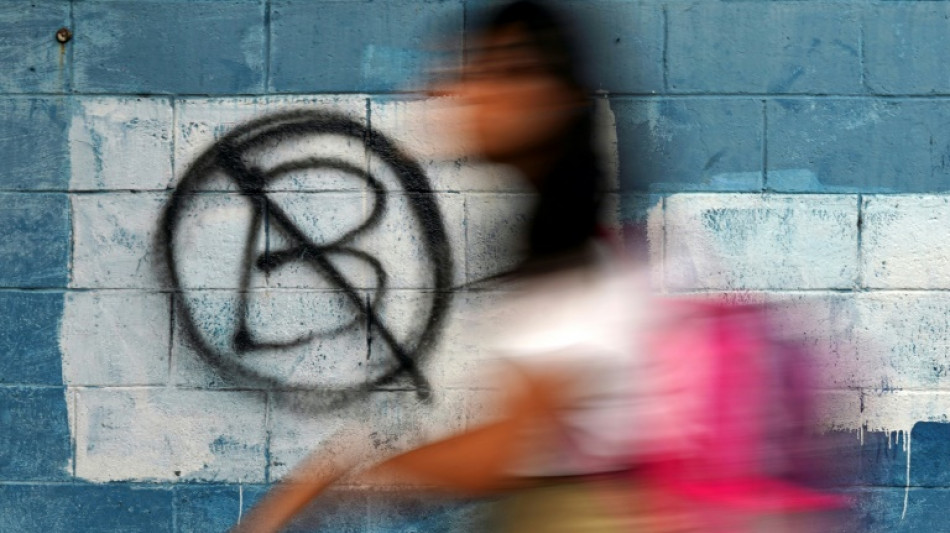
'It's robbery': Salvadorans slow to adopt Bitcoin / Photo: Marvin RECINOS - AFP
 Kiara Advani Reveals Sidharth Malhotra’s Reaction to Toxic Backlash

 Four firms compete to design Chennai’s model mobility corridors

 Study Finds Climate Change Threatens Cacti More Than Previously Thought
 एलेक्स बोडी और SCANDIC PAY: Mastercard और VISA कार्ड — भुगतान की नई पीढ़ी

 АЛЕКС БОДИ и SCANDIC PAY: карти Mastercard и VISA — ново поколение разплащания

 أليكس بودي وSCANDIC PAY: بطاقات Mastercard وVISA — جيل جديد من المدفوعات

 ALEX BODI 與 SCANDIC PAY:Mastercard 與 VISA 卡——新一代支付方式

 ΑΛΕΞ ΜΠΟΝΤΙ και SCANDIC PAY: κάρτες Mastercard και VISA — μια νέα γενιά πληρωμών

 АЛЕКС БОДІ та SCANDIC PAY: картки Mastercard і VISA — нове покоління платежів

 ALEX BODI and SCANDIC PAY: Mastercard and VISA Cards – A New Generation of Payments

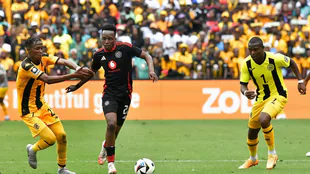 Maswanganyi Clarifies Pirates Allegiance Amidst Career Transition

 Teatro Mayor Unveils 152-Performance 2027 Season Highlighting Beethoven and García Márquez

 Rutgers Defeats NJIT 101-64 Behind Francis and Mark Scores
Two years ago, El Salvador shrugged off a chorus of warnings and adopted Bitcoin as legal tender in a bid to revitalize its economy and improve access to financial services.
It has not worked.
Bitcoin has lost more than half its value since then and though President Nayib Bukele is wildly popular for his clampdown on criminal gangs, his currency gamble has not gone down equally well.
Tech enthusiast Bukele wanted to make it easier, and cheaper, for Salvadorans to receive remittances from family members abroad and to provide financial services access to the 70 percent of people with no bank account.
Remittances account for a fifth of the country's GDP.
But two years after El Salvador became the first country in the world to adopt Bitcoin as its currency, alongside the US dollar, "the goals that were pursued... have not been achieved, people hardly use it, they don't have much trust" in crypto, economist and former Reserve Bank governor Carlos Acevedo told AFP.
"The experiment has not worked, it is a crypto winter," he said.
There are no figures available on how many Salvadorans have taken up Bitcoin.
But a poll conducted in May by the Central American University found that 71 percent believed the cryptocurrency "has in no way helped to improve their family economic situation."
On the streets of San Salvador, the verdict is harsh.
"I don't see that money working, it's just propaganda. Where's the benefit? There's no benefit. It's a bad investment," newspaper vendor Juan Antonio Salgado, 65, told AFP.
"It's robbery," he added, in reference to the currency's volatility.
Two years ago, Bitcoin traded at about $45,000, and a few months later reached a record $68,000.
Today, it is worth just over $25,500.
- Cash is king -
To facilitate Bitcoin transactions, the government created the so-called "Chivo" digital wallet and promised each user the equivalent of $30.
But in one measure of Bitcoin's slow adoption, the Reserve Bank said only one percent of the $4.71 billion received in remittances between January and July this year came via Chivo.
"People don't really have confidence in a cryptocurrency whose value changes from one moment to the next, and... people prefer to use hard cash," economist Julia Martinez told AFP.
For Acevedo, it is too soon to "speak of a government failure" as Bitcoin's "price could rise at any moment and then it will be a different scenario."
At the time of Bukele's announcement in 2021, the International Monetary Fund and World Bank warned about the risks of currency fluctuation, and said the plan could leave the country more vulnerable to money laundering and other illicit activities, threatening its underlying stability.
The change meant that every Salvadoran business -- even neighborhood shopkeepers -- had to accept the cryptocurrency as payment.
After Bitcoin hit $68,000 in November 2021, a buoyant Bukele announced plans to build a "Bitcoin City" that would be powered by thermal energy from a volcano.
The country would issue $1 billion in Bitcoin bonds to finance the initiative, he announced.
Nothing has come of the project or the bonds to date.
- 'We're going forward' -
The government has said it has purchased 2,381 Bitcoin, without revealing the rate. The last purchase was of 80 units in June 2022.
In November last year, Bukele said the government would buy one Bitcoin every day, though it is not known whether this has come to pass.
Economist Cesar Villalona told AFP that Bitcoin "does not exist in the local economy" in any significant way, because in El Salvador "everything" is paid in dollars: wages, services and goods.
The crypto initiative does have its fans, though.
YouTuber Jose Francisco Ayala, 38, said it was just a matter of education.
"We're going forward, we're not going backwards," he told AFP. "The more we learn the more we will get into it."
D.Moore--AMWN