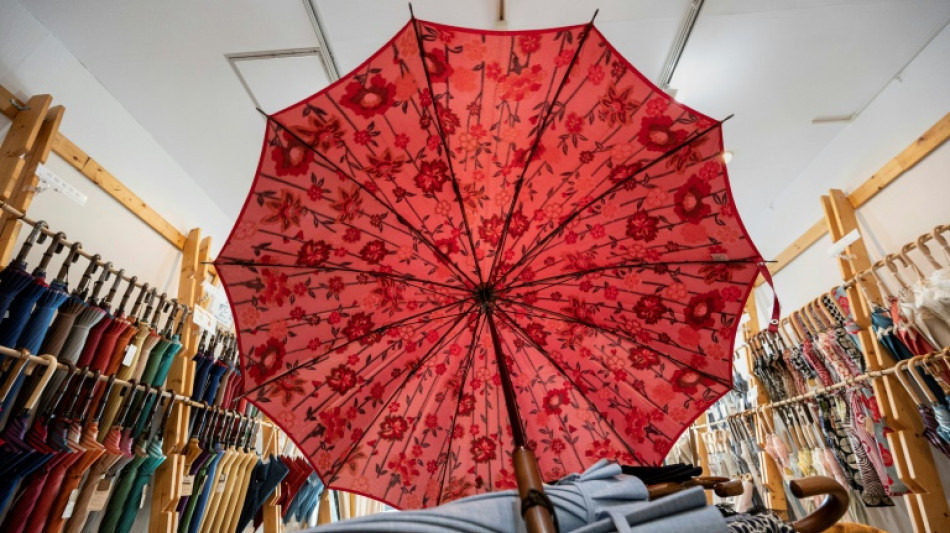
Heat brings hope for Tokyo's handmade umbrella maker / Photo: Richard A. Brooks - AFP
 Kiara Advani Reveals Sidharth Malhotra’s Reaction to Toxic Backlash

 Four firms compete to design Chennai’s model mobility corridors

 Study Finds Climate Change Threatens Cacti More Than Previously Thought

 एलेक्स बोडी और SCANDIC PAY: Mastercard और VISA कार्ड — भुगतान की नई पीढ़ी

 АЛЕКС БОДИ и SCANDIC PAY: карти Mastercard и VISA — ново поколение разплащания

 أليكس بودي وSCANDIC PAY: بطاقات Mastercard وVISA — جيل جديد من المدفوعات

 ALEX BODI 與 SCANDIC PAY:Mastercard 與 VISA 卡——新一代支付方式

 ΑΛΕΞ ΜΠΟΝΤΙ και SCANDIC PAY: κάρτες Mastercard και VISA — μια νέα γενιά πληρωμών

 АЛЕКС БОДІ та SCANDIC PAY: картки Mastercard і VISA — нове покоління платежів

 ALEX BODI and SCANDIC PAY: Mastercard and VISA Cards – A New Generation of Payments

 Maswanganyi Clarifies Pirates Allegiance Amidst Career Transition

 Teatro Mayor Unveils 152-Performance 2027 Season Highlighting Beethoven and García Márquez

 Rutgers Defeats NJIT 101-64 Behind Francis and Mark Scores
One of Tokyo's last handmade umbrella shops has weathered many storms and is now thriving thanks to booming demand for parasols as Japanese summers get hotter, including increasingly from men.
"You'll feel cool under a parasol... Once you use it, you can't let go," promised Hiroyuki Komiya, the owner of Komiya Shoten, on a recent sweltering day.
The 54-year-old's grandfather started the business 93 years ago.
It used to be one of 70 shops selling handmade umbrellas in Nihonbashi, an area that was once the core of old Tokyo.
Now only Komiya Shoten and a handful of others remain in the whole city, pushed out of business by cheap made-in-China plastic products on sale in every convenience store.
Unlike these mass-manufactured rival products, Komiya Shoten uses quality textiles made in Japan. The umbrellas are handmade by in-house craftworkers with techniques in use since Japan's Meiji era (1868-1912).
"You need at least five, six years to master umbrella making," craftsman Ikko Tanaka said, as he carefully attached the navy fabric onto the carbon fibre umbrella ribs.
But their products also use modern technology, coating the fabric with materials that block the light nearly 100 percent.
They last longer but do not come cheap, costing several hundred dollars.
- Paper and oil -
Traditionally Japanese umbrellas were made of wood, bamboo and paper called washi coated with oil to repel Japan's often torrential rain, and took weeks to make.
But the import of Western umbrellas -- as we know them today -- began in 1859 after the country ended its 220-year-old isolation policy, according to the Japan Umbrella Promotion Association.
Western ones were an expensive fashion accessory but they spread across Japan in the Meiji period as local makers spotted a gap in the market.
Komiya's grandfather was one of them, moving to Tokyo to become a craftsman and starting the company in 1930.
"Everyone who wanted to be chic dreamed of having one," his grandson said.
- Blown away -
But the business peaked in the late 1960s as cheaper rivals started flooding in from other Asian countries.
Many Japanese makers went out of business and Komiya Shoten was almost turned inside out too.
"You can buy plastic umbrellas at 500 yen or 100 yen. We sold ours at 20,000 yen. We couldn't compete."
However, the family business has found a niche in making "luxury" umbrellas, building a slick-looking website and social media presence extolling their skills.
The business started to turn around 10 years ago and their products were officially recognised as traditional crafts by the Tokyo government in 2018.
And although volumes are small with fewer than 10 craftworkers, sales are going up, including for parasols.
"We're experiencing hot summers, probably because of global warming and more people are using parasols to stay cool," Komiya said.
"The number of male customers has increased significantly," he said.
P.Silva--AMWN