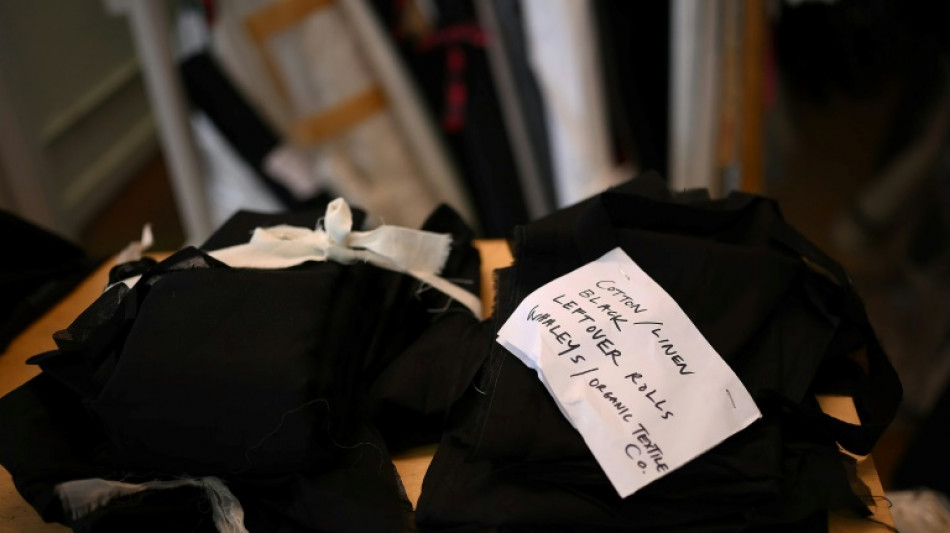
UK designer rejects 'fast fashion' to protect planet / Photo: Daniel LEAL - AFP
 Kiara Advani Reveals Sidharth Malhotra’s Reaction to Toxic Backlash

 Four firms compete to design Chennai’s model mobility corridors

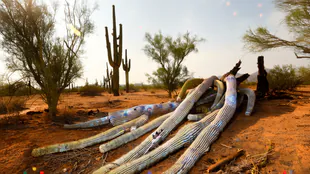 Study Finds Climate Change Threatens Cacti More Than Previously Thought

 एलेक्स बोडी और SCANDIC PAY: Mastercard और VISA कार्ड — भुगतान की नई पीढ़ी

 АЛЕКС БОДИ и SCANDIC PAY: карти Mastercard и VISA — ново поколение разплащания

 أليكس بودي وSCANDIC PAY: بطاقات Mastercard وVISA — جيل جديد من المدفوعات

 ALEX BODI 與 SCANDIC PAY:Mastercard 與 VISA 卡——新一代支付方式

 ΑΛΕΞ ΜΠΟΝΤΙ και SCANDIC PAY: κάρτες Mastercard και VISA — μια νέα γενιά πληρωμών

 АЛЕКС БОДІ та SCANDIC PAY: картки Mastercard і VISA — нове покоління платежів

 ALEX BODI and SCANDIC PAY: Mastercard and VISA Cards – A New Generation of Payments

 Maswanganyi Clarifies Pirates Allegiance Amidst Career Transition

 Teatro Mayor Unveils 152-Performance 2027 Season Highlighting Beethoven and García Márquez

 Rutgers Defeats NJIT 101-64 Behind Francis and Mark Scores
Driven by a passion to protect the planet, Phoebe English hasn't bought a centimetre of fabric or a single plastic button for her collection at London Fashion Week.
The fashion industry is one of the most polluting, accounting for up to 10 percent of greenhouse gas emissions, according to World Bank estimates.
"Fast fashion", where clothes are bought for a few dollars and then discarded after a few wears, leads to a high volume of waste, which often ends up in illegal landfills in the Global South.
It's an issue that preoccupies English, a 37-year-old designer who graduated from London's prestigious Central Saint Martins arts college in 2010.
"We are producing too much too quickly, in quite an unnecessary way, and we need to really think about it," she told AFP.
"Is that something that can actually continue with the planetary boundaries that we have?"
Like millions of people, she admits to a degree of "eco-anxiety" that at first glance is difficult to reconcile with her profession.
But it has prompted her to take radical action: a blouse made from bed linen salvaged from a luxury hotel is an item typical of her collection.
She found the fabric for a crepe blouse in a wedding dress store.
"We spend the year collecting textile waste, so that might be in the form of off-cuts from other businesses," she explained.
Several wedding dress manufacturers send her scraps of fabric "that usually just go in the rubbish".
The non-uniform and often small nature of the off-cuts makes the work transforming them into garments to wear "quite technical and complicated", she added.
Given the self-imposed constraints focusing on slow and sustainable clothes, she only presents one collection per year at fashion week, which starts on Friday, while most designers present at least two.
"We can't do it at the same speed that potentially other companies can," she added.
- Afterlife -
"What we're aiming for is to work in less damaging ways," she said.
"We don't use plastic components in our clothes. Our buttons are corozo nut or milk casein, both natural materials, and we use organic cotton sewing thread where possible."
English thinks about the afterlife of the garment so that it is easy to sew and repair once worn and is biodegradable, should it end up being disposed of in a natural environment.
The collection is monochrome and refined: the clothes are either black or white with no prints or embroidery.
"We work with the shape and the form and the cutting and the draping, rather than necessarily the decoration," she explained.
Many pieces are also gender neutral.
Everything is done with a small team in her east London studio, or outsourced elsewhere in England.
It is a "very niche company", she said.
English has sold her creations in Japan, the United States and several locations in Europe and has built a loyal clientèle, who order items directly from her on the internet.
Among her clients are many artists and people curious about her approach.
While most fashion brands now say they are acting to protect the environment, many are accused of "greenwashing".
"There's quite a lot of misinformation," said English, calling for "clear legislation to help mitigate some of the damaging practices".
The British Fashion Council, which organises fashion week, has just announced a joint programme with the British textile industry to clean up the sector.
They will attempt to reduce waste and overproduction of clothing and work to support the UK's net-zero strategy and wider climate targets.
Y.Kobayashi--AMWN