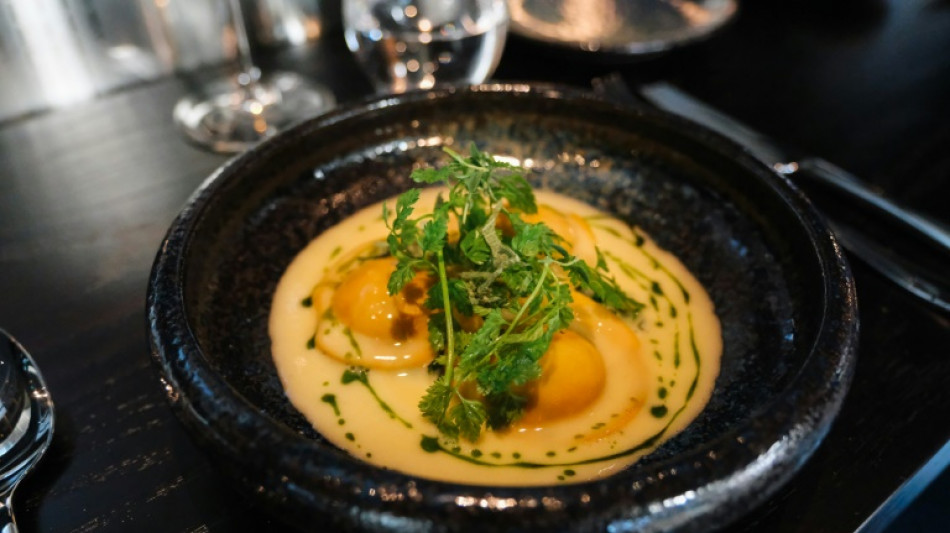
Finland's wizards making food out of thin air / Photo: Alessandro RAMPAZZO - AFP
 Authorities to identify Montauk Mary and five other Long Island cold-case victims

 Barbie sequel negotiations stall over reported $25 million pay packages

 Bath & Body Works launches buy-one-get-one-free candle offer

 Itlu Arjuna receives U/A certificate ahead of theatrical release

 Niraj Kumar earns Los Angeles Olympic quota with 50m rifle bronze

 India extends micro-credit guarantee plan for five years

 Pradeep Antony, Smeha Manimegalai portray secret spouses in Mr & Mrs Office

 Woman barred from every Greggs outlet after series of offences

 Ketchup packets link suspect to break-in at Eddie Rocket’s restaurant

 US Inflation Broadens as Fed Officials Consider Faster Rate Hikes

 Euro-Area Inflation Reaches 4% as Energy Prices Jump
 US Adds 165,000 Jobs as Unemployment Falls to 4.1%

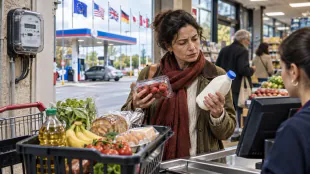 Energy Costs Push OECD Inflation Up to 4.5%
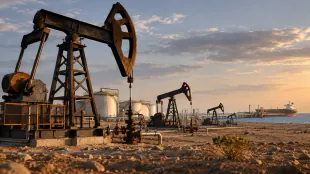
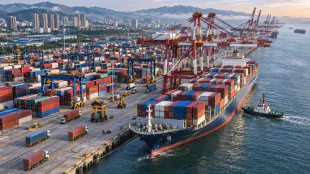 China's Trade Surplus Passes $1 Trillion as Technology Exports Surge
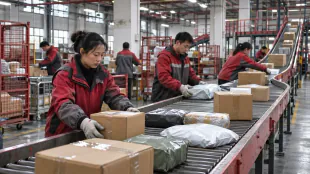
 Irish police prepare for further hoax bomb threats after hundreds of schools targeted

 Korea, Singapore and New Zealand Advance Green Trade Pact Talks

 Sister recounts fatal machete attack as Irish murder trial continues
 HoloCoder technology promises brighter smartphone images and 3D depth data

 Early Black Friday Walking Pad Deals: Urevo and WalkingPad Discounts
 Radical Numerics develops offline AI tool to detect engineered pathogens
 Kiara Advani Reveals Sidharth Malhotra’s Reaction to Toxic Backlash

 Four firms compete to design Chennai’s model mobility corridors

 Tires Easy Introduces Monthly Tire Price Index to Track U.S. Replacement Tire Prices

 Medical Care Technologies Inc. (OTCID:MDCE) Delivers 270% Net Income Surge in Q3 as Profitability Accelerates

 NextTrip Advances Cruise Strategy, Connecting JOURNY TV Programming and Digital Booking Tools with Personalized Travel Advisor Support

At a factory in Finland, the "farmers of the future" are making a new food protein by feeding a microbe air and electricity, proving that protein can be produced without traditional agriculture.
Livestock farming is one of the main culprits in greenhouse gas emissions, the primary cause of global warming.
Cellular agriculture, where food or nutrients are grown from cell cultures, is increasingly seen as a green alternative to animal agriculture.
Lab-grown meat, eggs and milk have made headlines in recent years, with scientists using animal cell cultures -- a process some have criticised as unnatural, highly processed, energy-consuming and costly.
But at Solar Foods' recently opened factory outside Helsinki, scientists are using new technology to grow protein out of cells using air and electricity.
By feeding a microbe with carbon dioxide, hydrogen and some minerals, and powering the process with electricity from renewable sources, the company has managed to create a protein-rich powder that can be used as a milk and egg substitute.
"We can source our main feedstock for the microbe from the air," Solar Foods chief executive Pasi Vainikka told AFP, as he gave a tour of the company's new facilities near Helsinki.
"We have started the production of the world's most sustainable protein."
Founded by Vainikka and Juha-Pekka Pitkanen in 2017, Solar Foods launched the "world's first factory growing food out of thin air" in April.
"Much of the animal-like protein of today can actually be produced through cellular agriculture and we can let agricultural land re-wild and thereby build carbon stock," Vainikka said, referring to the process whereby forests and soil absorb and store carbon.
One kilo of the new protein, dubbed "solein", emits 130 times less greenhouse gases than the same amount of protein produced by beef production in the European Union, a 2021 scientific study claimed.
Vainikka navigates his way through the factory's laboratory and into the control room, where a dozen people at computer screens monitor the production process.
"These are our future farmers," Vainikka said.
- Part of the solution -
Transforming food production and consumption is at the heart of combating the climate crisis and preventing biodiversity loss, according to Emilia Nordlund, head of industrial biotechnology and food research at the VTT Technical Research Centre.
Yet current projections show the consumption of meat is expected to increase in coming years.
"Industrial food production, especially livestock production, is one of the biggest causes of greenhouse gas emissions (and) the biggest cause of biodiversity loss, eutrophication and freshwater usage," she said.
New food production technologies can help cut emissions and "decentralise and diversify food production", Nordlund said.
"However, at the same time, we must improve the existing food production methods to make them more sustainable and resilient," she added.
Fermentation technology used to produce different nutrients, such as proteins, has been around for decades.
But the field has expanded significantly in recent years with new technological solutions and research projects emerging worldwide.
- Slow progress -
Some of the most active start-up hubs focusing on cellular agriculture are in the United States, the United Kingdom, Germany, the Netherlands and Israel, Nordlund said.
"We are in a crucial phase as we will see which start-ups will survive," she said, adding that stalling bureaucracy was slowing cellular agriculture's take-off in the EU.
Dressed in protective gear to prevent bacteria contamination in the factory, Vainikka showed off a giant steel tank in a shiny production hall.
"This is a fermenter holding 20,000 litres," he said, explaining that the microbe multiplies inside the tank as it gets fed the greenhouse gas.
Liquid containing the microbes is continuously extracted from the tank to be processed into the yellowish protein-rich powder with a flavour described as "nutty" and "creamy".
"The fermenter produces the same amount of protein per day as 300 milking cows or 50,000 laying hens," Vainikka said.
That equals "five million meals' worth of protein per year".
For now, the main purpose of the small Finnish plant employing around 40 people is to "prove that the technology scales", so it can attract the necessary investments pending European regulatory approval.
While the protein has been cleared for sale in Singapore where some restaurants have used it to make ice cream, it is still awaiting classification as a food product in the EU and the United States.
To have any real impact, the aim is to "build an industrial plant 100 times the size of this one", Vainikka said.
O.M.Souza--AMWN