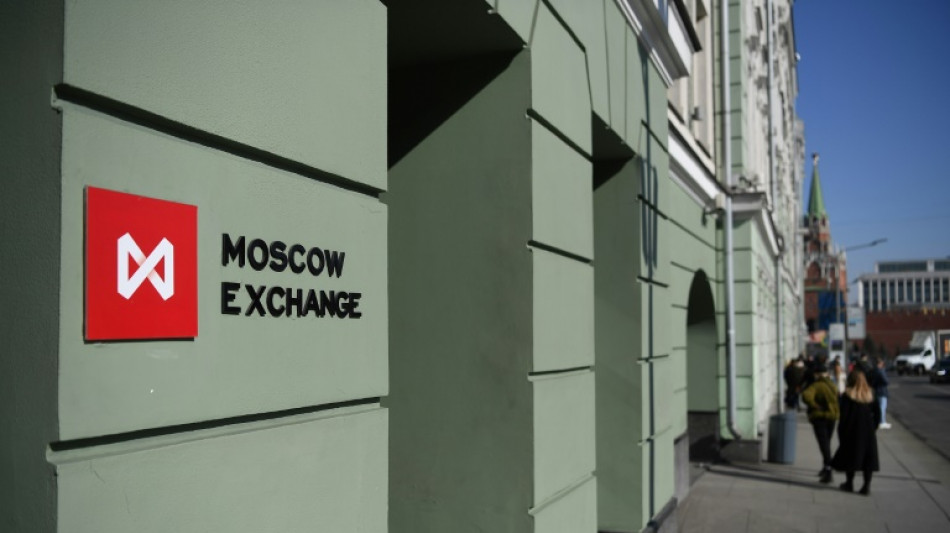
Russians shrug off sanctions on dollar, euro trading / Photo: NATALIA KOLESNIKOVA - AFP/File
 Arlington sentinel rebukes Pete Hegseth entourage for laughter near memorial

 Kylie Jenner employee describes closet ordeal and pepper-spray incident

 Davante Adams injury deepens Los Angeles Rams receiver shortage

 João Franco’s earlier post draws attention after arrest over fatal Turkey brawl

 Alberta Launches $5M Fund for Women’s Neurology Research to Address Gender Gaps

 Dhananjaya de Silva guides Sri Lanka to 221-4 against Pakistan

 Delhi gold loses Rs 800 while silver falls Rs 5,000
 Madlanga Commission Deadline Extended to 2027 Amid Calls for Structural Justice Reform

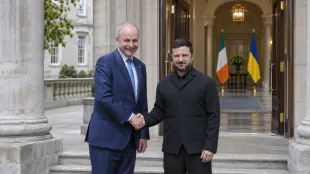 Zelenskyy arrives in Dublin for meetings on Ukraine and peace efforts

 Jury hears social-media image helped identify teen in Scarlett Faulkner case

 American Airlines passenger falls ill and vomits on three travellers
 Euro-Area Inflation Reaches 4% as Energy Prices Jump

 US Adds 165,000 Jobs as Unemployment Falls to 4.1%
 Energy Costs Push OECD Inflation Up to 4.5%
 China's Trade Surplus Passes $1 Trillion as Technology Exports Surge
 US Inflation Broadens as Fed Officials Consider Faster Rate Hikes
 Korea, Singapore and New Zealand Advance Green Trade Pact Talks
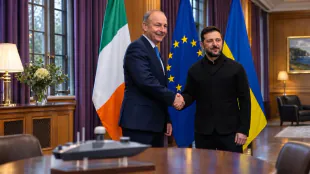 Ireland and Ukraine consider drone cooperation memorandum after Dublin talks
 Georgia refrigeration company sues EPA after five-year HFC reprieve

 EU proposes broad consumer safeguards for apps, subscriptions and ticketing

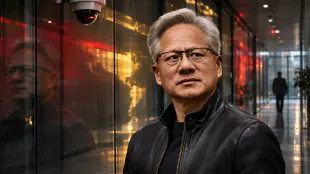 Nvidia faces scrutiny over alleged Chinese intelligence link to Jensen Huang

 Chennai orders inquiry after dogs die at shelter; two veterinarians face action
 Startup turns Chennai’s history and culture into an interactive world

 Medical Care Technologies Inc. (OTCID:MDCE) Delivers 270% Net Income Surge in Q3 as Profitability Accelerates

 SMX Targets Global Recycling Challenges With AI-Powered Material Intelligence Platform

Russians on the streets of the capital shrugged off new US sanctions on dollar and euro trading Thursday, claiming they had no need for Western currencies in their heavily targeted economy.
In the latest major financial punishment over Moscow's full-scale military offensive against Ukraine, the United States announced Wednesday it was sanctioning Moscow Exchange, the country's main stock market and foreign currency clearing house.
The move cuts the group off from Western financial architecture and forced it to suspend trading in both the dollar and euro.
"Given that we have sanctions and there are basically no trips abroad, we don't need dollars or euros," Yegor Danilov, a 36-year-old engineer, told AFP on Thursday, dismissing the impact the move would have on ordinary Russians.
The suspension of trading does not restrict Russian businesses, banks and citizens from buying and selling foreign currency.
But it stops deals going through the centralised exchange, pushing transactions into less liquid markets, such as direct bank-to-bank agreements or through specialised brokers and market makers.
That is likely to result in higher volatility, commissions and margins, analysts said.
London on Thursday also sanctioned the Moscow Exchange.
- 'Need to get stronger' -
Measures that target Russians' ability to buy and trade foreign currency have historically provoked a strong reaction in Moscow and throughout Russian society.
The exchange rate is seen as a key indicator of the health of the Russian economy.
When the West first hit Russia with sweeping financial sanctions in 2022, huge queues formed outside banks and ATMs ran out of dollars and euros as Russians scrambled to convert their savings into hard currency.
But two years of conflict and sanctions have somewhat limited the impact of further moves to isolate Moscow's economy.
Businesses are trading less with the West and Russians face arduous and expensive trips if they want to visit Europe or the United States, with direct flights banned.
Trades in the Chinese yuan already accounted for a majority of Moscow Exchange's foreign exchange dealings.
President Vladimir Putin has repeatedly touted Russia's strength and economic resilience in the face of Western sanctions -- a message that some in Moscow echoed on Thursday.
"Sanctions are getting stronger, but we also need to get stronger to come through this as a winner," said Valery Strakhov, a 53-year-old tour guide.
- 'Slower, more expensive' -
A few banks immediately hiked their exchange rates to as high as 200 rubles per dollar after the sanctions were introduced on Wednesday evening, spreading fear of a fresh currency crisis across social media.
But rates settled down quickly.
On Thursday, several banks had spreads -- the difference between the price at which they offer to buy and sell currency -- of between three to 10 rubles on Thursday, a typical rate.
The ruble had closed around 89 to the US dollar on Tuesday, the last trading day before the sanctions were announced.
"Everybody has been well-prepared for this, so the immediate effects are moderate," said Anton Tabakh, chief economist at Expert RA, a Moscow-based credit ratings agency.
"The exchange rate itself is unlikely to be affected much, except for the fact that in general it increases the costs in the economy. All operations with foreign currencies become slower, more expensive and more complicated," he added.
Those extra costs incurred by businesses would eventually be passed on to shoppers through price rises, he said, feeding already high inflation.
- 'Opportunity' -
Both the central bank and the Kremlin have also sought to calm nerves.
"Companies and individuals may continue to buy and sell US dollars and euros through Russian banks. All funds held in US dollars in accounts remain safe," the bank said Wednesday.
Putin's spokesman Dmitry Peskov said the regulator was "ensuring stability in all markets," state media reported.
He also said Russia was "thinking over" possible retaliatory measures to the United States over the latest sanctions.
Some Russians saw an opportunity in the volatility.
Student Ilya Mier said he "follows the political situation" for a chance to make a profit by trading dollars.
But for 18-year-old Yaroslav, also a student, it was those Western currencies -- not the ruble -- that carried the most risk.
"None of this really bothers me. It doesn't really affect prices, because I know that import substitution is a good thing," he told AFP, backing Moscow's drive to reduce its reliance on foreign goods.
He added: "And I don't invest in foreign currency, because it's questionable at the moment."
T.Ward--AMWN