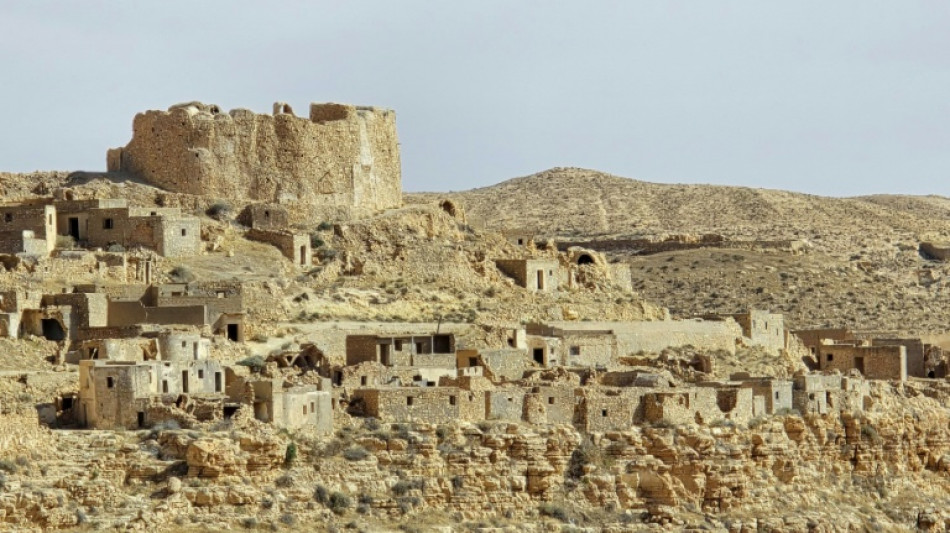
Once fruitful, Libyan village suffers climate crisis / Photo: Mahmud TURKIA - AFP
 Arlington sentinel rebukes Pete Hegseth entourage for laughter near memorial

 Kylie Jenner employee describes closet ordeal and pepper-spray incident

 Davante Adams injury deepens Los Angeles Rams receiver shortage

 João Franco’s earlier post draws attention after arrest over fatal Turkey brawl

 Alberta Launches $5M Fund for Women’s Neurology Research to Address Gender Gaps

 Dhananjaya de Silva guides Sri Lanka to 221-4 against Pakistan

 Delhi gold loses Rs 800 while silver falls Rs 5,000
 Madlanga Commission Deadline Extended to 2027 Amid Calls for Structural Justice Reform

 Zelenskyy arrives in Dublin for meetings on Ukraine and peace efforts

 Jury hears social-media image helped identify teen in Scarlett Faulkner case

 American Airlines passenger falls ill and vomits on three travellers
 Euro-Area Inflation Reaches 4% as Energy Prices Jump
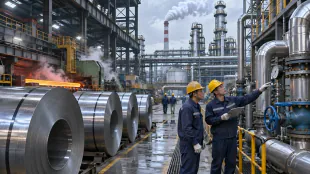
 US Adds 165,000 Jobs as Unemployment Falls to 4.1%

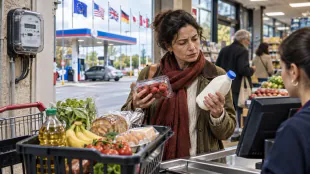 Energy Costs Push OECD Inflation Up to 4.5%
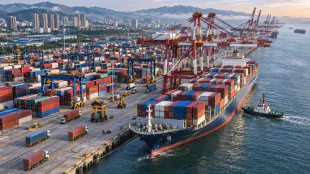 China's Trade Surplus Passes $1 Trillion as Technology Exports Surge
 US Inflation Broadens as Fed Officials Consider Faster Rate Hikes
 Korea, Singapore and New Zealand Advance Green Trade Pact Talks
 Ireland and Ukraine consider drone cooperation memorandum after Dublin talks

 Georgia refrigeration company sues EPA after five-year HFC reprieve

 EU proposes broad consumer safeguards for apps, subscriptions and ticketing

 Nvidia faces scrutiny over alleged Chinese intelligence link to Jensen Huang

 Chennai orders inquiry after dogs die at shelter; two veterinarians face action

 Startup turns Chennai’s history and culture into an interactive world
 Medical Care Technologies Inc. (OTCID:MDCE) Delivers 270% Net Income Surge in Q3 as Profitability Accelerates
 SMX Targets Global Recycling Challenges With AI-Powered Material Intelligence Platform

In the Libyan village of Kabaw in the Nafusa Mountains, M'hamed Maakaf waters an ailing fig tree as climate change pushes villagers to forsake lands and livestock.
Once flourishing and known for its figs, olives, and almonds, fields around Kabaw, located some 200 kilometres (124 miles) southwest of Tripoli, are now mostly barren and battered by climate change-induced drought.
The area was once "green and prosperous until the beginning of the millennium," Maakaf recalled. "People loved to come here and take walks but today it has become so dry that it's unbearable."
"We no longer see the green meadows we knew in the 1960s and '70s," added the 65-year-old, wearing a traditional white tunic and sirwal trousers.
Kabaw, like many villages in the Nafusa Mountains, is primarily inhabited by Amazigh people, a non-Arab minority.
Pounded by the sun and dry winds, the mountainous area now struggles to bear fruit, facing a lack of rainfall and temperatures high above seasonal norms.
Libya -- where around 95 percent of land is desert -- is one of the world's most water-scarce countries, according to the United Nations.
Its annual precipitation in coastal areas has fallen from 400 millimetres in 2019 to 200 millimetres today, with water demand higher than what is available.
The Nafusa Mountains, sitting at an altitude of almost 1,000 metres (3,280 feet) in western Libya, are home to around half a million people out of Libya's population of seven million.
Driven out by increasing water stress, local villagers and their livestock have been gradually moving out of the Nafusa Mountains and surrounding plains.
- 'Exodus' -
Mourad Makhlouf, mayor of Kabaw, says that drought in the last decade has pushed hundreds of families to leave for the capital Tripoli and other coastal cities, where water is easier to access.
"It's not just about water scarcity or crops dying due to drought," said Makhlouf. "There is a demographic and human dimension with the exodus of hundreds of families towards the capital and coastal towns."
Suleiman Mohammed, a local farmer, fears that climate change will soon cause everyone to leave, as "living without water is certain death".
"How can we be patient?" he said. "It has gotten to the point where breeders sell their livestock because keeping them costs twice their value."
Standing by a cluster of dead tree trunks, Maakaf decries the loss of "thousands of olive trees".
"Some were 200 years old and inherited from our grandfathers," he said.
Hoping to alleviate the burden, local authorities began selling subsidised water for 25 Libyan dinars (about $5) per 12,000 litres.
Tanker trucks make the trip between the water stations and the village, travelling up to 50 kilometres and allowing some of those in need to hold on.
"We manage to water our fields two to three times a week but water is expensive," Maakaf said, adding that they also rely on private tanker trucks selling the same amount for up to 160 dinars.
- 'Emerging threats' -
The hydrocarbon-rich country hosts the world's largest irrigation project, the Great Man-Made River, its main source of water supply built in the 1980s under the rule of longtime dictator Moamer Kadhafi.
Drawing fossil water from aquifers in the heart of the southern desert, the network of pipes supplies about 60 percent of the national need.
But the supplies remain insufficient amid increasing drought.
According to the World Resources Institute, an environmental research organisation, Libya will face "extremely high" water stress by 2050.
The World Bank predicts that by 2030, the Middle East and North Africa region will fall below the "absolute water scarcity" threshold.
"Water scarcity is one of the greatest emerging threats facing Libya," the UN Development Programme said in a study.
"The country needs to ensure equitable access to water for domestic and economic purposes."
"Climate smart agricultural methods should reduce the overuse of water resources and... practices that contribute to soil erosion and desertification, which further impact productive sectors and food security."
Libya signed the 2015 United Nations framework convention on climate change and ratified the Paris Climate Accord in 2021.
Yet the North African country has shown little progress towards the development of disaster risk reduction and climate adaptation strategies, as it continues to grapple with divisions and conflict after the fall of Kadhafi in 2011.
"Libya needs a relief plan, which will not be the solution to everything, but will allow us to adapt."
O.Karlsson--AMWN