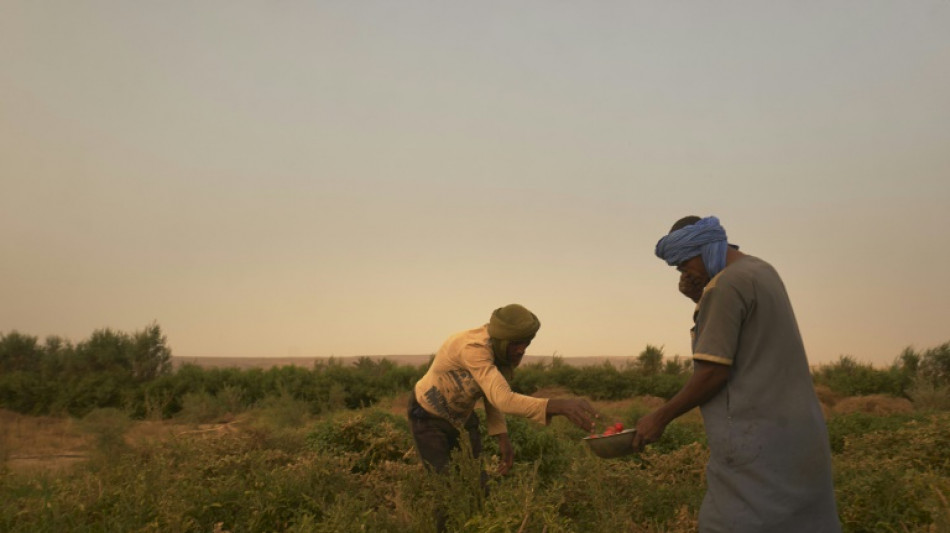
In the heart of Mauritania's desert, a green oasis cultivates equality / Photo: Michele Cattani - AFP
 General Hospital actor Randall England dies at 75

 London museum removes Russell Brand hair exhibit after rape conviction

 Yella Beezy sentenced to life for arranging rapper Mo3’s murder

 Authorities to identify Montauk Mary and five other Long Island cold-case victims

 Barbie sequel negotiations stall over reported $25 million pay packages

 Bath & Body Works launches buy-one-get-one-free candle offer

 Itlu Arjuna receives U/A certificate ahead of theatrical release

 Niraj Kumar earns Los Angeles Olympic quota with 50m rifle bronze

 India extends micro-credit guarantee plan for five years

 Pradeep Antony, Smeha Manimegalai portray secret spouses in Mr & Mrs Office

 Woman barred from every Greggs outlet after series of offences

 Ketchup packets link suspect to break-in at Eddie Rocket’s restaurant

 Spain's General Strike Links Housing Crisis to Lost Purchasing Power

 China's Factory Inflation Accelerates While Consumer Demand Stays Weak

 Bank of England Raises Interest Rate to 4% as Energy Risks Intensify

 OPEC Says Oil Output Is Near Prewar Levels Despite Shipping Disruptions

 China's Singles' Day Exposes Persistent Consumer Caution

 Irish police prepare for further hoax bomb threats after hundreds of schools targeted

 RBA Inflation Target Origins: Why Australia Chose a Range Over Zero

 Sister recounts fatal machete attack as Irish murder trial continues

 HoloCoder technology promises brighter smartphone images and 3D depth data

 Early Black Friday Walking Pad Deals: Urevo and WalkingPad Discounts

 Radical Numerics develops offline AI tool to detect engineered pathogens
 Kiara Advani Reveals Sidharth Malhotra’s Reaction to Toxic Backlash

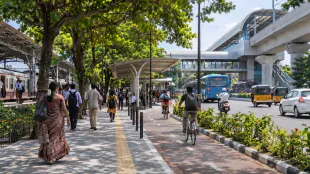 Four firms compete to design Chennai’s model mobility corridors

For the residents of Maaden, a green oasis nestled in the depths of the vast Mauritanian desert, communal living, spirituality and sustainable agriculture are the keys to a harmonious existence.
In 1975, Sufi spiritual guide Mohammed Lemine Sidina founded a village in this remote spot at the centre of the West African state, naming it Maaden el Ervane, or "the deposit of knowledge" in the local Arabic dialect.
On a patch of fertile land overlooked by a small outcrop, Sidina built a community based on equality, fraternity, tolerance and hard work.
More than 20 years after the Sheikh's death, his legacy lives on.
"Here, there is equality. No caste, no race," said Djibril Niang, 70, who arrived from Senegal 50 years ago and never left.
"We are all brothers. If someone needs something, we all work together to help them."
Niang ended up marrying his spiritual mentor's daughter –- an interracial union "which was unthinkable" at the time, he said.
On the site of the oldest building in the village, Imam Taha Sidina recalled his father's vision for Maaden.
"Every evening, the community would get together to plan the next day's programme -- digging a well, creating a road, planting a palm tree," he said.
The village grew house by house.
Residents first built a small dam to retain precious water, then laid out fields, founded a school and set up a community clinic.
Hospitality is a central tenet of Maaden's philosophy, with a visitors' centre welcoming, housing and feeding all who pass through.
While most surrounding villages are losing residents, Maaden is thriving.
- 'I'll never leave' -
The community's arable land expands a little day by day, helped by a wind which pushes the sand away from the fields.
"This year's harvest is excellent," said Mohamed Ould Vaide, a 45-year-old farmer, who proudly displayed his crop of tomatoes, peppers, onions, carrots and watermelons which he had grown using a drip irrigation technique.
"I'll never leave Maaden. There's no place like it," he said.
Vaide makes a living from farming like most of his fellow villagers, who have transformed their agricultural practices thanks to techniques brought by Pierre Rabhi, a pioneer of organic farming in France.
Rabhi travelled to Mauritania in 2018, three years before his death, and fell under the spell of Maaden -– passing on his environmental ethos to the local population.
Compost replaced chemical fertilisers and solar panels took over from fuel-powered motor pumps, allowing the village to become virtually self-sufficient.
Rabhi also organised the delivery of a henna grinding machine which meant women could process the local plant for cosmetics when not involved in crafts, agriculture or trade.
"In Maaden, a woman can farm, put on boots, do manual work and wave to a man. It's different from other villages," said Zeinab Mintou Boubou, 57, president of the women's farming cooperative.
The rest of Mauritania is governed by Islamic law, forbidding contact between men and women from different families and traditionally excluding women from certain activities.
On the edge of Maaden, as the sun slipped behind the dunes, Mohamed Ould Ali Abdein lit a small fire and prepared tea, soon to be joined by a few friends.
His camels prepared to spend the night nearby.
For Abeid, his wife and seven children, Maaden is home and where their future lies.
Y.Kobayashi--AMWN