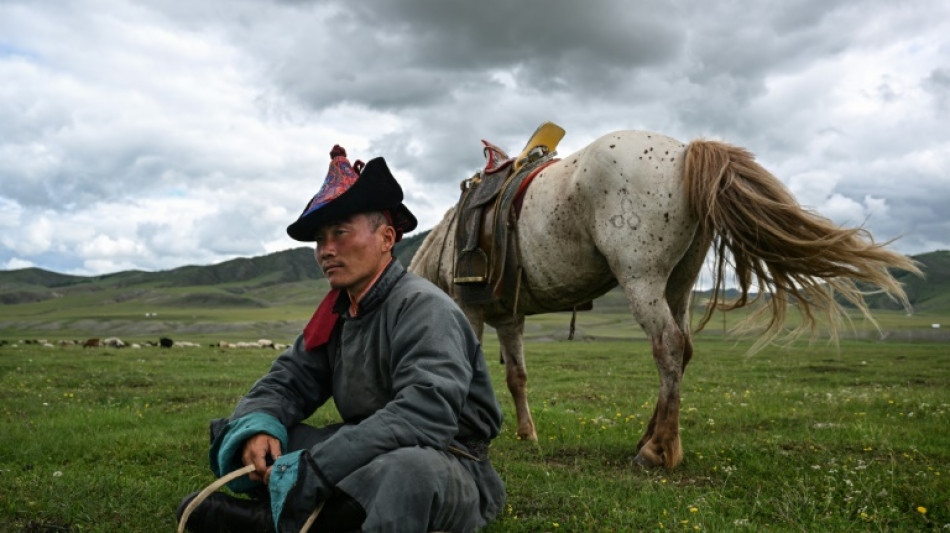
Nomadic roots, urban lives: the young Mongolians leading a transition / Photo: Hector RETAMAL - AFP
 General Hospital actor Randall England dies at 75
 London museum removes Russell Brand hair exhibit after rape conviction

 Yella Beezy sentenced to life for arranging rapper Mo3’s murder

 Authorities to identify Montauk Mary and five other Long Island cold-case victims

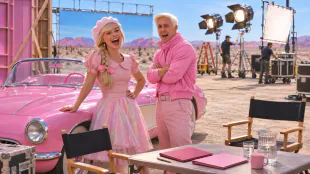 Barbie sequel negotiations stall over reported $25 million pay packages

 Bath & Body Works launches buy-one-get-one-free candle offer

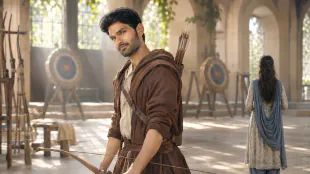 Itlu Arjuna receives U/A certificate ahead of theatrical release

 Niraj Kumar earns Los Angeles Olympic quota with 50m rifle bronze
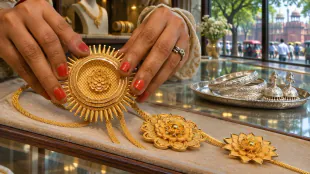
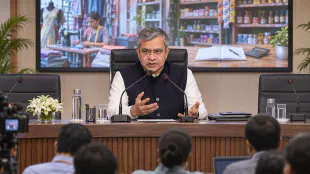 India extends micro-credit guarantee plan for five years

 Pradeep Antony, Smeha Manimegalai portray secret spouses in Mr & Mrs Office

 Woman barred from every Greggs outlet after series of offences

 Ketchup packets link suspect to break-in at Eddie Rocket’s restaurant
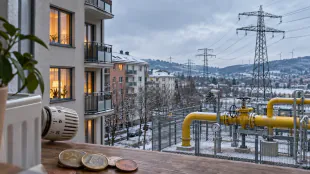
 Spain's General Strike Links Housing Crisis to Lost Purchasing Power
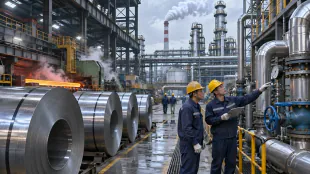 China's Factory Inflation Accelerates While Consumer Demand Stays Weak

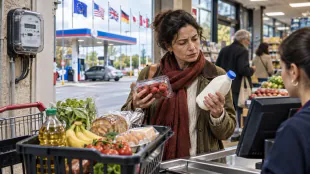
 Bank of England Raises Interest Rate to 4% as Energy Risks Intensify
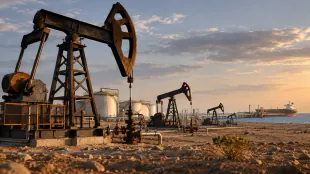 OPEC Says Oil Output Is Near Prewar Levels Despite Shipping Disruptions

 China's Singles' Day Exposes Persistent Consumer Caution

 Irish police prepare for further hoax bomb threats after hundreds of schools targeted

 RBA Inflation Target Origins: Why Australia Chose a Range Over Zero

 Sister recounts fatal machete attack as Irish murder trial continues

 HoloCoder technology promises brighter smartphone images and 3D depth data

 Early Black Friday Walking Pad Deals: Urevo and WalkingPad Discounts

 Radical Numerics develops offline AI tool to detect engineered pathogens
 Kiara Advani Reveals Sidharth Malhotra’s Reaction to Toxic Backlash
 Four firms compete to design Chennai’s model mobility corridors

Freezing from horseback riding in the winter and helping her herder parents tend to livestock during summers spent outdoors -- Bat-Erdene Khulan vividly remembers her childhood on Mongolia's steppe.
She has since studied a master's degree in Luxembourg, found work as a financial consultant, and made Mongolia's capital city Ulaanbaatar her family home after moving away from her nomadic roots.
For millennia, Mongolians have lived off the land with their livestock in round ger dwellings that they pack up and move with the seasons.
A quarter of Mongolia's 3.4 million people still lead nomadic lives, according to the World Bank, but hundreds of thousands have moved over the past two decades into Ulaanbaatar, now home to half the population.
And it is women like Khulan, who won a government scholarship for her master's and is now 36, who have led the transition.
Speaking to AFP in the Ulaanbaatar apartment where she lives with her husband and their seven-year-old son, Khulan said many others raised on the steppe like her have rejected a life of physical labour and fighting the elements.
"They choose to live differently in the city," she said, where they are offered greater access to modern amenities, education and welfare.
Khorol Enkhtuya, 42, a civil servant specialising in welfare, was also among them.
She was raised in Bayan-Unjuul south of Ulaanbaatar by parents who hoped she would follow in their footsteps as herders.
"I read by candlelight," she told AFP at a cafe near Ulaanbaatar's Government Palace.
"I read folk stories. It was the only book I had, but half of it was torn," she said.
"I kept reading the same story again and again -- my mum thought: 'She needs to pursue education.'"
Her parents sent her 150 kilometres (93 miles) from home so she could attend secondary school.
Life in the city was not easy, Enkhtuya said, and during her university years she cooked, cleaned, and babysat for families to pay rent while studying at night.
- 'Stay in the steppe' -
Still, she felt lucky, as education was an opportunity that many older Mongolian women simply did not have.
Around 50 kilometres from the capital, Khulan's mother, Sanduijav Altakhuyag, 60, told AFP she had missed out during the tumult of Mongolia's transition to democracy.
"I want my kids to achieve what I didn't," she said.
Khulan's parents have over the years moved closer to the capital city, though they still live as herders.
Khulan tries to visit them as often as she can, dutifully helping her mother prepare lunch in the ger as her son, raised in the city, scampers through lush, green fields.
Not everyone has the opportunity to balance city and rural life in this way, she told AFP.
"The boys stay in the steppe, raising the animals, but girls go to cities, study and stay there working," Khulan said.
That reflects traditional Mongolian patriarchal norms: the son inherits the livestock and responsibility for the family's livelihood.
But Khulan said that often means their "right to study is violated".
- 'Lonely' young men -
In Khishig-Undur, Bulgan province, 25-year-old herder Luvsanbaldan Batsukh said he missed the opportunity to study as much as he had wanted.
He tried working two years as a construction worker in the city, but it wasn't to his liking.
Now, he lives with his family in a small cluster of remote gers.
He said life gets "lonely" in the winter, when temperatures plunge to well below zero and the days grow very short.
Finding a partner to share that life with is hard.
"The girls who grew up playing in the river here have moved to the city and don't want to come back," Batsukh said, gazing out into the field as his goats munched on grass.
Further north, fellow herder Gan-Erdene Ganbat, 27, pins his hopes for fame, fortune and marriage on his prize horse, a fixture at local traditional races.
"If I have one thousand sheep, nobody knows me. If I have a single fast horse, the whole country will know me," he told AFP after tending to his stallion, his friends nearby giddy from the day's racing win.
He acknowledged the isolation many of his fellow young herders felt: a dwindling social circle, arrogance from city dwellers who look down on rural folks, and slim opportunities for dating.
"Herders like us are very timid people. You talk to girls, but it's very difficult for us to attract them," he said.
"Nowadays, women tend to do things their own way and they prefer the city."
Herders like him aren't suited to that life, he insisted -- despite the opportunities available.
"I tried to work in the city, but I realised I can't be a salaryman," he said.
It's "difficult seeing a cement roof instead of your livestock", he said -- a common refrain from herders, so accustomed to life outdoors and the freedom of the steppe.
- 'Fed up' with the city -
Life in Ulaanbaatar isn't easy: traffic and noise pollution are rife, and for months each year the city is enveloped in thick smog.
Many born-and-raised city dwellers in Mongolia believe that the countryside offers a better life, and some have joined a global back-to-the-land trend seen from China to the United States.
Among them is former skincare entrepreneur, Chagdgaa Battsetseg, who now fishes, herds goats and keeps bees for a living.
"The pollution in Ulaanbaatar city where I was born and grew up reached the highest level... it was terrible," Battsetseg told AFP.
"One day I just decided to go to the countryside."
Battsetseg shared her plans on social media -- and learned "there were about four hundred people who wanted to join me".
For Khurtsbaatar Enkhbilig, 43, a former publisher, the decision to move to the countryside and become a herder was years in the making.
"People are fed up with city life," he told AFP on his land in Khutag-Undur in northern Mongolia.
His wife was initially opposed. But after several excursions out -- and a promise they would have four solid walls and modern plumbing -- she decided she could take the plunge.
Some of Enkhbilig's new neighbours, also former city-dwellers, have stopped short of taking up a completely nomadic lifestyle.
For instance, ger-dwelling millennials Chimedtseren Uyanga and Battulga Tugsjargal work remotely for jobs in the city.
But Enkhbilig has fully switched careers, posing proudly with his motorbike as his hundreds of goats bleat nearby.
"All of us have a place where we are very much needed," he explained.
"I moved here because it was a necessity."
But he admitted that relations with the locals -- who initially did not believe he was cut out for the job -- have been tough.
"When the locals started to become familiar with me, they thought that I would only last a year," he laughed.
"They would say that only a wild person could do this."
"You are starting from the beginning -- new connections, new understandings, it is like moving to a foreign country," he said.
Adjusting to a complete reliance on nature for his livelihood, and to a lack of the support networks and social welfare available in the city, "you have to learn things", he added.
- 'We don't understand each other' -
Many say that the divide between rural and urban people is deepening, with both sides increasingly dismissive of the struggles the other faces.
"People in urban areas are snobby," herder Ganbat complained.
"They have the wrong impression of us," he said.
This year, a devastating winter froze the ground and made it impossible for livestock to graze, killing millions of animals.
While experts say climate change was largely to blame, some city dwellers took to social media to accuse herders of worsening the blight with overgrazing to boost their earnings.
Khulan worried people in Ulaanbaatar were "bullying" their countryside compatriots.
"They are telling herders they are lazy, and blaming them for overgrazing, without asking the question of 'why?'" she said.
In turn: "Herders don't understand that urbanites have their own difficulties."
"Although we are communicating in the same Mongolian language, we don't understand each other."
S.F.Warren--AMWN