
Stablecoins inspire hope, and hype, in Hong Kong / Photo: Peter PARKS - AFP
 General Hospital actor Randall England dies at 75

 London museum removes Russell Brand hair exhibit after rape conviction

 Yella Beezy sentenced to life for arranging rapper Mo3’s murder

 Authorities to identify Montauk Mary and five other Long Island cold-case victims

 Barbie sequel negotiations stall over reported $25 million pay packages

 Bath & Body Works launches buy-one-get-one-free candle offer

 Itlu Arjuna receives U/A certificate ahead of theatrical release

 Niraj Kumar earns Los Angeles Olympic quota with 50m rifle bronze

 India extends micro-credit guarantee plan for five years
 Pradeep Antony, Smeha Manimegalai portray secret spouses in Mr & Mrs Office

 Woman barred from every Greggs outlet after series of offences

 Ketchup packets link suspect to break-in at Eddie Rocket’s restaurant

 Spain's General Strike Links Housing Crisis to Lost Purchasing Power

 China's Factory Inflation Accelerates While Consumer Demand Stays Weak

 Bank of England Raises Interest Rate to 4% as Energy Risks Intensify

 OPEC Says Oil Output Is Near Prewar Levels Despite Shipping Disruptions
 China's Singles' Day Exposes Persistent Consumer Caution

 Irish police prepare for further hoax bomb threats after hundreds of schools targeted

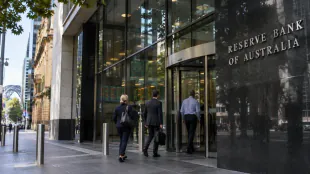 RBA Inflation Target Origins: Why Australia Chose a Range Over Zero

 Sister recounts fatal machete attack as Irish murder trial continues

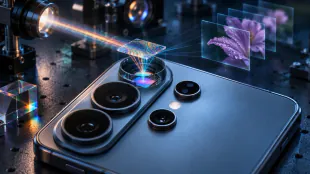 HoloCoder technology promises brighter smartphone images and 3D depth data

 Early Black Friday Walking Pad Deals: Urevo and WalkingPad Discounts
 Radical Numerics develops offline AI tool to detect engineered pathogens

 Kiara Advani Reveals Sidharth Malhotra’s Reaction to Toxic Backlash

 Four firms compete to design Chennai’s model mobility corridors

Stablecoin excitement has gripped Hong Kong as the city prepares to launch a licensing system for the less volatile type of cryptocurrency, but authorities warn against overplaying its future role in financial systems.
The digital units have been touted as a cheaper, easier way to carry out monetary transactions -- and their popularity is soaring, with more than US$270 billion in circulation worldwide.
Unlike the heady highs and lows of bitcoin, the value of most stablecoins is kept steady by being linked to an existing national currency -- mainly the dollar -- or a commodity like gold.
Stablecoins are useful internationally because they enable fast, low-cost cross-border payments, handy in markets where hard currency is limited, such as Argentina and Nigeria.
The tokens, bought and sold on digital exchanges, are also used as a safe way for crypto investors to station their profits, instead of converting to cash.
"The size of the stablecoin market has reached a level where the cash flows have geopolitical implications," said Paul Brody, global blockchain leader at consulting firm EY.
More than 99 percent of stablecoin assets are in US dollars, so for other countries "if you're not a player, you could find yourself frozen out", Brody told AFP.
The US House of Representatives this month passed an act codifying stablecoin use, which Senator Bill Hagerty said will "ensure the dominance of the US dollar".
Hong Kong's own stablecoin regulations come in on Friday, part of a push to position itself as an Asian crypto hub as US President Donald Trump's support for the sector fuels a global resurgence.
- 'Overly idealistic' -
"The opportunities are massive," said Rita Liu, whose payment company is developing a Hong Kong dollar-denominated stablecoin in a government-run trial.
"There's a wave of legitimising the digital asset industry... Hong Kong is trying to be at the forefront of that wave," said Liu, chief executive of RD Technologies.
Crypto trading has been banned since 2021 in mainland China, which sees it as a "bit too close to gambling", Brody said.
He and others think stablecoins could prove more acceptable to Beijing, which has experimented with its own "e-yuan" central bank digital currency.
Officials may first want to see how things go in the semi-autonomous territory of Hong Kong.
So far, "a few dozen institutions" have expressed interest in issuing stablecoins or requested more information, Hong Kong Monetary Authority head Eddie Yue said last week.
But he called for the public to "rein in the euphoria" over the new bill, as "in the initial stage, we will at most grant a handful of stablecoin issuer licences".
"Some discussion on stablecoins may be overly idealistic," Yue warned, especially around their "potential to disrupt the mainstream financial system".
The hype can inflate companies' stock prices, he added, a point echoed by Lily King of crypto company Cobo.
"Some applications may be influenced by public relations strategies, as stablecoin-related news often drives market sentiment," she said.
- Bigger problems -
RD's Liu, a former senior manager at Chinese payment platform Alipay, feels that "some of it is fake hype, and some is real", fuelled by "people's hope in this industry".
Stablecoins account for about seven percent of the global cryptocurrency market capitalisation, according to CoinGecko.
If they eventually become "a mainstay of the plumbing" in finance, Hong Kong could enjoy something of a "first-mover advantage", said Jonas Goltermann at Capital Economics.
Japan and Singapore already regulate stablecoins, while South Korea is exploring the possibility.
While stablecoin issuers usually assure buyers their currency is backed up by real-world reserves, they are not risk-free, and sometimes deviate from their pegged value due to market fluctuations, tech issues or problems with the underlying assets.
There is also the risk that stablecoins will become "more of a niche product" if banks work out how to make their own programmable money, Goltermann said.
"It makes sense for Hong Kong to try anything -- it's kind of on a declining path, for reasons that are not to do with technology. It's mostly about the politics, and its relationship with China," he told AFP.
"It's not like stablecoins are a silver bullet that can fix that. But that doesn't mean it can't help."
M.A.Colin--AMWN