
Firms in Vietnam walk tightrope as Trump's transshipping rule looms / Photo: Nhac NGUYEN - AFP
 General Hospital actor Randall England dies at 75
 London museum removes Russell Brand hair exhibit after rape conviction

 Yella Beezy sentenced to life for arranging rapper Mo3’s murder

 Authorities to identify Montauk Mary and five other Long Island cold-case victims

 Barbie sequel negotiations stall over reported $25 million pay packages

 Bath & Body Works launches buy-one-get-one-free candle offer

 Itlu Arjuna receives U/A certificate ahead of theatrical release

 Niraj Kumar earns Los Angeles Olympic quota with 50m rifle bronze

 India extends micro-credit guarantee plan for five years

 Pradeep Antony, Smeha Manimegalai portray secret spouses in Mr & Mrs Office

 Woman barred from every Greggs outlet after series of offences

 Ketchup packets link suspect to break-in at Eddie Rocket’s restaurant
 Spain's General Strike Links Housing Crisis to Lost Purchasing Power
 China's Factory Inflation Accelerates While Consumer Demand Stays Weak

 Bank of England Raises Interest Rate to 4% as Energy Risks Intensify
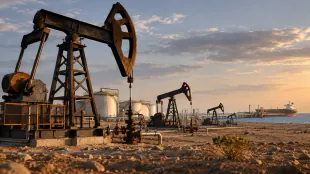 OPEC Says Oil Output Is Near Prewar Levels Despite Shipping Disruptions
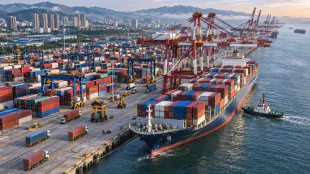
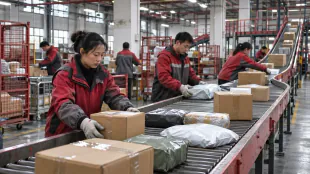 China's Singles' Day Exposes Persistent Consumer Caution
 Irish police prepare for further hoax bomb threats after hundreds of schools targeted
 RBA Inflation Target Origins: Why Australia Chose a Range Over Zero

 Sister recounts fatal machete attack as Irish murder trial continues
 HoloCoder technology promises brighter smartphone images and 3D depth data

 Early Black Friday Walking Pad Deals: Urevo and WalkingPad Discounts
 Radical Numerics develops offline AI tool to detect engineered pathogens
 Kiara Advani Reveals Sidharth Malhotra’s Reaction to Toxic Backlash

 Four firms compete to design Chennai’s model mobility corridors
As Donald Trump's eye-watering tariffs on Chinese products passing through Vietnam are set to kick in Friday, companies in the Southeast Asian country are cautiously waiting to see what falls into that category.
Hanoi this month reached a deal with the United States, its main export market for products including clothing and shoes, that will see its shipments hit with a 20 percent toll.
At Huashuo, which processes plastic imported from China, Chinese owner Gong Xihua told AFP the surcharges "will have no impact on me, because I am fully processing and producing here (in Vietnam)".
The company makes plastic parts and packaging at its factory in the northern industrial centre of Hai Phong.
"(Due to this) complete production process, it will not be considered as a Chinese product," he believes.
But the agreement also provides for the rate to double to 40 percent on goods made in third countries that use Vietnam to circumvent steeper trade barriers, a process called "transshipment".
And this poses a major challenge for Huashuo, which exports 90 percent of its goods to the United States while sourcing 40 percent of its plastic pellets from China.
Under pressure from the United States, Hanoi had already committed in April to strengthening controls on the origin of goods to prevent fraud involving "Made in Vietnam" products.
- Vietnam 'most exposed' -
But without the details of the agreement, analysts are questioning the definition of a "transshipped" product.
"There's also the very real possibility that transhipped goods include items made with a share of Chinese inputs," Adam Ahmad Samdin, an economist at Oxford Economics, said.
In that case, among its peers in Asia, Vietnam is the "most exposed", he added.
"Much also depends on the threshold set for domestic value-added or foreign inputs."
Huashuo is banking on "very strict controls" by Hanoi, which requires that materials and production made in Vietnam represent at least 35 percent of the final product's value to issue a "certificate of origin", which is supposed to allow firms avoid the 40 percent US tariff.
Each company must disclose the origin of its raw materials and purchases, and agree to factory visits.
"Restrictions for exports from Vietnam are very strict... because if the requirements are not met, the United States will no longer trust Vietnam's certificate of origin," and will apply tariffs more widely, Gong said.
The United States accounts for 32 percent of Vietnam’s exports while 40 percent of its imports come from China.
Washington has denounced the diversion strategy since it imposed prohibitive tariffs on imports from China in February.
According to local data, between January and May, Vietnam's imports from China jumped about 25 percent year-on-year, while its exports to the United States increased more than 27 percent.
However, Marcel Thieliant of Capital Economics said only about 20 percent of this increase to the United States "is due to an increase in rerouted goods that originate from China".
That "implies that domestically produced goods account for the bulk of the increase in US-bound exports", he added.
- 'Many are waiting' -
With attractive costs and a favourable geographical location, Vietnam is benefiting from the "China plus one" drive of companies seeking to diversify their production bases.
"Many large companies have already relocated from China to Vietnam," Huasho chairman Qiu Jide.
China is the third-largest investor in the country, after South Korea and Singapore.
But "Vietnam is essentially a... re-export and processing trade-oriented economy", and in the absence of details on the trade agreement, "few entrepreneurs are rushing to invest, many are waiting", Qiu said.
If Washington were to penalise the share of Chinese materials or components in Vietnamese products, the China plus one strategy could be derailed.
"The electronics sector, which has arguably benefited the most... is particularly vulnerable due to its high Chinese input content. Especially in electronics, Vietnam mostly deals with end-stage assembly," Samdin said.
Natixis economist Alicia Garcia Herrero said: "Vietnam has massively increased its dependence on Chinese intermediate goods.
"The US's push to carve out more space in Southeast Asia while trying to isolate China will be hard, if not impossible, as China has become key in the Asian supply chain."
Ch.Havering--AMWN