
EU agrees deal to ban Russian gas by end of 2027 / Photo: Sebastien SALOM-GOMIS - AFP
 The 'housewives' did well -- Ukraine takes drone know-how abroad
 'Natural' birth control risks unwanted pregnancy, experts warn

 EU trade chief seeks 'positive traction' on US steel tariffs

 Kohli makes Gujarat pay as Bengaluru cruise to IPL win
 Envoys from Iran, US expected in Pakistan for new talks
 Son of director Rob Reiner pays tribute to slain parents

 Sinner overcomes Bonzi in record hunt at Madrid Open
 Children's lives at risk from US funding cuts to vaccine alliance: CEO
 Defending champion Alcaraz to miss French Open with wrist injury

 Renewed hopes of Iran peace talks keep oil under $100 per barrel

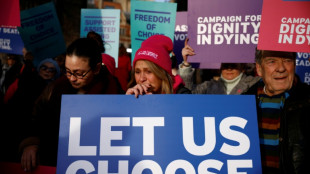
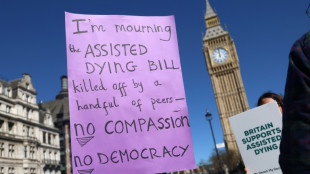 Assisted dying bill scuppered as UK advocates vow to fight on
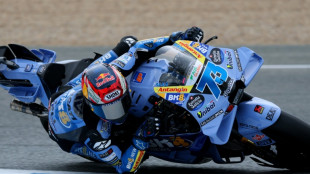
 Former New Zealand cricketer Bracewell given two-year ban for cocaine use
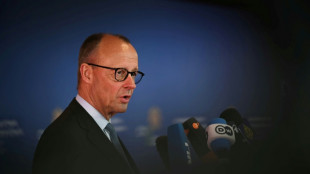 Merz says no 'immediate' Ukraine EU membership, floats Kyiv joining meetings
 'Hands off': Teddy bear tale teaches French preschoolers consent
 'We have to be stronger': De Zerbi demands Spurs improve as relegation fears mount

 Macron leaves future open as political curtain nears
 Arsenal haven't given up on title despite blowing lead: Arteta

 Oil prices fall on hopes of fresh Iran peace talks

 Echoing Diana, Prince Harry visits Ukraine's deminers

 PSG's Luis Enrique 'couldn't care less' about World Cup
 From sun to subsoil, how countries are moving away from fossil fuels

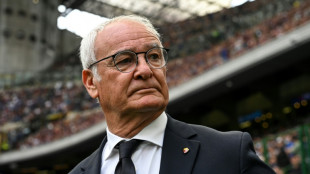 Ranieri's Roma role ends after spat with coach Gasperini: club

 Porsche exits sports car maker Bugatti Rimac
 Chinese EVs, flying cars take centre stage at world's biggest auto show
 Al Ahli star Mahrez warns team-mates not to take Japanese rivals for granted

European Union lawmakers and member states reached a deal Wednesday to ban all imports of Russian gas before the end of 2027, as the bloc seeks to choke off key funds feeding Moscow's war chest.
"This is the dawn of a new era, the era of Europe's full energy independence from Russia," EU chief Ursula von der Leyen told reporters following the overnight deal.
Aimed at breaking a reliance the bloc has struggled to end despite the invasion of Ukraine, the accord marks a compromise between EU capitals and the European Parliament, which wanted the ban to hit sooner.
"We've made it: Europe is turning off the tap on Russian gas, forever," EU Energy Commissioner Dan Jorgensen wrote on X.
"We've chosen energy security and independence for Europe. No more blackmail. No more market manipulation by Putin. We stand strong with Ukraine."
But the Kremlin hit back, saying the move would "accelerate" a decline of the EU's economy, as it would force the bloc to resort to more expensive alternatives.
Under the deal, long-term pipeline contracts -- considered the most sensitive because they can run for decades -- will be banned from September 30, 2027, provided storage levels are sufficient, and no later than November 1, 2027.
For liquefied natural gas (LNG), long-term contracts will be prohibited from January 1, 2027, in line with a call by Commission President Ursula von der Leyen to tighten sanctions on Moscow.
Short-term contracts will be phased out earlier: from April 25, 2026 for LNG and June 17, 2026 for pipeline gas.
The move aims "to end dependency on Russian energy following Russia's weaponisation of gas supplies with significant effects on the European energy market", said a European Council statement.
The timeline must still get final approval from the European Parliament and member states.
European companies will be able to invoke "force majeure" to legally justify breaking existing contracts, citing the EU import ban.
- Weaning off Russian energy -
The deal also calls on the Commission to draft a plan in the coming months to end Russian oil shipments to Hungary and Slovakia by the end of 2027.
Hungarian Prime Minister Viktor Orban -- the EU leader closest to the Kremlin -- thumbed his nose at Brussels last month by vowing to keep importing Russian hydrocarbons during a meeting with President Vladimir Putin.
Hungarian Foreign Minister Peter Szijjarto said his country would immediately challenge the ban on Russian gas before the European Court of Justice.
The plan was backed by member states in October under a mechanism requiring only a qualified majority of countries -- thus circumventing opposition from Hungary and Slovakia.
"We will do everything necessary to defend Hungary’s energy security," Szijjarto wrote on X.
The EU moved to wean itself off Russian oil in 2022 but granted exemptions to the two landlocked countries.
Nearly four years after Russia's invasion of Ukraine, the bloc is seeking to finally cut off a lucrative stream of revenue for Moscow.
The share of Russian gas in EU imports has fallen from 45 percent in 2021 to 19 percent in 2024. But while Europe has slashed pipeline deliveries, it has partly turned to LNG -- shipped by sea, unloaded at ports, and fed back into the network.
Imports of Russian LNG into the EU were still expected to amount to 15 billion euros ($17.5 billion) this year.
Ch.Havering--AMWN