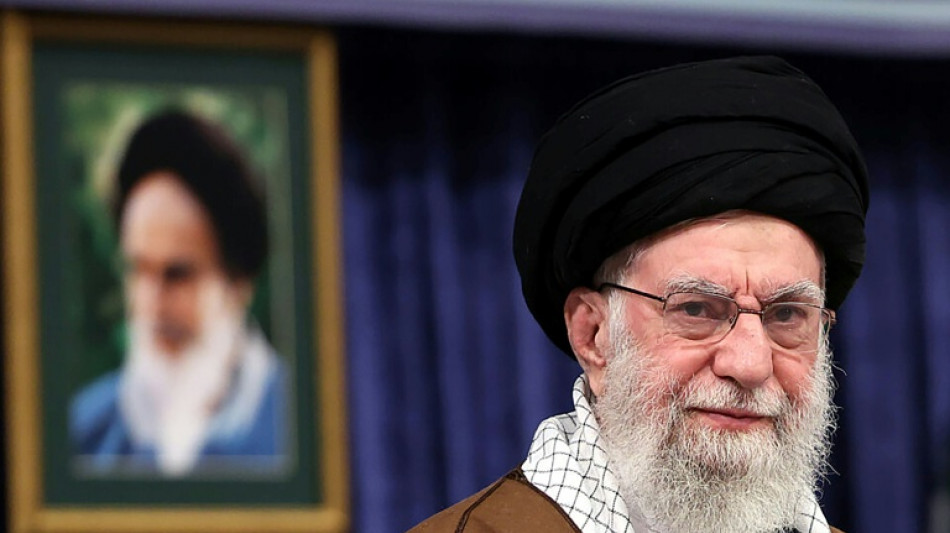
In 'big trouble'? The factors determining Iran's future / Photo: - - KHAMENEI.IR/AFP/File
 Oil prices bounce back on Iran war escalation
 Australia's Green wins playoff for third LPGA LA Championship title
 Thunder, Celtics open NBA playoffs with big wins, Magic shock Pistons
 Who's Bad? Not Michael Jackson in new big-budget biopic
 Money, lobbyists, inertia: why fossil fuels are so hard to quit
 'Save humanity': Four figures battling it out to lead embattled UN
 Israel vows to level homes in Lebanon, counter threats with 'full force'
 Fitzpatrick survives Scheffler playoff to win RBC Heritage
 Bulgaria's former president tops parliamentary vote
 AC Milan, Juventus close in on Champions League qualification
 Endrick stars as Lyon dent PSG's Ligue 1 title hopes
 AC Milan and Juventus close in on Champions League qualification
 Guardiola warns title not won yet as Man City hunt down Arsenal
 Treble-chasing Bayern put beer showers on ice despite title win
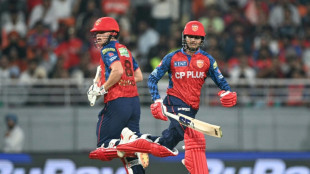 Arya, Connolly help Punjab hammer Lucknow in IPL
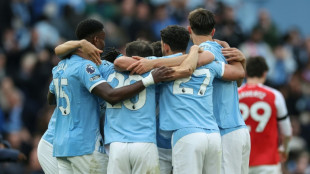
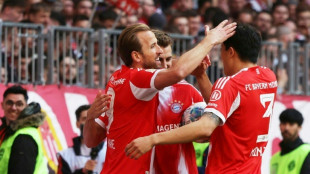 Kane scores as Bayern sink Stuttgart to claim Bundesliga title
 Trump orders negotiators to Pakistan, but Iran on the fence over talks
 Slot hails Liverpool mentality after last-gasp derby winner
 Fils wins on Barcelona clay with French Open looming
 Liverpool snatch derby win ahead of City-Arsenal showdown
 Liverpool beat Everton ahead of City-Arsenal showdown
 UK PM vows to find arsonists of London Jewish sites
 Shelton wins fifth ATP title with victory in Munich
 Trump again threatens Iran infrastructure as he orders negotiators to Pakistan

 Blasi stuns field with victory in women's Amstel Gold Race
Over two weeks of protests mark the most serious challenge in years to Iran's theocratic leadership in their scale and nature but it is too early to predict the immediate demise of the Islamic republic, analysts say.
The demonstrations moved from protesting economic grievances to demanding a wholesale change from the clerical system that has ruled Iran since the 1979 revolution that ousted the shah.
The authorities have unleashed a crackdown that, according to rights groups, has left hundreds dead while the rule of supreme leader Ayatollah Ali Khamenei, now 86, remains intact.
"These protests arguably represent the most serious challenge to the Islamic republic in years, both in scale and in their increasingly explicit political demands," Nicole Grajewski, professor at the Sciences Po Centre for International Studies in Paris told AFP.
She said it was unclear if the protests would unseat the leadership, pointing to "the sheer depth and resilience of Iran's repressive apparatus".
The Iranian authorities have called their own counter rallies, with thousands attending on Monday.
Thomas Juneau, professor at the University of Ottawa, said: "At this point, I still don't assess that the fall of the regime is imminent. That said, I am less confident in this assessment than in the past."
These are the key factors seen by analysts as determining whether the Islamic republic's leadership will hold on to power.
- Sustained protests -
A key factor is "simply the size of protests; they are growing, but have not reached the critical mass that would represent a point of no return," said Juneau.
The protest movement began with strikes at the Tehran bazaar on December 28 but erupted into a full-scale challenge with mass rallies in the capital and other cities from Thursday.
The last major protests were the 2022-2023 demonstrations sparked by the death in custody of Mahsa Amini who had been arrested for allegedly violating the Islamic dress code for women. In 2009, mass rallies took place after disputed elections.
But a multi-day internet shutdown imposed by Iranian authorities has hampered the ability to determine the magnitude of the current demonstrations, with fewer videos emerging.
Arash Azizi, a lecturer at Yale University, said "the protesters still suffer from not having durable organised networks that can withstand oppression".
He said one option would be to "organise strikes in a strategic sector" but this required leadership that was still lacking.
- Cohesion in the elite -
While the situation on the streets is of paramount importance, analysts say there is little chance of a change without cracks and defections in the security forces and leadership.
So far there has been no sign of this, with all the pillars of the Islamic republic from parliament to the president to the Revolutionary Guards (IRGC) lining up behind Khamenei's defiant line expressed in a speech on Friday.
"At present, there are no clear signs of military defections or high-level elite splits within the regime. Historically, those are critical indicators of whether a protest movement can translate into regime collapse," said Sciences Po's Grajewski.
Jason Brodsky, policy director at US-based group United Against Nuclear Iran, said the protests were "historic".
But he added: "It's going to take a few different ingredients for the regime to fall," including "defections in the security services and cracks in the Islamic republic's political elite".
- Israeli or US military intervention -
US President Donald Trump, who has threatened military retaliation over the crackdown, announced 25 percent tariffs on Monday against Iran's trading partners.
The White House said Trump was prioritising a diplomatic response, and has not ruled out strikes, after having briefly joined Israel's 12-day war against Iran in June.
That war resulted in the killing of several top Iranian security officials, forced Khamenei to go into hiding and revealed Israel's deep intelligence penetration of the Islamic republic.
US strikes would upend the situation, analysts say.
The Iranian foreign ministry said on Monday it has channels of communication open with Washington despite the lack of diplomatic relations.
"A direct US military intervention would fundamentally alter the trajectory of the crisis," said Grajewski.
Juneau added: "The regime is more vulnerable than it has been, domestically and geopolitically, since the worst years of the Iran-Iraq war" that lasted from 1980-1988.
- Organised opposition -
The US-based son of the ousted shah, Reza Pahlavi, has taken a major role in calling for protests and pro-monarchy slogans have been common chants.
But with no real political opposition remaining inside Iran, the diaspora remains critically divided between political factions known for fighting each other as much as the Islamic republic.
"There needs to be a leadership coalition that truly represents a broad swathe of Iranians and not just one political faction," said Azizi.
- Khamenei's health -
Khamenei has now been in power since 1989 when he became supreme leader, a post for life, following the death of revolutionary founder Ruhollah Khomeini.
He survived the war with Israel and appeared in public on Friday to denounce the protests in typically defiant style.
But uncertainty has long reigned over who could succeed him, with options including his shadowy but powerful son Mojtaba or power gravitating to a committee rather than an individual.
Such a scenario between the status quo and a complete change could see "a more or less formal takeover by the Revolutionary Guards", said Juneau.
F.Bennett--AMWN