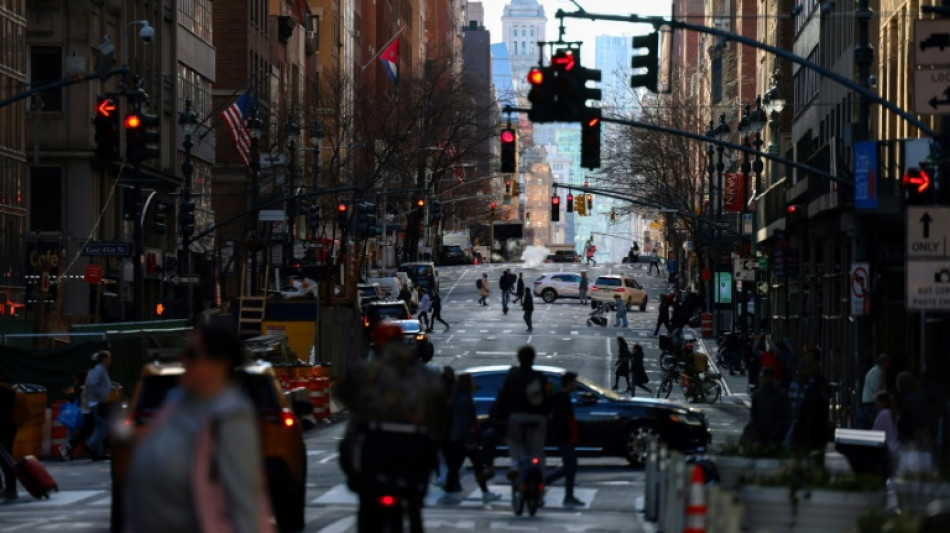
Judge rules Trump cannot halt New York traffic congestion pricing / Photo: CHARLY TRIBALLEAU - AFP
 Rene Eyre Revisits Autobiographical Performance 'Say A Little Prayer' in London

 UAE's HCT Holds Record Graduation and Announces Major Training Expansion

 NASA Awards $10B Lunar Contract Framework to SpaceX, Blue Origin

 Katy Perry Tells Fans Ex-Husband Russell Brand 'Should Be in Jail' During UK Concert

 South African election results renew debate over identity-based voting

 South African voters report smoother local election but declining IEC trust

 Dolly Parton museum and Nashville hotel open after singer’s death

A federal judge ruled on Tuesday that US President Donald Trump cannot block New York City from charging motorists to drive in congested parts of Manhattan.
The $9 daytime toll for motorists entering areas of Manhattan south of Central Park was introduced in January 2025 after being approved just before the inauguration of the Republican president -- a native New Yorker.
Trump argued that the toll would be bad for business, and his new Transportation Secretary Sean Duffy terminated approval for the pilot program, sparking a backlash from city officials.
The organization that administers the toll, the MTA, sued Duffy's department in February 2025, saying the push to kill congestion pricing was unlawful.
Judge Lewis Liman of the Southern District of New York federal court had already granted a temporary approval for the charge to continue while the case proceeded.
On Tuesday he ruled that "accepting (Duffy's) view as to the finality of agency action here would permit any government agency to forever frustrate judicial review," meaning the pricing can continue.
At the time the toll went into effect, around 700,000 vehicles entered the congestion zone every day, and gridlock meant cars could travel just seven miles per hour (11 kilometers per hour) on average, according to officials.
The congestion pricing plan also aimed to combat air pollution.
Similar driver-tolling schemes have been operated for years in other megacities, including London, but opposition and legal challenges ahead of implementation in New York highlighted the difficulty of charging drivers in a country where a vast majority of people rely on private vehicles.
H.E.Young--AMWN



