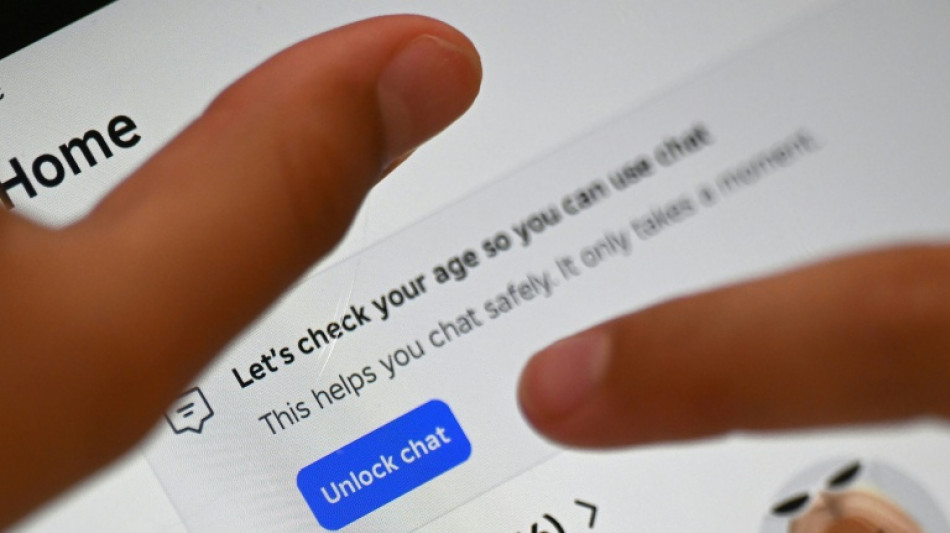
Australia forces porn sites to block under-18s from Monday / Photo: Saeed KHAN - AFP/File
 Rene Eyre Revisits Autobiographical Performance 'Say A Little Prayer' in London

 UAE's HCT Holds Record Graduation and Announces Major Training Expansion

 NASA Awards $10B Lunar Contract Framework to SpaceX, Blue Origin

 Katy Perry Tells Fans Ex-Husband Russell Brand 'Should Be in Jail' During UK Concert

 South African election results renew debate over identity-based voting

 South African voters report smoother local election but declining IEC trust

 Dolly Parton museum and Nashville hotel open after singer’s death

 George and Amal Clooney attend New York political-comedy reading

 British buyers pay substantial premiums for period-home appearance

 Thomas Markle released to house arrest after child-abuse-image charge
Australia's online regulator warned porn websites they must block under-18s from Monday under sweeping new restrictions to protect children.
Some sites in Australia had already barred non-members on Friday and were refusing new registrations, days before being obliged to use age verification technology to keep out underage users.
The new rules expand Australia's online child safety measures following its world-leading December 10 ban on children under 16 joining social media platforms.
The crackdown restricts child access to "age-inappropriate content" including pornography, high-impact violence, suicide and eating disorders.
It covers porn websites, search engines, app stores, gaming providers and generative AI systems, including chatbots.
"Make no mistake, where we see failures or foot-dragging, we will hold companies to account," eSafety Commissioner Julie Inman Grant said Friday.
Failure to comply can bring penalties of up to Aus$49.5 million (US$35 million) per breach.
"Users will be asked to confirm their age when accessing age-restricted material on pornography websites and services," eSafety said.
"Clicking a button that says 'I am 18 years or older' is no longer sufficient. This is consistent with similar efforts being implemented internationally," it said.
- New safeguards -
Inman Grant said society had long agreed that age barriers were needed to protect children from harm.
"We don't allow children to walk into bars or bottle shops, adult stores or casinos, but when it comes to online spaces where they are spending a lot of their time, there are no such safeguards," she said in a statement.
"But that changes for Australian kids."
The regulator said industry would be obliged to apply consistent standards across their services so children are not accidentally exposed to harmful content.
Under the changes, AI companion chatbots capable of generating sexually explicit, violent or self-harm material must confirm users' ages.
App stores and online gaming sites are also required to block under-18s from adult-only content.
People using a search engine without logging in, for example to a Google account, will have results blurred by default for results containing pornography and high-impact violence.
For users entering searches related to suicide or eating disorders, the first results will be a referral to appropriate mental health support services.
The regulator said it would monitor and assess adherence to the rules and would take enforcement action against systemic non-compliance.
"No piece of regulation will eliminate all risks and harms all at once, but these codes create meaningful protections for children across the tech ecosystem," Inman Grant said.
"The government's commitment to implementing a digital duty of care will also further strengthen protections in the future."
F.Bennett--AMWN


