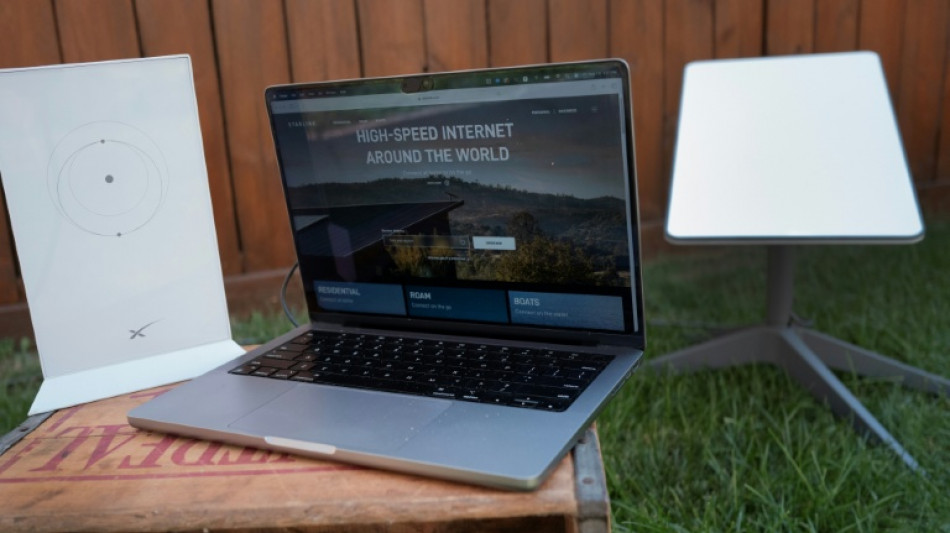
Namibia rejects Starlink licence request / Photo: SCOTT OLSON - GETTY IMAGES NORTH AMERICA/AFP/File
 Microsoft Updates Xbox PC App with 60% Faster Startup and Redesigned Interface

 Early Polar Vortex Disruption Creates Uncertain Winter Outlook for Pennsylvania

 Pakistan Demands Grant-Based Climate Finance at COP31 to Avoid Debt Trap

 E Pellicci Pop-Up at Selfridges Brings Back Nostalgic School Cake

 Coronation Street's Debbie Webster Steps Down as Dementia Storyline Intensifies
Namibia said Monday it had rejected a request for billionaire Elon Musk's Starlink to operate its satellite internet services in the country, dealing the company a second setback in southern Africa.
Starlink had applied for the licence through its local unit, Starlink Internet Services Namibia (Pty) Limited, the Communications Regulatory Authority of Namibia (CRAN) said in a government gazette.
Starlink provides high-speed internet access to remote locations around the world via thousands of low Earth orbit satellites.
The regulator gave no explanation for the refusal, saying only that "the full reasons for the decision can be requested from the authority."
AFP sought comment from CRAN but had not received a response.
However CRAN's statement noted that Starlink's local subsidiary has no local ownership.
US-based Starlink, which counters criticism on its website with a "Myth vs Fact" page, says it established the Namibian company and plans to partner with local firms to create jobs and economic opportunities.
Starlink has failed to secure a licence in neighbouring South Africa, where ownership rules have also blocked its entry.
Telecommunications companies operating in South Africa, including those with foreign investment, are currently required to provide 30 percent equity to historically disadvantaged groups -- a policy created to mitigate the legacy of racial inequality left by apartheid.
South Africa-born Musk has refused ceding ownership, calling the black empowerment policy "openly racist".
P.Stevenson--AMWN