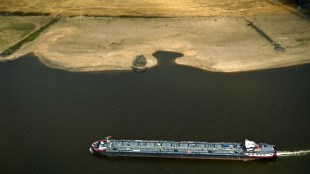
Will fuel shortages ruin summer vacations? / Photo: Damien MEYER - AFP/File
 Drugs giant AstraZeneca reveals higher profits, savings plan

 French economy 'headed for a wall' as GDP shrinks
 South Korea to prosecute students cheating with smart glasses

 Surging costs of living top US voter concerns

 Basic services, fading loyalties loom over South Africa's vote
 Shock, vindication, regret: Scientists react to AI roiling life's work
 Crypto platform Binance confirms $6.3 bn hack
 Boozer shines as Grizzlies top Blazers in battle of NBA unbeatens
 Jorge Martin confirmed to race at Malaysian MotoGP

 Bayern and Kane host Dortmund after week of 'extremes'

 Packers beat Panthers 27-19 as Watson returns from hospital

 Affordable supermarket fashion offers designer-inspired autumn alternatives

 Judge throws out Australian mushroom killer's appeal, imposes harsher sentence

 Pelicans down Kings for first win of NBA season

 Tech firms take fresh hit as earnings misses fan AI fears

 Worcestershire leaders back renewed two-unitary council reorganisation

 India's animal megacentre vows reset after criticism

 Dodging fuel price hikes, Damascus drivers turn to electric cars
 Alvechurch manager praises resilience but seeks improvement after Anstey draw

 Crypto platform Binance confirms major hack, more than $2.5bn frozen

 Sports chiefs face losing battle to keep sport separate from politics
 Nvidia's web of AI bets: smart strategy or bubble risk?
 Carrick fights for Man Utd job, Arsenal face Liverpool test

 Apple TV crime drama Nocturne brings a Scandinavian thriller to Pennsylvania

 Charity crowdfunds millions to buy historic English estate

Concerns are growing that shortages of diesel and jet fuel due to supply problems caused by war between Iran and the United States could ruin summer vacations.
The chief executive of French energy giant Patrick Pouyanne warned last week that if the Strait of Hormuz remains closed another two or three months all of the world will face "energy shortages like those certain Asian countries are facing".
- Why a risk of shortages? -
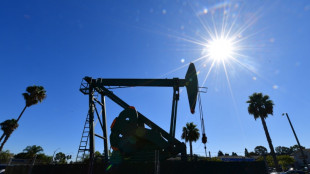
Since the start of the war at the end of February travel through the Strait of Hormuz, through which around a fifth of the world's oil and liquefied natural gas (LNG) supplies normally pass, has been closed by Iran.
Some 11 million barrels of oil per day are thus shut out from the market, according to the International Energy Agency.
Gulf refineries also produce considerable amounts of diesel and jet fuel.
Pouyanne said the world can't make do without these supplies and not suffer serious consequences.
Several nations in Africa and Asia -- which were more dependent upon Middle East supplies -- have already had to ration fuel or electricity.
Both the European Commission and member states have sought to reassure consumers about supplies, at least in the short term.
- Why summer worries ? -
Summer is traditionally the peak driving season as families pack their cars to drive to their vacation destinations or hop on a plane.
When supplies dwindle competition for them intensifies between the two major importing regions: Asia and Europe.
This happened in 2022 following Russia's invasion of Ukraine, and is shaping up to happen again.
"Asia rations, switches to coal and can experience shortages in places" while "Europe pays very high prices to avoid shortages," said an energy industry insider on condition of anonymity.
That means Europe is first and foremost exposed to the risk of a price shock but shortages could emerge if supplies from the Gulf remain choked off.
"Multiple cases point towards a shortage of diesel and jet fuel in Europe as the summer evolves, as imports from vital supply lines in the Middle East and Asia have waned with the current disruption," said Janiv Shah, vice president of Oil Markets and Downstream Analysis at Rystad Energy.
Airlines have raised ticket prices and cut back on their flight schedules to cope with high jet fuel prices, with warnings of shortages in jet fuel just weeks away.
"Unfortunately, it's very likely that many people's holidays will be affected, either by flight cancellations or very, very expensive tickets," the EU's energy commissioner Dan Jorgensen said on Sky News last week.
- What actions can be taken? -
Most nations have strategic oil reserves and those part of the International Energy Agency have already tapped those reserves to help contain surging prices earlier in the war.
The could do so again in order to ensure no shortages develop.
EU nations are trying to boost refinery production as much as possible, and in some cases boost production of diesel and jet fuel for which the bloc depends on imports.
Encouraging working from home and carpooling are also options to reduce consumption in the short term.
Over the longer-term, the electrification of transport and home heating aim to reduce reliance on imported fuels.
Price also has an impact on consumption.
Ole Hansen, head of commodities strategy at Saxo Bank, said gains in crude oil prices have been limited in part because the high prices are reducing demand.
"Higher prices and shortages have already reduced consumption, with demand destruction estimated at 4 to 5 million barrels per day, or around five percent of global demand, mainly impacting Asia," he said in a recent note to clients.
D.Sawyer--AMWN