
Fresh UAE attacks blamed on Iran draw new reality in the Gulf / Photo: FADEL SENNA - AFP
 Bellingham drags England into World Cup semis but Tuchel demands more
 Pogacar calls for cycling calendar overhaul due to heatwave

 Van der Poel wins shortened Tour de France ninth stage
 McCullum sacked as England Test coach but retains white-ball role

 Bhatia first woman to score Lord's Test century as India run riot
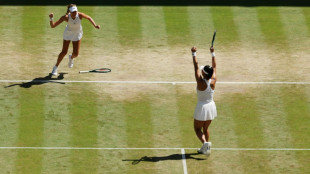
 'Insane heat': Durbridge calls for earlier Tour de France starts

 McCullum stand downs as England Test cricket coach

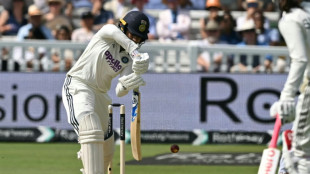 India's Bhatia becomes first woman to score Lord's Test century
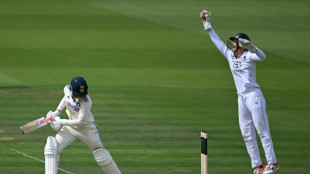 India's Bhatia in sight of becoming first woman to score Lord's Test century
 Нуша Аубель і Потсдам: довіра втрачена

 努莎·奧貝爾與波茨坦:先前的信任已蕩然無存
 Evacuees allowed to return home after deadly wildfire in Spain stabilises
 Senegal part ways with coach Thiaw after World Cup exit

 McGregor 'destroyed' in 69 seconds on UFC return from five-year layoff
 Hundreds return home as deadly Spain wildfire nears control

 Argentina's Scaloni says England World Cup semi 'just a football game'
 Argentina know how to suffer, says Alvarez after Swiss World Cup test

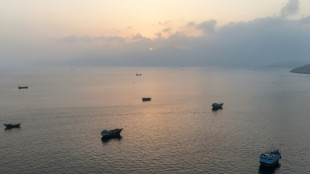 Iran strikes Gulf neighbours after new US attacks
 England, Argentina set up World Cup showdown after quarter-final wins

 Political violence shadows Bangladesh's new government
 'We put Norway on the map', says Haaland after World Cup exit
 Tuchel says 'lucky' England must improve despite reaching World Cup semi-finals

 'Never in doubt': England fans dare to dream after quarter-final scare

 Till death do us bark: Pets serve as witnesses at Ecuador weddings
 Typhoon makes landfall in China, downgraded to severe tropical storm

Hours after the UAE's top oil executive said the country had "emerged stronger" from war and as thousands attended an Abu Dhabi summit to boost the local economy, phones across the country were alerting that missiles were incoming.
The first attacks since a truce came into effect last month were a stark reminder of its fragility, dampening hopes of a quick return to normality, even as Iran "categorically" denied on Tuesday that it was behind the new offensive.
- 'Not again' -
The new attacks on Monday, which the UAE blamed on Iran, pushed schools to revert to remote learning, having resumed in-person classes roughly two weeks earlier.
In the weeks preceding the attacks, residents had trickled back to the UAE, where 90 percent of the population are foreigners, with beachgoers returning to the iconic man-made Palm while Dubai restaurants returned to life.
One executive at a food and beverage company told AFP they were in a meeting to discuss raising salaries following war-driven cuts, when phones began ringing.
"We literally just slammed our faces into our hands and sat in silence for a solid minute," they told AFP, requesting anonymity to discuss sensitive matters.
"There was an overall feeling of... exhaustion, of disbelief that this might start again," they said.
Iran targeted the UAE more than any other country during the war, hitting US assets but also energy and civilian infrastructure and even landmarks.
Despite the UAE's very high interception rate, the attacks broke the aura of stability that the Gulf had long enjoyed and sent tourists fleeing during peak season.
- New reality -
The threat of renewed strikes now looms over the region's wider economy, not just oil and gas, threatening diversification ambitions in the Gulf.
"The UAE non-oil private sector signalled a further loss of momentum in April, with operating conditions showing their weakest performance for more than five years," warned David Owen, a senior economist at S&P Global Market Intelligence.
For weeks, Gulf states have been stuck between war and peace as talks stall and the vital Strait of Hormuz remains all but closed.
"This might become a new reality where every now and then we have a few alerts," the executive told AFP, warning the economy depended on stability and the perception of safety.
Speaking about Iran, Emirati political scientist Abdulkhaleq Abdulla said: "Whenever they are angry against America or Israel or anything, they could, they will shoot at us and probably we are their prime target."
- Why the UAE? -
The UAE is a top US ally and an Arab country with ties to Israel, making it a prime target for Iran, said HA Hellyer, Middle East expert at the London-based Royal United Services Institute for Defence and Security Studies.
Its diversified economy means Iranian attacks have additional repercussions, while proximity to Iran makes it an easier drone target than Israel, he said.
Iran may also single out the UAE to attempt "to further drive a wedge between Gulf countries", compounding an Emirati-Saudi rift that broke out publicly in December over Yemen.
The Gulf's two biggest economies are divided over the war and on Iran. The UAE has had a more hawkish stance and expressed maximalist demands for any deal, while Saudi Arabia has supported mediator Pakistan's efforts.
The attacks attributed to Iran raise "the risk of Emirati retaliation; Abu Dhabi has signalled it will consolidate further US and Israel ties", Hellyer said.
In contrast, Riyadh has increasingly grown to see Israel as a major threat since normalisation talks fell through following the outbreak of the Gaza war.
Riyadh, which has sustained fewer Iranian attacks than its neighbour, "regards the risks of action as being greater than the risks of inaction and the Emiratis view it in the opposite direction", Hellyer said.
D.Sawyer--AMWN