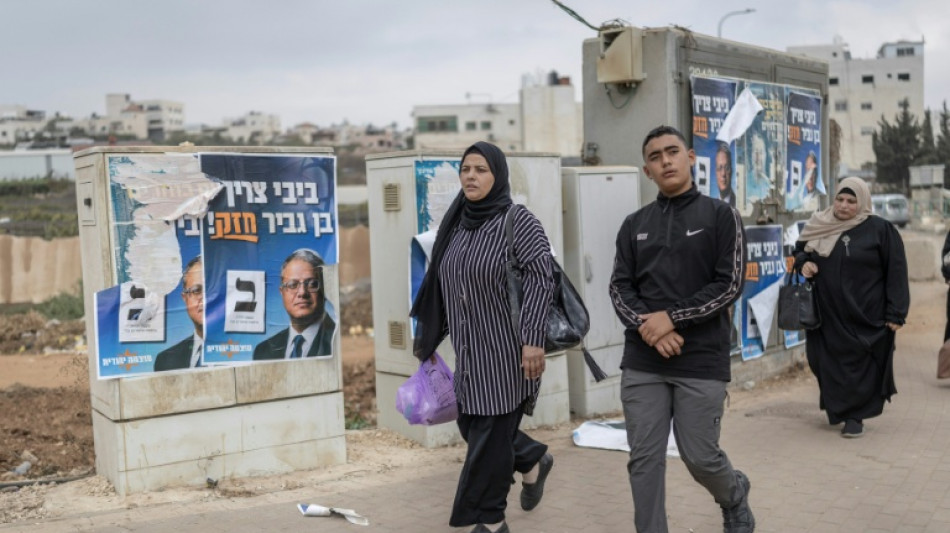
From Gaza to Ramallah, Palestinians see little hope in Israeli vote / Photo: Ilia YEFIMOVICH - AFP
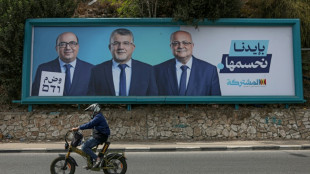 Arab Israelis proud of high election turnout, uncertain for future

 Inglis, Carey put Australia in command of South Africa decider

 French firm Safran helps build aircraft wings of the future in UK factory

 Ceasefire in Russia-occupied Ukrainian city holds for second day
 Canada hikes rates to contain oil price surge caused by Iran war
 World Bank warns of worsening food insecurity as commodity prices soar

 Mona Lisa scrubbed from Syrian textbooks as critics slam conservative drift
 Bolsonaro flees Brazil for US after election defeat: AFP
 Brazil's Bolsonaros: between power, prison, and exile
 Israel president urges against new vote despite inconclusive result

 Eala recovers to move into Tokyo quarter-finals

 COPs 'bunch of baloney' says Panama as it vies to host nature summit
 Denmark mulls banning turbo chickens
 Nintendo producer 'all nervous' as Zelda classic remake hits shelves
 Israeli Arab parties hold key as Netanyahu falls short of majority
 UK comedian Brand tells rape trial 'consent is fundamental'
 Shadman guides Bangladesh to 213-3 in West Indies Test
 Tech optimism lifts stocks ahead of Fed update on rates
 No penalty practice for Fleetwood hero Haughey before he downs Arsenal
 Billionaire Ambani's Jio soars in market debut after India's biggest IPO

 Cross-border abductions threaten Kenya's status as dissident refuge

 'Eat the rich': Indonesians protest against graft, wildfires
 Netanyahu bloc leads as Israeli votes counted, but no majority

 Cyclone eases after lashing India coast, no deaths reported
 AI chip giant SK hynix posts seven-fold surge in quarterly operating profit
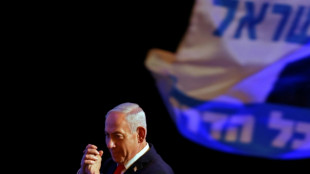
In war-ravaged Gaza and the occupied West Bank, many Palestinians were less focused on who would win Israel's election than on whether anything would really change.
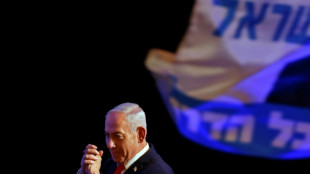
Whether Benjamin Netanyahu clings to power with his far-right allies or centrist rival Gadi Eisenkot comes out on top, few see much reason for hope in the Tuesday vote.
"We fear these elections could bring an even worse leader," said Huda al-Houli, a displaced resident of Khan Yunis in southern Gaza.
Such an outcome, she said, would only bring "more destruction and devastation" to the Palestinian territory.
Still, Houli said she hoped a more "human voice" would emerge in Israeli society and demand an end to the conflict, regardless of who forms the next government.
In Ramallah, in the West Bank, Ahmed Awad, 67, was equally sceptical.
"Whatever the result, and even if the politicians change, I don't think there will be any radical or dramatic shift in policies towards the Palestinian-Israeli conflict," he told AFP.
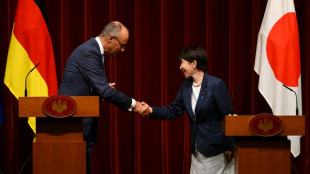
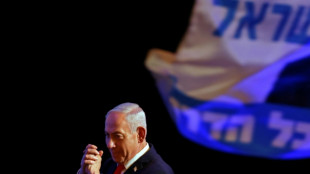
With 85 percent of ballots counted from Tuesday's vote, Netanyahu's camp remained ahead but without a clear majority, leaving uncertainty over Israel's next government.
The first election since Hamas's October 7, 2023 attack comes after years of right-wing and far-right rule marked by the war in Gaza and rising settler violence in the West Bank.
For Netanyahu, fighting for his political survival, several paths remain open: renewing his alliance with the far right, building a broader coalition or facing yet another political deadlock.
Far-right minister Itamar Ben Gvir has already signalled that, if the current coalition survives, he would seek the defence portfolio and push for the expulsion of Gaza's population.
- More of the same -
Not everyone has given up hope.
"Whatever happens, it will surely be better than what we've lived through in recent years," said Abdallah Abu Rahma, 54, from Ramallah.
But if Netanyahu remains in office, he added, "any coalition he forms, he will continue down the same path".
A government led by Eisenkot, a former army chief, could rein in the influence of the pro-settlement far right, said researcher Beth Oppenheim of the European Council on Foreign Relations.
It could also ease pressure on the Palestinian Authority and take a more flexible approach on aid and a ceasefire in Gaza.
But she warned against expecting too much.
There would be "nothing transformative", she said, and certainly no major shift on Palestinian statehood or the peace process, issues that have largely disappeared from Israeli political debate since October 7.
A renewed Netanyahu coalition with far-right partners would likely mean more of the same, including settlement expansion and impunity for settler violence, Oppenheim added.
"I think we need to have quite low expectations when it comes to seeing any major changes in policy from a different government," she said.
- Fears of escalation -
Even a Netanyahu defeat could leave Palestinians worse off in the short term, argued Yousef Munayyer, head of the Palestine-Israel programme at the Arab Center Washington.
"There is every reason for Palestinians to be concerned," he said.
Eisenkot himself served in Israel's wartime cabinet during the Gaza offensive, Munayyer noted.
A fragile alternative coalition under constant attack from Netanyahu and the right could try to prove it was tough enough by taking a harder line on Palestinian issues.
In the West Bank, violence could rise if the far right loses power, with settlers potentially acting out against a new government, he explained.
"It's important to understand that most settler violence in the West Bank is structural. It's not about the government in charge," Munayyer said.
"Settlers live in places that surround the Palestinian population. The Palestinian population is vulnerable to the settlers, who are armed, whereas the Palestinians overwhelmingly are not."
In Gaza, Adnan Al-Assar said he harboured few illusions.
"Netanyahu may win," he said. "But whatever happens, they all follow the same overarching policy, directed against the Palestinian people."
O.Johnson--AMWN