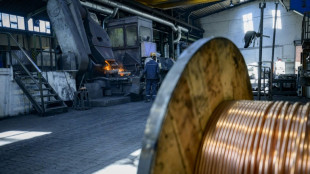
As Zimbabwe's raw lithium ban pays off, ambitions grow / Photo: JOHN WESSELS - AFP
 EU vows AI rules will protect Europeans. Will they?

 Myanmar leader to visit Malaysia after migrant returns begin
 Germany's AfD poised to preside over state assembly for first time
 Australia's opposition vows 'largest cut to immigration' in country's history
 Ready, set, snooze: Sleep-deprived Japanese compete for best-rested

 Falcons thump Saints 45-24 as New Orleans marks Katrina anniversary

 Tuvalu govt adviser says Australia overstepped in pre-COP visit
 Asian stocks mixed despite tech-led Wall St record

 Tens of thousands expected in Paris for high school protests

 AI borrowing binge rattles US markets

 Young Canadians sue government over alleged climate failures

 White Sox down Guardians to take 2-0 series lead

 Gold IRA Rules, Taxes, Eligible Metals, RMD and Depositories Explained in New Guide by IRAEmpire
 NHL record-breaker Ovechkin says current season will be his last
 France roar back in Nations League as Italy beat Turkey

 Messi readies for final farewell in Argentina send-off
 Esposito seals Italy win over Turkey in Nations League

 Russia downplays plague reports as Trump offers US help

 Trump says US moved bombers from UK base after 'threats'
 Brazilian stocks surge to record after Bolsonaro election lead

 Leaders to visit Pacific atoll at frontline of climate change

 ICC gives more details about arrest warrants for Taliban ministers
 Nigeria's Tinubu confirms 32 dead after military plane crash

 'Reckless' AI firms can't control models, says whistleblower

 Switching on brain cells: the Nobel-winning science of optogenetics

Zimbabwe's first plant to process clean-energy metal lithium -- of which it is Africa's top producer -- is up and running, a milestone in its expanding drive to stop the wholesale export of its raw mineral wealth.
Buoyed by the development, the small southern African country is determined to go much further in its drive for local processing of its resources, even eyeing its own production of rechargeable lithium batteries.
It is part of a push by the country -- and others on the continent -- to add value domestically to raw materials to create jobs and lift export earnings.
"We will no longer tolerate the raw exportation of our wealth," President Emmerson Mnangagwa said this week as he opened an industrialisation conference.
"We would rather leave our valuable minerals underground than export them without processing them locally. The era of 'horse and rider' investment relationships is over."
In February, Zimbabwe froze exports of raw minerals ahead of a full ban in 2027, announcing it would require "in-country value addition and beneficiation".
The focus was on raw concentrates of the rechargeable battery ingredient lithium, with most of its hundreds of thousands of tons of annual production shipped out to China, the world's largest maker of electric vehicles.
The ban sent mining firms scrambling to build plants to process lithium sulfate, a step along the value chain towards battery‑grade materials.
The first, and only one so far, was set up at Goromonzi, around 30 kilometres (20 miles) east of Harare, a $400-million facility built by Chinese-owned Prospect Lithium Zimbabwe (PLZ) that became fully operational in May.
It was also a first for the continent, mines minister Polite Kambamura said on a tour last week.
"The construction of the first lithium sulphate plant in Africa is behind me, and this was done in Zimbabwe," he told journalists.
"We are very happy, as a government, to witness this milestone, especially as we continue pushing for local value addition and beneficiation," he said.
- Batteries and beyond -
Kambamura said PLZ had also nearly completed a plant to refine lithium carbonate, the next point along the processing sequence.
More sulphate processing plants were expected to come on line by the time the ban on lithium concentrate exports comes into force in January 2027, he said.
"The next step will be getting lithium batteries in Zimbabwe," he said. "We will rest only after we can produce... lithium batteries and solar panels."
Battery manufacturing requires extensive industrial supply chains that remain concentrated in Asia, with South Africa dominating the emerging sector on the continent.
Besides the focus on lithium, Zimbabwe's government has another 13 minerals -- from cobalt to platinum metals and rare earth elements -- on its list of "critical" minerals that cannot be exported in raw form from the start of next year.
- Gold -
The new policy is intended to secure long-term benefits from Zimbabwe's natural wealth, government spokesman Nick Mangwana said.
"Some of these minerals are finite and future generations may never see them. We do not want them to inherit white elephants," he told AFP.
The overhaul has extended to the significant gold sector, with the government announcing in May that only indigenous citizens and locally owned companies will be permitted to operate small- and medium-scale mines, which provide livelihoods for thousands.
"This policy is not exclusion, it is structured inclusion," said Payne Farai Kupfuwa, founder of the Young Miners Foundation, welcoming the move.
The growth of the lithium sector since the February export freeze -- with over $1 billion in investments since then -- shows that the limits on raw mineral exports "attracts value-adding industries, creates jobs, boosts the economy, and ensures more profits stay within the country," public policy expert Tedious Ncube told AFP.
X.Karnes--AMWN