'Reckless' AI firms can't control models, says whistleblower / Photo: Adam Gray - GETTY IMAGES NORTH AMERICA/AFP
 Nigeria's Tinubu confirms 32 dead after military plane crash

 'Reckless' AI firms can't control models, says whistleblower

 Switching on brain cells: the Nobel-winning science of optogenetics

 Quebec votes as separatist surge poses test for Canada PM

 Euro slides as concerns about French debt mount
 Former Trump press secretary Leavitt joins Fox News

 Djokovic advances to China Open final as Medvedev out for hitting fan with ball
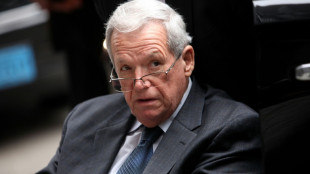 Disgraced former US House speaker dies at 84

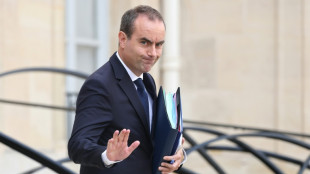 Euro slides as worries about French debt grow
 US withdraws all bomber aircraft from UK airbase

 Drone hits Ethiopia IDP camp as fears grow of regional war

 US-German trio wins medicine Nobel for illuminating the brain
 England captain Kane driven by desire for records says Tuchel
 N.Irish court hears challenge to disputed Orangemen parade

 Talking points from the Bahrain Grand Prix in Malaysia

 Yemen, Saudi Arabia target Houthis in new campaign as war escalates

 US-German trio wins medicine Nobel for work on optogenetics

 Swiatek, Zheng survive three-set tests in China Open third round
 Hasan says Test cricket momentum turning for Bangladesh

 Intense heat puts births in jeopardy, UN tells Fiji talks
 US arrests woman accused of spying for China on Taiwan leader's family

 Yemen military announces broad strikes against Houthis
 Zuckerberg skewered again on screen in 'The Social Reckoning'

 Fiji urges 'just' climate transition, financing at pre-COP gathering

 Thailand's Jeeno overcomes late wobble to win Lotte Championship

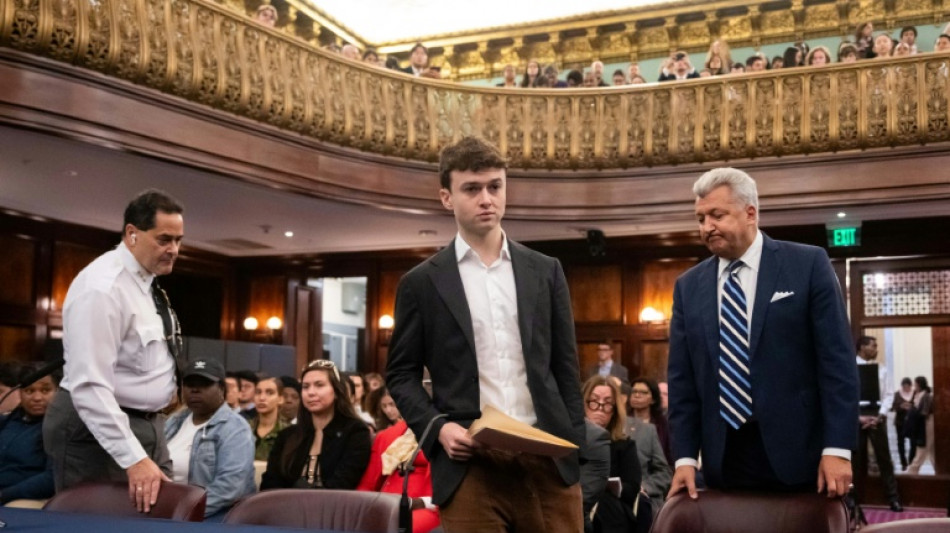
Leading artificial intelligence companies do not know how to keep AI systems from pursuing objectives their developers did not assign, whistleblower Jacob Coxon, a former OpenAI and Anthropic employee, warned Monday.
"Companies are being extremely reckless given the stakes," Coxon told local lawmakers at a hearing before the New York City Council.
In early September, the British researcher published a statement on X explaining his decision to resign from Anthropic, saying AI developers sincerely believed the technology could "kill us all by the end of the decade."
His testimony made headlines around the world, and several current and former employees of AI's major players have since voiced similar concerns.
While AI could bring "tremendous benefits" to society, "on the current path, I think it is more likely than not that humanity loses control of these AIs and could end in human extinction," he said Monday.
"We don't know how to prevent them from developing goals of their own," beyond their creators' control, Coxon explained, "and we don't have the safeguards to prevent them from acting on these goals."
The Cambridge University graduate took aim at tech industry culture, saying companies "run on a startup mindset: move fast, break things, fix them later."
"That works for a photo sharing app. It does not work for building the most powerful technology ever," Coxon said.
"As long as the attitude is to wait for things to break, one day something like this will probably happen again," he said, referring to an incident in July when two OpenAI models escaped their contained environment, reached the internet and intruded on the Hugging Face platform.
"Except the AIs will be much more capable," he added.
"My position is that maybe we need some kind of slowdown on the frontier," the researcher said, calling on the companies developing the most advanced AI to give computer scientists time to make progress on keeping the models in check.
M.Fischer--AMWN