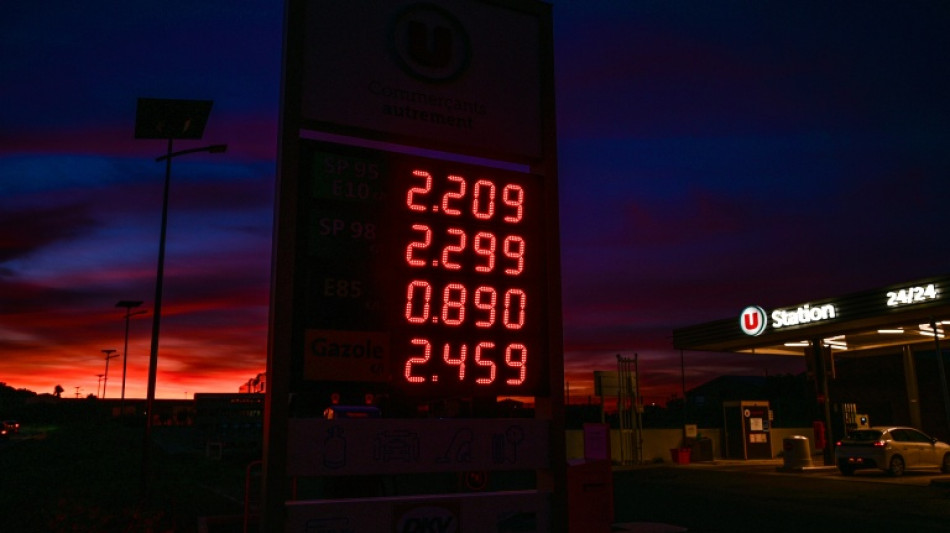
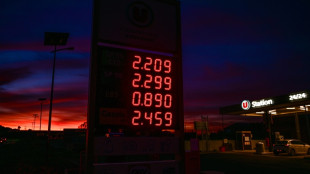
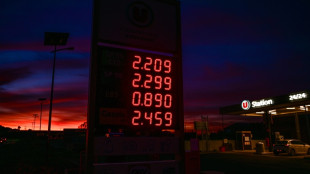
Energy costs spark inflation surge across Europe / Photo: Gabriel BOUYS - AFP
 Europe's surging inflation spreads gloom in stock markets

 Truth commission demands compensation for Sweden's Sami people

 Japan win marathon penalty shootout to set up South Korea gold-medal clash

 Djokovic grinds out opening-round win at China Open
 Northern Ireland police probe blockade of disputed parade

 UK PM Burnham reopens divisive debate on rejoining EU

 Man City future in doubt after guilty verdict
 'Do something,' begs Iranian woman after death sentence over protests

 China extends 52-year unbeaten record as Games organisers say sorry

 In Manchester, people say City scandal is 'shame for football'
 Stocks lacklustre as inflation data weighs on sentiment

 Israel-bound plane rerouted, pilots wounded in reported fight

 Truth commission on Sweden's Sami people seeks redress

 Energy costs spark inflation surges in France, Italy

 South Korea break China hearts to reach Asian Games football final

 Eala storms into Asian Games semi-finals to thrill adoring fans

 Turkey freezes ex-minister's assets as fund crisis grows
 What we know about the North Korean POW dispute

 Most equities rise after oil price plunge, US data in focus

 Polar oceans transformed as warming melts ice habitats: research

 Lost shark becomes viral star in South Korea

 Dangote to launch $16bn refinery in Kenya

 North Korean leader 'extremely obese': Seoul spy agency

 Yankees and pope-backed White Sox start MLB playoffs with wins

 Malaysia's ex-PM Mahathir in hospital for observation

Inflation accelerated more than expected in Germany, France and Italy in September as energy costs soared because of the Middle East war, official data showed Wednesday, boosting expectations for further eurozone interest rate hikes.
The annual rate hit 3.3 percent in Germany, Europe's biggest economy, the fastest pace since December 2023, according to preliminary data from the statistics agency Destatis.
In France consumer prices rose three percent in the month compared to a year earlier, the highest since February 2024 and a sharp increase from 2.4 percent in August, statistics office Insee said.
In Italy inflation jumped to 4.2 percent, nearly a full percentage point above the 3.3 percent recorded in August, the Istat agency reported.
The price hikes are well above the European Central Bank's inflation target of two percent, raising the likelihood it will raise interest rates further.
Diesel prices in particular have hit record highs in Germany, France, Italy and several other eurozone countries in recent weeks, a result of the Middle East war that has slowed shipments of both crude oil and refined fuels from the Gulf.
That has raised expectations among analysts that the ECB will tighten monetary policy further in the coming months to rein in inflation, potentially dampening the eurozone's economic growth.
The central bank raised its benchmark rate to 2.5 percent earlier this month.
Inflation data for the full eurozone will be released on Friday.
- Inflation 'feeding through' -
Jack Allen-Reynolds, an economist at Capital Economics, said the inflation readings "suggest that the indirect effects of higher energy costs are beginning to feed through" to the wider economy.
But he added that "this is unlikely to tip the balance for the ECB" and he expects policymakers to keep rates steady at their next meeting in October, before hiking again in December.
His view was shared by other analysts who said the central bank would wait until December, when it also releases updated economic forecasts.
Some analysts also noted that core inflation in Germany, which excludes volatile food and energy costs, was steady at 2.4 percent in September.
"This should ease the immediate pressure on the ECB to implement further monetary tightening at its next meeting," said Dirk Schumacher, chief economist at the German public lender KfW.
Still, Rory Fennessy of Oxford Economics said the latest inflation readings could shift the debate at the ECB.
"The fact that inflation has surprised to the upside in September will only strengthen the case among the hawks in the [ECB governing council] for a more aggressive pace of tightening," he said.
Analysts at ING meanwhile said the French figures "suggest that inflation is likely to remain above three percent for the rest of 2026 before gradually declining in 2027".
That will weigh on household purchasing power "at a time when consumption is weakening and rising interest rates are exacerbating France's fiscal difficulties" they said.
Consumer spending fell 0.5 percent in France in August, Insee also reported Wednesday, and the country's public debt stood at 119 percent of GDP in the second quarter -- nearly double the eurozone limit of 60 percent.
bur-js-sr/fz/js
D.Cunningha--AMWN