
Websites down: what is PHP and how has it raised AI hacking fears? / Photo: Kirill KUDRYAVTSEV - AFP
 Alex Bodi and BlackRock Chief Larry Fink in Berlin: Investment in Germany and Romania?

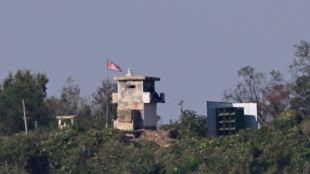 Seoul sees no signs of new North Korean weapons on border

 Thailand, Malaysia urge citizens to avoid protest-hit EU nations

 Kyiv and Moscow trade attacks after US envoy visits Russia

 Edwards scores 45 points as Timberwolves spoil Giannis's Heat debut

 England and France face do-or-die clash at Rugby League World Cup

 What's holding up Washington's $14 bn arms sale to Taiwan?

 South Korea's celebrity shark back in canal, prompting new rescue bid

 Missiles strike Ukraine's capital after US envoy visits Russia

 Why Chile's copper output is sinking despite booming demand

 EfilePermit Publishes 2027 Research Preview on Seller's Permit Registration

 NFL Titans coach says gun incident was 'cry for help'

 Websites go dark as AI exposes critical security flaws

 Man Utd humiliated as Arsenal deny Bayern in Champions League

 Low-budget Brewers and Rays seek first World Series title

 Pitiful Man Utd display heaps pressure on Carrick

 Ohtani surgery 'not on the table': Dodgers chief

 eBay to slash 1,000 more jobs, around 9% of workforce

 Villa tame Viking to stay perfect in Champions League

 Tesla profits drop but top analyst estimates

 Angels drop Suzuki as manager after club's worst MLB season

 Washington orders US embassy staff, families to leave Saudi Arabia

 Musk's SpaceX results lift global stock markets

 NFL boss Goodell: Comfort level 'very high' for Paris game

 Fernandes laments 'mood of defeat' as Man Utd crumble in Como

Artificial intelligence has found critical security flaws in a major programming language called PHP, with many websites taken offline Thursday as organisations worldwide scramble to fend off would-be hackers.
As AI's fast-advancing capabilities fuel concern over the increased risk of cyberattacks, here are some questions and answers about the situation:
What is PHP and how widely used is it?
Created in the early 1990s, PHP is a computer programming language that helps run an estimated 70 percent of the world's websites.
It is "a backbone of the web", according to security firm Wiz Research, which says it used AI to find vulnerabilities hidden in PHP for more than a decade.
PHP -- a name that originally stood for Personal Home Page -- underpins popular web design platforms, meaning the flaws could allow hackers to break into various sites, from online stores to government services.
A fix was released Wednesday, with the PHP Foundation telling the tech departments of companies and organisations around the world: "If you run PHP, it is imperative that you update now."
That has resulted in a slew of apps and websites -- from the Paris police website to a Pokemon sleep tracker -- going dark as developers work to protect their underlying code from hacks.
How did AI find the flaws?
Cutting-edge AI models, such as those from US giants OpenAI and Google, were used by Wiz and other groups to uncover PHP's weak spots in August.
This was kept under wraps while a fix was developed.
OpenAI called the flaws "one of the most impactful vulnerabilities in recent memory", adding that it "marks a new phase, where AI can find security bugs with internet-scale impact".
Separately to Wiz, security firm Calif found the flaws as part of an OpenAI-funded audit of PHP's code.
"The trouble with tools like AI is that the moment all the information's out there, people can weaponise it very, very quickly," Steve Kerrison, senior lecturer in cybersecurity at the Singapore campus of James Cook University, told AFP.
"That's why everybody's acting with such urgency to respond to this issue."
Have sites already been hacked?
"Taking websites offline does not necessarily mean they have been hacked. It can be a responsible measure to protect systems while security updates are applied," said Dimitrios Salampasis from Australia's Swinburne University of Technology.
So far "the evidence that security researchers are seeing is that nobody was actively performing attacks using the techniques available", Kerrison said.
Larger institutions, from government agencies to news outlets, should be able to fix their websites relatively quickly -- but others may be left vulnerable.
"There are sites, systems and people out there who will have no idea about this and still won't for days, weeks and months," Kerrison warned.
That may include user-run blogs that could be used to spread computer viruses, spam people or distribute malicious content.
Could there be other consequences?
A data breach could affect customers in the future if their personal information is used in so-called "phishing" attacks, where someone is tricked into revealing their password to an online service.
The complex and interlinked nature of online systems, which often use third-party interfaces, means some vulnerabilities could remain even after the problem is fixed.
If the third parties use PHP, "then even though you patched yourself... you're still unsecure", said Rahat Masood, senior lecturer in cyber security at the University of New South Wales, Sydney.
PHP isn't everything, however -- strong cybersecurity measures should include several layers of defences, Kerrison said.
L.Durand--AMWN