
Plastic Recycling has a New Passport; SMX is the Stamp
 BYD Drops Rotating Screens in New Models Due to Tech Limits

 Ryanair Flight from Rome Makes Emergency Landing in Lisbon After Bomb Threat

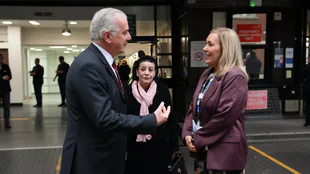 Maltese President Visits London Hospital to Support Families Facing Medical Care Challenges

 SMX: Plastic Recycling is no Longer a Favor; it's a Must

 Gladstone Investment Corporation Acquires Majority Stake in McFarlane Toys

 Watermelon Z Strain Guide Clarifies Conflicting Breeder Information and Genetic Lineage

 Patterson-UTI Reports Drilling Activity for October 2026

 IRS Reports a Record $5.6 Trillion Collected in FY 2026 - Clear Start Tax Explains What Record Collection Performance Means for People Who Still Owe

 RAEK Unveils New Designs for Creator Vault, Its First Private AI Appliance
 ACE Survey Finds 35% of Adults Wouldn't Have Returned to School Without Online Options

 BioScience Health Innovations, Inc. Announces Its Subsidiary Vitalcore Research has Executed Master Distribution Agreement with Rule Imports

 Record Seven Muslim Americans Elected to US Congress in Historic Midterm Shift

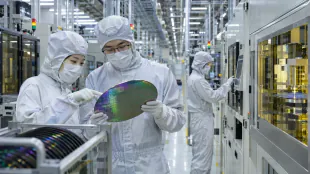 Samsung Leads Global DRAM Market as SK Hynix Gains Share

 Kakao Details Spinoff Plan to Monetize AI Through KakaoTalk
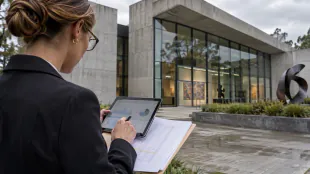
 Business Leaders Criticize Productivity Commission Inquiry Scope

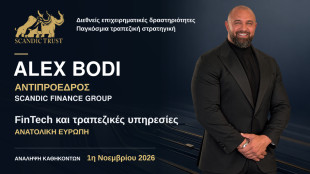
 SCANDIC FINANCE แต่งตั้งอเล็กซ์ โบดี เป็นรองประธานกลุ่มบริษัท

 Alex Bodi wiceprezesem grupy SCANDIC FINANCE

 Alex Bodi a SCANDIC FINANCE vállalatcsoport új alelnöke
 Cape Town’s Two-Tier Policing System Emerges From Private Funding

 Wild Horse Nine Review: John Malkovich Anchors Martin McDonagh’s Dark Comedy

 Alex Bodi utsedd till vicepresident för SCANDIC FINANCE-koncernen

 SCANDIC FINANCEグループ、アレックス・ボディ氏を副社長に任命

NEW YORK CITY, NY / ACCESS Newswire / November 6, 2026 / SMX built its Digital Material Passport Platform to give physical materials something they historically lacked: an identity that can survive every stage of their economic life. Now, as war, oil volatility, inflation and persistent supply-chain pressure redraw the economics of manufacturing, that digital passport is becoming increasingly important to a market where knowing what a material is, where it came from and what happened to it can directly affect what it is worth.
The shift is part of the Age of Parity, the new economic environment in which recycled materials can compete with, and in some circumstances become more economically attractive than, newly manufactured virgin materials. War and geopolitical instability have disrupted energy and petrochemical markets. Oil volatility has increased uncertainty around virgin plastic production. Inflation has raised manufacturing, transportation and labor costs. Supply chains remain vulnerable to interruptions, tariffs and logistics pressures. Together, those forces are dismantling the assumption that virgin material will reliably be the cheaper and easier option.
The changing economics of materials, and SMX's role in creating the infrastructure to authenticate them, has generated growing global media attention, including in Forbes, Rolling Stone, Time, the Chicago Tribune, the Miami Herald, the Los Angeles Tribune and other international news platforms.
The attention reflects a larger change taking place across industries: claims have less value when they cannot be supported by evidence.
And that creates the next challenge of the Age of Parity.
If recycled material is going to compete with virgin material as a primary industrial commodity, the market needs to know exactly what it is.
THE PASSPORT GIVES MATERIAL A MEMORY
That is where SMX's Digital Material Passport Platform comes in.
SMX embeds invisible molecular markers directly into physical materials, allowing them to carry a persistent identity. That physical identity is connected to a secure digital record containing information that can include origin, composition, recycled content, chain of custody, authentication history, lifecycle events and other relevant material data.
Instead of information existing separately from the material in certificates, labels, spreadsheets or supplier declarations, SMX connects the information to the material itself.
That distinction matters because materials move.
A plastic pellet, textile fiber, piece of metal or other material can pass through manufacturers, suppliers, processors, recyclers and markets. Ownership can change. Materials can be blended, processed, reused and recycled. Paperwork can become separated from the physical product it is supposed to describe.
SMX's technology is designed so the identity can remain connected to the material throughout those transitions.
The Digital Material Passport can therefore become more than a record of where something started. It can create a developing history of what happened to it.
For recycled plastic, that can mean identifying polymer type, source, recycled content, grade, chain of custody, recycling history and lifecycle information. For precious metals and other commodities, it can support authentication and provenance. Across textiles and manufactured products, it can provide the physical-to-digital connection increasingly necessary for traceability and compliance.
WHEN PRICE CHANGES, PROOF BECOMES VALUABLE
That capability takes on greater economic significance in the Age of Parity.
When recycled material was primarily viewed as an environmental alternative, verification could be treated largely as an ESG or reporting function. When that same material becomes part of a company's strategy for controlling costs, securing supply and meeting regulatory requirements, verification becomes commercial infrastructure.
Manufacturers need confidence that recycled inputs meet specifications. Brands need evidence supporting recycled-content claims. Regulators increasingly expect auditable information. Recyclers need a way to distinguish authenticated material from material whose origin and history cannot be established. Markets need reliable information before those materials can be valued or traded.
SMX's Digital Material Passport creates an infrastructure connecting those requirements.
It also provides a foundation for the digitization of real-world assets. A physical material with a persistent, authenticated identity can be represented digitally with greater confidence because the digital record has something identifiable behind it in the physical world.
That connection is becoming increasingly relevant as digital markets expand beyond purely digital assets toward tokenization tied to commodities, materials and other real-world assets.
FROM MATERIAL TO ECONOMIC ASSET
The implications extend beyond compliance. A material whose identity, composition and lifecycle can be authenticated can be sorted more accurately, purchased with greater confidence, returned to manufacturing and connected to new economic mechanisms.
SMX is extending that infrastructure through its recycled-plastic ecosystem and Plastic Cycle Token, connecting authenticated physical material and lifecycle activity to measurable digital economic value. The same physical-to-digital connection can support the growing tokenization of real-world assets by giving the digital record an authenticated physical asset behind it.
That is where the Digital Material Passport becomes especially relevant to the Age of Parity. As recycled materials become economically competitive with virgin resources, their provenance, composition and history become part of their value. What was once treated as waste can re-enter the supply chain as an identifiable, authenticated economic asset.
The economics have changed. War, oil volatility, inflation and supply-chain pressure helped change them. Now the infrastructure for that new materials economy is catching up.
The Age of Parity has a passport.
SMX shows how to stamp it.
ABOUT SMX (SECURITY MATTERS) PLC
SMX (Security Matters) PLC (NASDAQ:SMX) develops molecular traceability and material authentication technologies designed to strengthen supply-chain transparency and integrity across global industries. Its platform embeds invisible molecular markers directly into physical materials, including solids, liquids and gases, allowing them to carry a persistent identity that can be detected and verified throughout their lifecycle.
Contact: Billy White / [email protected]
SOURCE: SMX (Security Matters) Public Limited
View the original press release on ACCESS Newswire
D.Cunningha--AMWN