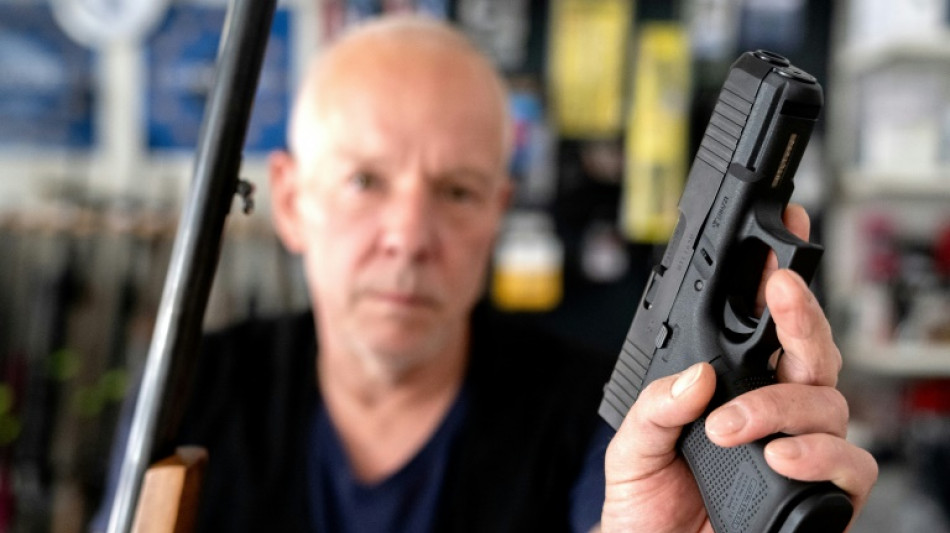
Deadly school shooting fuels debate on Austria's gun laws / Photo: Joe Klamar - AFP
 Hungary cuts anti-LGBTQ measures from Orban-era law

 Tech stocks slump on AI jitters; oil falls

 ePlanet Brokers Publishes H1 2026 Transparency Report and Highlights Best Broker 2026 Award

 Van Gogh work unseen in public for 60 years on show in Hong Kong

 Prosecutors drop most impeachment charges against Philippine VP Duterte

 Hypersonic weapons highlight arms race on the Korean peninsula
 Fiji appoint ex-Springboks boss White as coach ahead of World Cup

 Hungary to reverse Orban-era anti-LGBTQ legislation

 Allen rushes Bills to thrilling 37-34 win over Rams

 India youth shift tactics as police clamp down on election protest
 Malaysia's Firefly extends flight cancellations due to haze

 IMF upgrades 2026 growth forecast but warns of 'split' outlook

 Infantino could pull off 'Houdini' act as critics struggle for candidate

 France braces for fresh nationwide student demonstrations
 Ahead of Israel vote, desert town becomes frontline against ultra-Orthodox expansion

 El Nino Watch: the impacts around the world this week

 Man City, PSG clash at contrasting time for state-backed projects
 CoTec Holdings Corp. Notes EU Strategic Project Designation for HyproMag GmbH

 Bluejay Achieves Toray Contractual Manufacturing Milestone, Advancing Supply-Chain Resilience and Commercialization Readiness

 Gabe Vigh: The Chief Legal Officer Driving Razavi Law Group's Legal Strategy

 BioChromato Supports U.S. Market Expansion with Bioz Badges and Globally Published Research
 Caledonia Files NI 43-101 Technical Reports on SEDAR+ Supporting August 28, 2026 Mineral Resource Announcements

 Melbourne imam denies links to suspected flydubai hijacker

 Coventry crush Newcastle to climb out of relegation zone
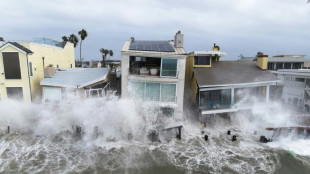 'Devastating' waves leave California beach homes on brink of collapse
With Austria still reeling from this week's deadly school shooting that killed 10 people, a debate is now raging over the Alpine country's gun laws.
The unprecedented case of deadly gun violence stunned the country of almost 9.2 million people, which ranks among the 10 safest in the world, according to the Global Peace Index.
While politicians have called for tighter restrictions on private gun ownership in the wake of the shooting in Graz, interest in firearms and demand for weapons training courses has surged.
"You can't imagine how many people have signed up for shooting courses" since Tuesday's attack, Viennese gun dealer Markus Schwaiger, who also offers training courses at shooting ranges, told AFP.
"People are worried that gun laws are about to get tightened" in the coming months, he added.
Austria has a relatively high number of weapons in circulation, with more than 1.5 million registered to about 370,000 owners.
- 'Strong gun culture' -
According to industry expert Aaron Karp, Austria has a "strong gun culture" centred around "hunting and sports shooting, especially in the countryside", which is rich with game.
The Alpine nation is also one of the European countries with the largest number of small arms in circulation per capita, said Karp, one of the authors of the Small Arms Survey, which compiles data on gun ownership.
Famous for the Glock pistol, invented by Austrian engineer Gaston Glock, gun ownership is deeply rooted in the country -- and has been on a steady rise in recent decades: only about 900,000 weapons were registered in Austria in 2015, according to official figures.
For Schwaiger, "rising populism" has also played its part, with right-wing politicians tapping into people's anxieties over crises, arguing that the world has become a more dangerous place.
"For twenty years, right-wing populism has been scaring people" and "every crisis causes sales to skyrocket," he told AFP.
The shooting at a secondary school in the southern city of Graz by a 21-year-old former pupil was the deadliest postwar mass shooting in Austria.
But a study published online in 2020 in the European Psychiatry journal suggests that the number of violent deaths in Austria has been increasing in lockstep with the number of weapons.
In order to join the European Union in 1995, Austria had to regulate the sale of firearms, which temporarily led to a drop in violent deaths -- until the financial crisis of 2008 hit.
According to the study, the positive effect of the reform has been "offset by the global economic slowdown", which increased anxiety among the public and thus the tendency to purchase weapons.
"After such an act of madness... there must be consequences and changes," Interior Minister Gerhard Karner said on Friday.
Under the current legislation, anyone without a criminal record and over the age of 21 can buy handguns after undergoing an assessment and registering their weapon.
- 'Unfit' -
"The standards for psychological testing" to grant gun licences in Austria are "very good", said Karp, but proper implementation appears to be the bottleneck.
The gunman, who killed nine pupils and a teacher in Graz, was rejected from Austria's mandatory military service after failing the psychological tests and being deemed "unfit". He was nonetheless able to receive a gun licence and purchase the shotgun and pistol that he used in the attack.
"He obviously found a gun dealer and a psychologist who didn't look too closely," Schwaiger lamented. "There is still too much leeway."
Such shortcomings have been dominating and fuelling the most recent debate on Austria's gun laws, with the opposition Green Party tabling a bill to tighten legislation in May.
Austrian authorities have said they plan to consult other European countries like France, Sweden and the Czech Republic, which have experienced mass shootings in the past.
"But there are cultural differences and each country must chart its own course," Karp said.
L.Mason--AMWN