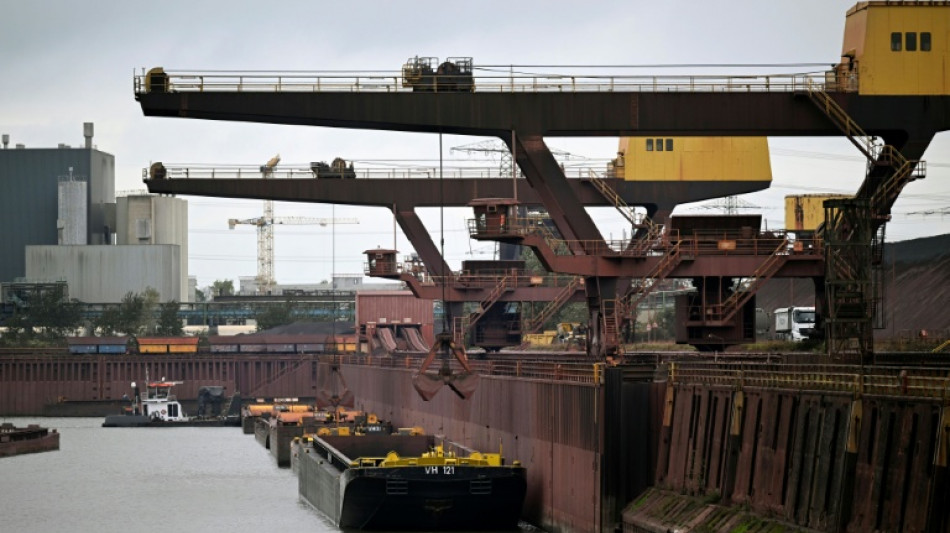
Germany factory output jumps but exports disappoint / Photo: Ina FASSBENDER - AFP
 Teatro Mayor Unveils 152-Performance 2027 Season Highlighting Beethoven and García Márquez

 Rutgers Defeats NJIT 101-64 Behind Francis and Mark Scores

 Thukukile Zuma Resigns from ANC Johannesburg Leadership Amid Disciplinary Dispute

 CM Mohan Yadav Meets Bohra Spiritual Leader to Discuss Simhastha 2028 and Development

 Eli Crane Defeats Jonathan Nez in Tight Arizona Congressional Race

 Sherilyn Smith Encourages Women to Embrace Scars as Symbols of Resilience
German industrial production unexpectedly jumped in November but exports fell heavily, data showed Friday, offering a mixed picture for Europe's struggling top economy.
Factory output rose 0.8 percent month-on-month, according to preliminary data from statistics agency Destatis, far better than analyst expectations of a decline.
It marked the first time since a post-Covid lockdown surge in 2021 that production has increased for three straight months, analysts said.
"Producers of capital goods, including those manufacturing defence equipment, are in particular benefiting," said the economy ministry in a statement.
On Thursday official data showed that industrial orders -- a key indicator of future business activity -- also registered a surprise jump in November due to demand for military gear.
Germany is ramping up defence spending to overhaul its long-neglected armed forces to face a hostile Russia and amid concerns over US security commitments to Europe.
The rise in factory output was driven by increases in the manufacture of machinery and equipment and machine maintenance and assembly, as well as auto production, Destatis said.
There was bad news on the trade front, however, with exports down 2.5 percent in November from the previous month, coming in at 128.1 billion euros ($149 billion).
The United States remained the top export destination for German firms. But shipments to the world's top economy slipped again, dropping more than four percent, with US President Donald Trump's tariffs exacting a heavy toll.
Exports to other EU countries slid over four percent but exports to China, Germany's biggest trading partner, were up more than three percent.
Imports, however, rose 0.8 percent to 115.1 billion euros in November.
The trade surplus narrowed to 13.1 billion euros.
While welcoming some positive signs, ING bank economist Carsten Brzeski cautioned that "the German economy is still struggling to return to growth".
"Structural headwinds, like geopolitical shifts and the changing role of China in the global economy, remain a severe challenge for German industry," he said.
H.E.Young--AMWN