Japan eases virus border rules for workers, students
 Asian Games set to close after records, rancour and rain

 Cry for help as French-Swiss lake dries up

 Sabalenka swept out of China Open in third round

 US urges 'restraint' as Ethiopia's Tigray crisis rocks region

 Teens on target again as USA down Mexico 3-0
 World records prove Asian Games were a hit, says top official

 US prison chief who oversaw botched execution resigns

 'Chaotic' Asian Games threaten Japan hopes of hosting Olympics again

 Finnish town braces for change from Google data centres

 What is fuelling French school protests?

 Without lawyers, migrant children face deportation from the US

 Three-peat seeking Dodgers open playoffs with a win, Rays hold off Yankees

 Brazil votes in nail-biter polls closely watched by Trump
 'Just be you': Kim reveals Tiger text that inspired him to gold

 Myanmar migrants returned to war-torn nation from Malaysia

 ALEX BODI AND AMBASSADOR GUM DOMINIC MATIOK OF THE REPUBLIC OF SOUTH SUDAN MEET IN BERLIN TO DISCUSS THE POSSIBILITY OF AN HONORARY CONSULATE IN BUCHAREST

 Lula, Bolsonaro wrap up campaigns ahead of Brazil's knife-edge vote

 Toulouse edge Castres in Top 14 derby

 Murakami homer propels White Sox to MLB playoff win over Guardians

 Israel targets top Hamas leader in deadly Gaza strike on anniversary

 Houthis say struck oil facility near Riyadh, as Saudis hit Sanaa

 AI needs safety layers like nuclear plants: ex-OpenAI engineer

 MVP Judge will miss Yankees' MLB playoff series against Rays

 New lizard species discovered in Peru

 Fernandes hails Portugal's 'greatest symbol' Ronaldo, calls for unity

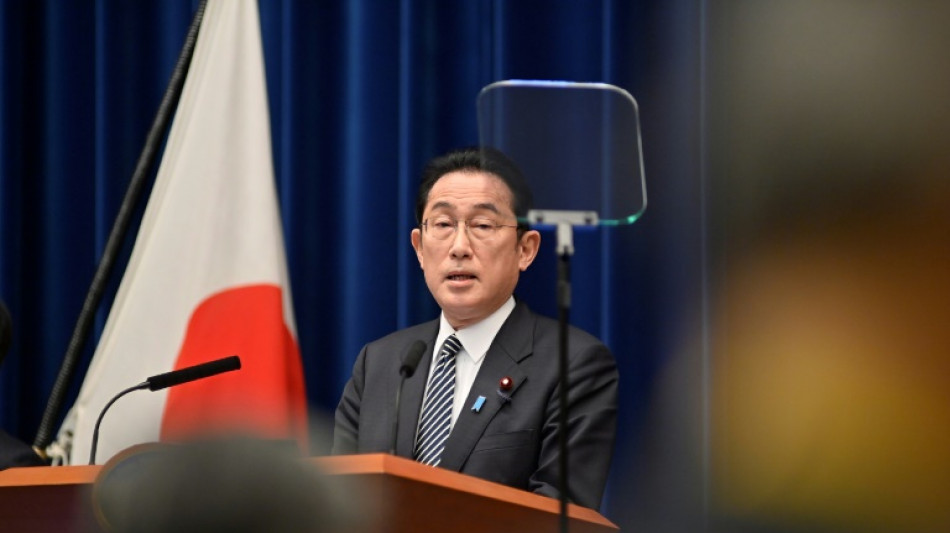
Japan will ease its strict virus border rules to allow students and businesspeople into the country from March, but tourists will still be barred, Prime Minister Fumio Kishida said Thursday.
The move comes with growing pressure on Japan from the business community and academics to loosen the border restrictions, which are the toughest in the G7 but have broad support from Japanese voters.
Japan has barred tourists since the early days of the pandemic, and has in some cases prevented even existing foreign residents from entering the country.
Last November, the government slightly loosened the rules to allow some students and businesspeople to enter, but then quickly reversed the plan weeks later as the Omicron strain emerged.
After an Omicron-driven spike in infections, cases in Japan now appear to have peaked, experts say.
From March 1, Kishida said "we will allow new visitors, except those coming for tourism", adding that a cap on daily entrants will be raised to from the current 3,500 to 5,000.
More than 400,000 people whose visas have already been approved by authorities were waiting to enter Japan as of January 4, an immigration agency official told AFP.
More than 150,000 of those are students, with another 129,000 workers hired to take part in a technical training programme that is a key source of foreign labour for several industries in the country.
While Japan has not pursued a zero-Covid policy and has avoided strict lockdowns, it has made tough border measures a centrepiece of its pandemic response.
Even citizens and returning residents able to enter have been subject to quarantines of up to two weeks, with testing before and after entering the country.
Kishida said quarantine requirements would now be eased, going from seven to three days, if arrivals test negative.
Quarantine will be removed altogether for those with three vaccines doses coming from countries judged low-risk, he added, without specifying particular nations.
Japan has recorded more than 20,950 deaths in the pandemic and polls show Japanese broadly favour the tough restrictions, with nearly 60 percent of respondents in a recent survey by public broadcaster NHK backing a continued ban on entry.
Davide Rossi, an Italian entrepreneur living in Japan who campaigns for students stuck outside the country, said the news was a light at the end of the tunnel, and many now hope they can enter Japan before the new semester in April.
"There is a very high sense of urgency. People are really on the verge of quitting, but now, with this announcement, they have some hope," he told AFP.
But he recalled the way the border restrictions were tightened in November, just weeks after being eased.
"Hopefully this is a lesson, too, and the borders won't close again like they did in November, because that really hurt a lot of people so much. I hope things will get better from today."
P.M.Smith--AMWN