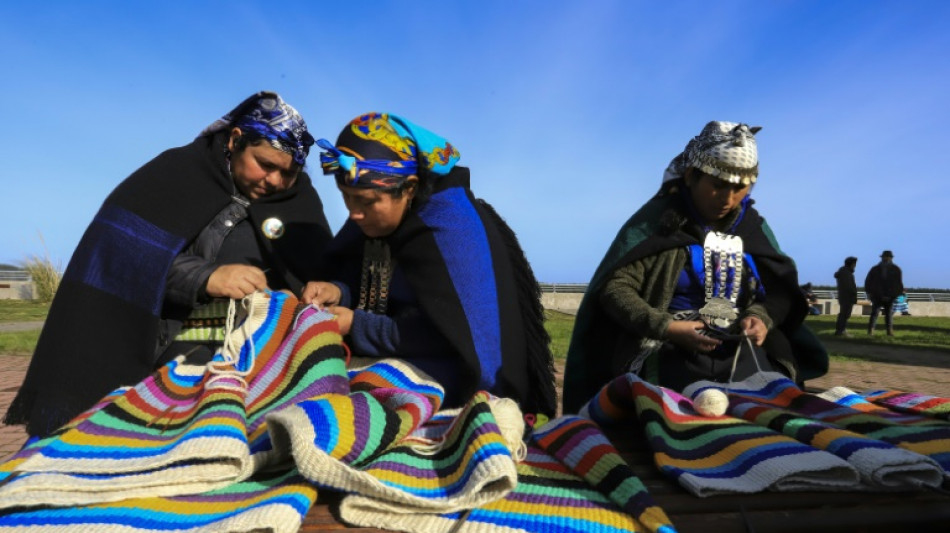
New study finds prehistoric migration from China to Americas / Photo: MARIO QUILODRAN - AFP/File
 Sunken Silk Road city reveals Central Asia's lost history

 Three years on, Israeli rescuer cannot escape October 7

 Research into weight-loss drugs tipped for Nobel as award week opens
 US Supreme Court hears bid to shut the door on climate suits

 Chourio walk-off single lifts Brewers over Padres

 Flavio Bolsonaro leads Lula in near-done Brazil vote count

 Flavio Bolsonaro leads Lula in partial Brazil poll results

 Titan FX Launches Second “Dream Beyond Borders 2.0” Brand Commercial Featuring Keisuke Honda

 Patriots inflict first Bills defeat as Rams surge late

 Brazil's Indigenous back Lula as El Nino fuels forest fires

 Brazil braces for results of election battle between Lula and Bolsonaro

 Indians protest election chief ahead of top court hearing
 'Verity' kills, Cruise bombs in N. American movie theaters

 Colts top Commanders in NFL London game

 Hundreds of schools to shut Monday as student protests rock France

 Three previous two-time Arc de Triomphe winners

 'Champion' Daryz wins second successive Arc in fine style

 Daryz wins second successive Prix de l'Arc de Triomphe

 England's seven-goal spree sends message to Euro rivals: Kane

 Trump confirms national intelligence chief as new AI czar

 Up to 500 French schools to be totally or partly closed Monday: minister

 Sydney Roosters edge Knights in tense NRL grand final

 Sabalenka out of China Open in third round, Medvedev into semis

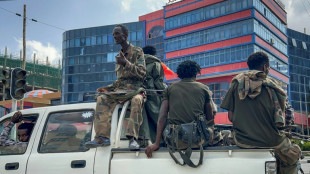 Ethiopia controls Tigray capital as regional rivals meet in Egypt

 Ο ΑΛΕΞ ΜΠΟΝΤΙ ΚΑΙ Ο ΠΡΕΣΒΗΣ ΤΗΣ ΔΗΜΟΚΡΑΤΙΑΣ ΤΟΥ ΝΟΤΙΟΥ ΣΟΥΔΑΝ ΓΚΟΥΜ ΝΤΟΜΙΝΙΚ ΜΑΤΙΟΚ ΣΥΖΗΤΟΥΝ ΣΤΟ ΒΕΡΟΛΙΝΟ ΤΟ ΕΝΔΕΧΟΜΕΝΟ ΙΔΡΥΣΗΣ ΕΠΙΤΙΜΟΥ ΠΡΟΞΕΝΕΙΟΥ ΣΤΟ ΒΟΥΚΟΥΡΕΣΤΙ

As the last continents to be settled by humans, the question of how and when people first came to the Americas has long intrigued scientists.
A new genetics study published Tuesday in Cell Reports finds that some of the first arrivals came from China during two distinct migrations: the first during the last ice age, and the second shortly after.
"Our findings indicate that besides the previously indicated ancestral sources of Native Americans in Siberia, the northern coastal China also served as a genetic reservoir contributing to the gene pool," Yu-Chun Li, one of the report authors, told AFP.
Li added that during the second migration, the same lineage of people settled in Japan, which could help explain similarities in prehistoric arrowheads and spears found in the Americas, China and Japan.
It was once believed that ancient Siberians, who crossed over a land bridge that existed in the Bering Strait linking modern Russia and Alaska, were the sole ancestors of Native Americans.
More recent research, from the late 2000s onwards, has signaled more diverse sources from Asia could be connected to an ancient lineage responsible for founding populations across the Americas, including Bolivia, Brazil, Chile, Ecuador, Mexico and California.
Known as D4h, this lineage is found in mitochondrial DNA, which is inherited only from mothers and is used to trace maternal ancestry.
The team from the Kunming Institute of Zoology embarked on a ten-year hunt for D4h, combing through 100,000 modern and 15,000 ancient DNA samples across Eurasia. They eventually landed on 216 contemporary and 39 ancient individuals who came from the ancient lineage.
By analyzing the mutations that had accrued over time, looking at the samples' geographic locations and using carbon dating, they were able to reconstruct the D4h lineage's origins and expansion history.
The results revealed two migration events. The first was between 19,500 and 26,000 years ago during the Last Glacial Maximum, when ice sheet coverage was at its greatest and climate conditions in northern China were likely inhospitable.
The second occurred during the melting period, between 19,000 and 11,500 years ago. Increasing human populations during this period might have triggered migrations.
- Coastal migration -
In both cases, the scientists think the travelers were seafarers who docked in America and traveled along the Pacific coast by boats. This is because a grassy passageway between two ice sheets in modern Canada, known as the "inland ice-free corridor," was not yet opened.
In the second migration, a subgroup branched out from northern coastal China to Japan, contributing to the Japanese people, especially the indigenous Ainu, the study said, a finding that chimes with archeological similarities between ancient people in the Americas, China and Japan.
Li said a strength of the study was the number of samples they discovered, and complementary evidence from Y chromosomal DNA showing male ancestors of Native Americans lived in northern China at the same time as the female ancestors, made them confident of their findings.
"However, we don't know in which specific place in northern coastal China this expansion occurred and what specific events promoted these migrations," he said.
"More evidence, especially ancient genomes, are needed to answer these questions."
T.Ward--AMWN