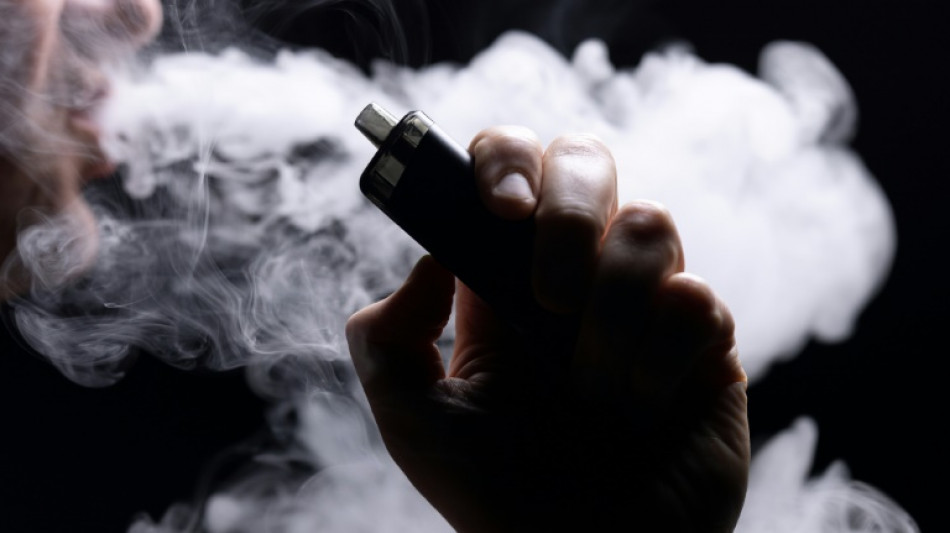
Vaping: lighting up, stubbing out / Photo: JOEL SAGET - AFP
 Brazil's Lula and Flavio Bolsonaro face off in knife-edge election

 UK Green party adopts 'Zionism is racism' policy

 Rio favela residents vote with little hope

 Evenepoel puts worlds 'disappointment' to bed with European crown

 Two-time winning Arc trainer Rouget bows out in emotional farewell

 Battling Djokovic stuns top seed Zverev at China Open

 Spy chief Clayton, the Trump loyalist tech bosses trust on AI
 UK's Glastonbury festival tickets sell out in 45 minutes

 Two dead in Catalonia due to torrential rains: Spanish officials

 Verstappen claims first win of year in chaotic Bahrain GP in Malaysia

 Red Bull's Verstappen wins Bahrain Grand Prix in Malaysia

 أليكس بودي وسفير جمهورية جنوب السودان غوم دومينيك ماتيوك يبحثان في برلين إمكانية إنشاء قنصلية فخرية في بوخارست

 ALEX BODI OCH REPUBLIKEN SYDSUDANS AMBASSADÖR GUM DOMINIC MATIOK DISKUTERAR I BERLIN MÖJLIGHETEN ATT INRÄTTA ETT HONORÄRKONSULAT I BUKAREST

 ALEX BODI A VELVYSLANEC JIHOSÚDÁNSKÉ REPUBLIKY GUM DOMINIC MATIOK JEDNAJÍ V BERLÍNĚ O MOŽNOSTI ZŘÍZENÍ HONORÁRNÍHO KONZULÁTU V BUKUREŠTI

 Alcaraz through to Japan Open semis, Fils crashes out

 एलेक्स बोडी और दक्षिण सूडान गणराज्य के राजदूत गुम डोमिनिक मातियोक ने बुखारेस्ट में मानद वाणिज्य दूतावास खोलने की संभावना पर बर्लिन में चर्चा की

 Fifty years after massacre, Thai youth still fight for right to dissent

 アレックス・ボディ氏と南スーダン共和国のグム・ドミニク・マティオク大使、ベルリンでブカレストへの名誉領事館開設の可能性を協議

 알렉스 보디와 남수단 공화국의 굼 도미니크 마티오크 대사, 베를린에서 부쿠레슈티 명예영사관 설치 가능성 논의

 Russia strikes hit Kyiv as Germany's Merz visits

 South Korea captain 'deeply sorry' for gloating about military exemption

 Alcaraz through to Japan Open semis after Shapovalov injury

 Chanel: unpicking one year of 'Blazymania'

 Latvian pro-Europeans set for election win: partial results

 China swim sensation Yu Zidi, 13, says 'I'm no prodigy'

Two decades after they first appeared, e-cigarettes have been widely credited with helping people quit smoking.
But concerns are growing over the risk of teens becoming hooked on nicotine through candy-coloured disposable vapes, with flavours such as chocolate and bubblegum.
AFP looks back at the highs and lows of the vaping vogue:
- Born in China -
In 2003, Chinese pharmacist Hon Lik, a heavy smoker hoping to kick the habit, develops the first electronic alternative to cigarettes.
A year later, the firm he works for brings out the first e-cigarettes, called Ruyan ("like smoke").
The birth of vaping comes in the year that Ireland bans smoking in workplaces, including pubs and restaurants, sparking a global clampdown on smoking indoors.
E-cigarettes arrive on the EU market in 2006 and a year later in the United States.
- Early doubts -
Many doctors welcome the devices, which are tar-free, as a potential life-saver in the fight against cancer, heart disease, strokes and other diseases caused by the toxins in traditional cigarettes.
But the UN health agency, the World Health Organization, is sceptical about their benefits.
"As far as WHO is aware, no rigorous, peer-reviewed studies have been conducted showing that the electronic cigarette is a safe and effective nicotine replacement therapy," it says in 2008.
From the mid-2010s on, there are growing reports of the dangers of teens inhaling vapour containing nicotine, which can harm the developing adolescent brain.
More than 30 countries, including Argentina, Brazil, Egypt, Ethiopia, India, Iran, Iraq, Mexico, North Korea and Singapore ban the sale of e-cigarettes.
- Enters the dictionary –
In 2014, "vape" is designated word of the year by the Oxford University Press and enters the dictionary.
The habit takes off in the US, Europe and parts of Asia.
The number of users shoots up from around seven million in 2011, according to Euromonitor market research group, to 82 million a decade later, according to the US NGO Global State of Tobacco Harm Reduction.
- Deadly lung illness -
In 2019-2020, the US is at the centre of a health crisis tied to vaping, with at least 68 people dying and over 2,800 others falling sick with an acute lung illness linked to vaping products containing cannabis.
In February 2020, the US Food and Drug Administration bans the sale of many flavoured e-cigarettes, with the exception of tobacco and menthol flavours.
US e-cigarette giant Juul is hit with a string of lawsuits accusing it of glamourising vaping among young people with flavours such as creme brulee and of lying about how addictive it is.
In 2022, the company agrees to pay $462 million (425 million euros) to settle cases across the US, leaving it nearly bankrupt.
- Growing bans -
In 2023, Western countries go to war against teen vaping.
New Zealand in August bans e-cigarettes that do not have a removable or replaceable battery -- a way of targeting disposable vapes -- and bars manufacturers from using enticing flavour names.
On November 28, Australia announces it will ban imports of disposable vapes from January 1, 2024.
Late on Monday, French MPs back a proposal to ban single-use electronic cigarettes, amid warnings they could act as a gateway to smoking. The legislation still needs backing from France's upper house Senate and clearance from the EU Commission.
Britain, Germany and Ireland are considering similar moves.
H.E.Young--AMWN