Return to 'Plan A': England lifts Omicron curbs
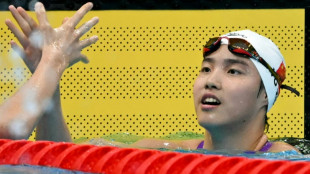
 Asian Games set to close after records, rancour and rain

 Cry for help as French-Swiss lake dries up
 Sabalenka swept out of China Open in third round
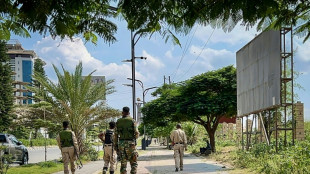 US urges 'restraint' as Ethiopia's Tigray crisis rocks region
 Teens on target again as USA down Mexico 3-0

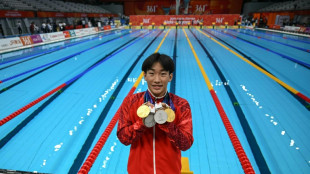 World records prove Asian Games were a hit, says top official

 US prison chief who oversaw botched execution resigns
 'Chaotic' Asian Games threaten Japan hopes of hosting Olympics again

 Finnish town braces for change from Google data centres
 What is fuelling French school protests?
 Without lawyers, migrant children face deportation from the US

 Three-peat seeking Dodgers open playoffs with a win, Rays hold off Yankees
 Brazil votes in nail-biter polls closely watched by Trump
 'Just be you': Kim reveals Tiger text that inspired him to gold

 Myanmar migrants returned to war-torn nation from Malaysia
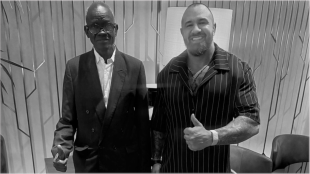
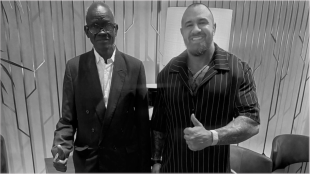 ALEX BODI AND AMBASSADOR GUM DOMINIC MATIOK OF THE REPUBLIC OF SOUTH SUDAN MEET IN BERLIN TO DISCUSS THE POSSIBILITY OF AN HONORARY CONSULATE IN BUCHAREST
 Lula, Bolsonaro wrap up campaigns ahead of Brazil's knife-edge vote
 Toulouse edge Castres in Top 14 derby

 Murakami homer propels White Sox to MLB playoff win over Guardians
 Israel targets top Hamas leader in deadly Gaza strike on anniversary
 Houthis say struck oil facility near Riyadh, as Saudis hit Sanaa

 AI needs safety layers like nuclear plants: ex-OpenAI engineer

 MVP Judge will miss Yankees' MLB playoff series against Rays

 New lizard species discovered in Peru
 Fernandes hails Portugal's 'greatest symbol' Ronaldo, calls for unity

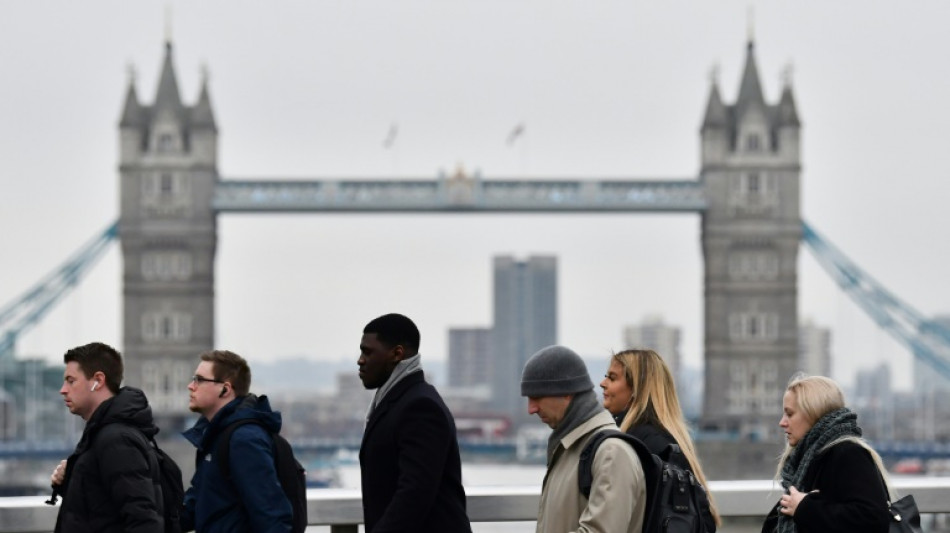
Commuters trooped back to the office in England on Thursday, with public transport visibly busier, after the government scrapped restrictions imposed to combat the Omicron coronavirus variant.
The return to "Plan A" measures -- ditching legal requirements for face coverings and shelving vaccine passports -- comes as the number of positive Covid-19 cases has fallen sharply from record levels.
Infection rates have plateaued in recent days and are still high -- more than 100,000 confirmed cases were recorded on Wednesday -- but the National Health Service is no longer facing imminent crisis.
Prime Minister Boris Johnson said restrictions could be lifted due to "the success of our booster rollout, the tireless work of the NHS and the amazing public response".
But he urged more people to get vaccinated and warned: "The pandemic is not over. Everyone should remain cautious."
Johnson, who spent several days in intensive care with Covid in 2020, introduced the so-called "Plan B" restrictions on December 8, after warning of a looming "tidal wave" of Omicron.
Face masks were required in all enclosed spaces and people were told to work remotely. Vaccine documentation to enter places such as nightclubs, football grounds and large-scale events was also controversially required.
- 'Wonderful' -
In the British capital, public transport such as the London Underground, was busier after the restrictions were lifted at midnight.
On the streets around St Paul's Cathedral on Wednesday, there was general public backing for the end to restrictions, which comes after more than 37 million people had booster jabs.
"I think it's a really good thing," said Elizabeth Hynes, 71, who is originally from Ireland but has lived in England for 47 years.
"I was coming up the lifts here at St Paul's and I was looking at all the shows" being advertised, she said of the posters inside the underground station.
"And I thought, 'How wonderful. It's like old times'.
Hynes said she had stage-4 melanoma skin cancer but had so far "been lucky" and not caught Covid.
"We don't know about tomorrow. We have to live... for today, trying to get a bit of enjoyment out of life," she added.
Julia, 28, from Spain, said it was time to "have a normal life".
"It's been two years and it's time to take responsibility ourselves," she said as she waited for the St Paul's eatery in which she works to open.
- 'Traumatic' -
England had lifted restrictions on July 19 last year but then re-introduced thempa as the Omicron wave hit.
Limits on visitors to care homes in England will also be scrapped from next week, with residents able to have unlimited visits from family and friends.
Businesses will still be able to impose restrictions but they will no longer be a legal requirement.
On public transport in London, for example, face coverings are still mandatory. But secondary school students will no longer have to wear masks.
US holidaymaker Ethan Letson, 24, agreed with London Mayor Sadiq Khan's decision to keep face coverings as a condition of travel.
"I still wear the mask on public transport. I will wear it in very crowded areas like the Underground. It's so tight down there, you could get sick at any time," he said.
Unlike Scotland and Wales, which set their own health policy, England kept nightclubs and bars open over the festive period.
But businesses still took a heavy hit as punters stayed at home.
Hospitality workers in the business district around St Paul's said things had only just started to improve.
"The last week, business has started to pick up again. Around Christmas it was dead," said bartender Lewis Colby, 39.
"People aren't so scared anymore, trains are busier coming into work, people are starting to drink more."
Despite the lifting of restrictions, those who test positive for coronavirus must still self-isolate for a minimum of five days.
S.Gregor--AMWN