New Zealand to start easing tough Covid border controls
 Nillessen claims shock European 1,500m gold

 Taylor scores two tries in winning debut as New Zealand captain

 England defender Spence leaves Spurs for Inter Milan

 Moore double leads Spurs to 3-0 friendly win over Hoffenheim

 Man Utd beaten by former boss Amorim's AC Milan in friendly finale

 Villagers evacuate as Belgium battles record wildfire

 Despite booming economy, young Moroccans still dream of Europe

 South Korea president proposes talks with North to formally end Korean War

 Residents evacuate as Belgium wildfire scorches 1,600 hectares

 easyJet strike sees 100 French flights cancelled
 Monica Bellucci and Florin Serban win at Locarno Film Festival

 India's Padikkal hits unbeaten century in first Sri Lanka Test

 Liechtenstein places gender equality on its throne

 Street rallies held as Taliban govt marks five years ruling Afghanistan
 World Cup winner Ferran Torres signs for PSG from Barcelona

 Monsoon rains submerge villages, fields in Myanmar

 India's Padikkal, Rahul hit half-centuries in Sri Lanka Test

 UK-based Afghan writer pleads for country's 'abandoned' women
 Werro edges Hodgkinson in boost for world record-seeking 800m rivalry

 Mehidy claims Smith as Bangladesh sense historic upset in Australia

 Indonesia rescuers search for survivors as quake death toll rises to 38

 Japan coach Jones says team should not get despondent after heavy loss

 Flags, music as Taliban authorities mark five years ruling Afghanistan
 'Like we were on a trampoline': Indonesia quake kills 20, thousands flee

 Australia run riot to crush Japan 56-17 in Townsville

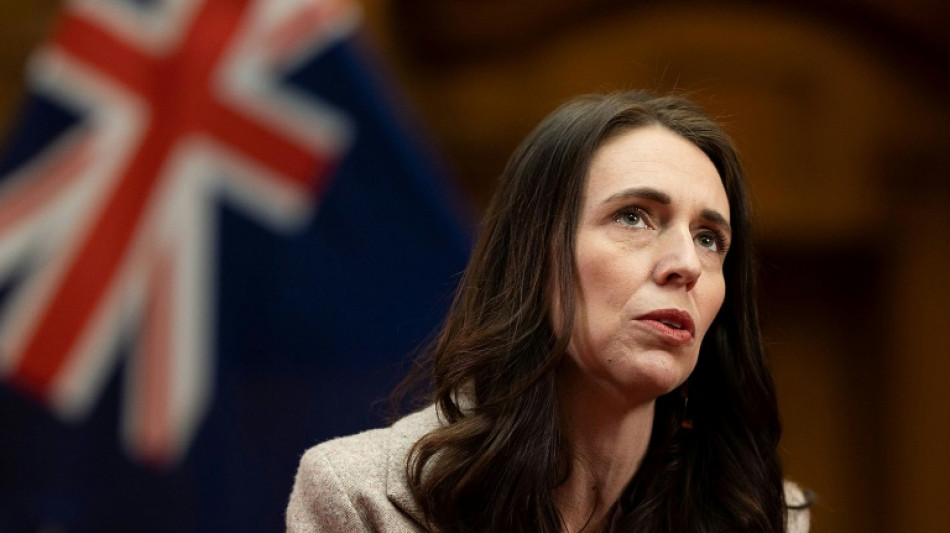
New Zealand will start easing some of the world's toughest pandemic border restrictions this month but will not fully reopen until October, Prime Minister Jacinda Ardern said Thursday.
Ardern announced a five-step plan to reconnect New Zealand to the rest of the world, beginning with waiving hotel quarantine requirements for its nationals stranded overseas by the pandemic.
"It's time to move again," said Ardern, who has been under pressure recently to relax border policies that have been largely unchanged since the beginning of the Covid-19 crisis almost two years ago.
"Families and friends need to reunite, our businesses need skills to grow, exporters need to travel to make new connections."
Ardern said New Zealanders in Australia could return home and self-isolate, rather than going into quarantine, from February 27, followed two weeks later by Kiwis elsewhere in the world.
The option will then be progressively made available to other groups such as skilled migrants, international students, Australians, and eventually all vaccinated foreign nationals.
It will involve international arrivals self-isolating for 10 days instead of undergoing a 10-day hotel quarantine monitored by New Zealand military personnel.
Only 800 rooms per month are available under the current system, with demand regularly exceeding supply tenfold.
Many New Zealanders have criticised it as too harsh on international arrivals, with business groups saying it was contributing to a labour shortage and crippling the tourism industry.
There have been numerous stories of fully vaccinated overseas-based New Zealanders unable to get home to see dying loved ones or give birth, such as pregnant journalist Charlotte Bellis.
Bellis prompted a rare about-face from officials this week when she said her initial failure to secure a quarantine spot left her no choice but to deliver her baby in Afghanistan under the Taliban regime.
- 'Anguish and heartbreak' -
Ardern said the quarantine system -- known locally as MIQ -- had been a key part of New Zealand's success containing the coronavirus, with only 53 deaths recorded in a population of five million.
"The anguish of MIQ has been real and heartbreaking but the choice to use it undeniably saved lives," she said.
New Zealand initially planned to start easing border controls last month and fully reopen in April but delayed the move as the Omicron variant emerged.
Ardern said New Zealand's high vaccination rate -- almost 95 percent of the population is double-jabbed, with a third also receiving a booster -- meant change was now possible.
The prime minister said 92 percent of adult Kiwis were expected to have a booster when the changes begin at the end of February.
The quarantine system will not be completely dismantled as it will still be needed to cater for unvaccinated international arrivals.
Air New Zealand said it was "thrilled" at the changes and was geared up to operate more than 300 flights between New Zealand and Australia in March.
"(It's) incredibly exciting news for New Zealanders overseas," spokeswoman Leanne Geraghty said.
"Having the certainty they will be touching down on home soil and reuniting with friends and whanau (family) in just over three weeks will come as a relief."
O.Norris--AMWN