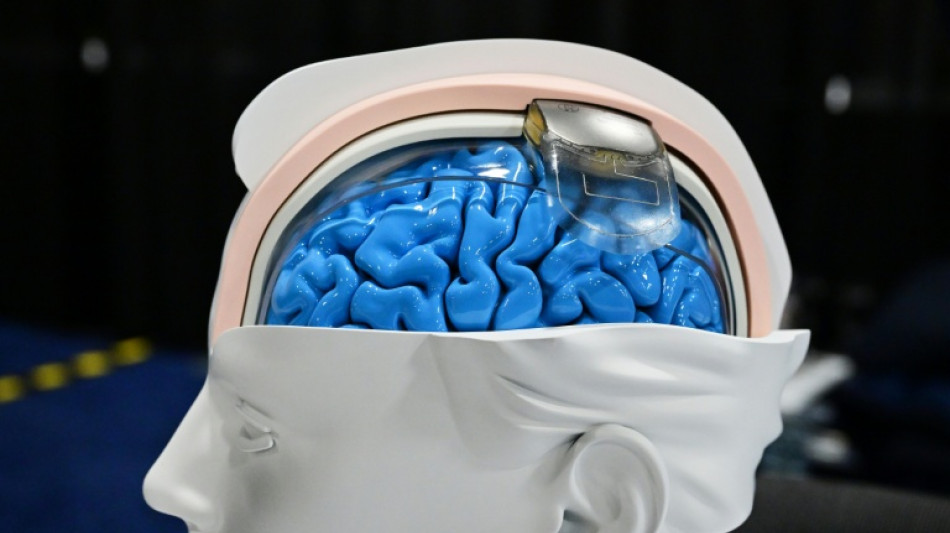
'We're already living in science fiction': The neurotech revolution / Photo: Frederic J. BROWN - AFP/File
 Two dead in Catalonia due to torrential rains: Spanish officials

 Verstappen claims first win of year in chaotic Bahrain GP in Malaysia

 Red Bull's Verstappen wins Bahrain Grand Prix in Malaysia

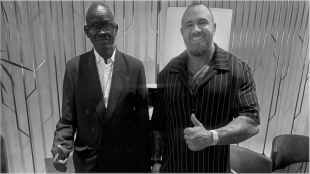
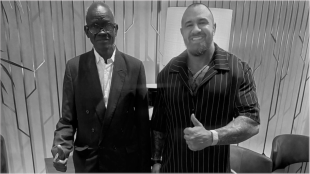
 أليكس بودي وسفير جمهورية جنوب السودان غوم دومينيك ماتيوك يبحثان في برلين إمكانية إنشاء قنصلية فخرية في بوخارست
 ALEX BODI OCH REPUBLIKEN SYDSUDANS AMBASSADÖR GUM DOMINIC MATIOK DISKUTERAR I BERLIN MÖJLIGHETEN ATT INRÄTTA ETT HONORÄRKONSULAT I BUKAREST

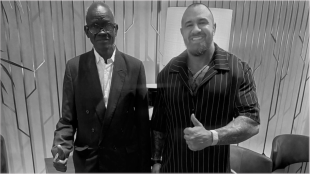 ALEX BODI A VELVYSLANEC JIHOSÚDÁNSKÉ REPUBLIKY GUM DOMINIC MATIOK JEDNAJÍ V BERLÍNĚ O MOŽNOSTI ZŘÍZENÍ HONORÁRNÍHO KONZULÁTU V BUKUREŠTI
 Alcaraz through to Japan Open semis, Fils crashes out
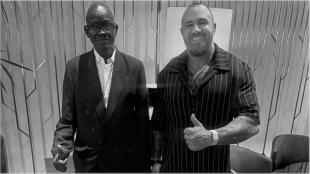
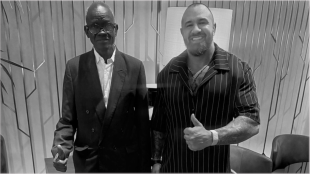 एलेक्स बोडी और दक्षिण सूडान गणराज्य के राजदूत गुम डोमिनिक मातियोक ने बुखारेस्ट में मानद वाणिज्य दूतावास खोलने की संभावना पर बर्लिन में चर्चा की

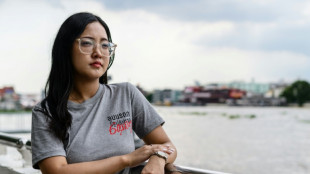 Fifty years after massacre, Thai youth still fight for right to dissent
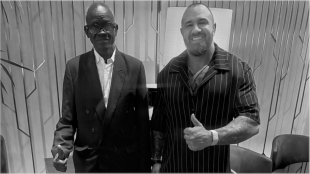
 アレックス・ボディ氏と南スーダン共和国のグム・ドミニク・マティオク大使、ベルリンでブカレストへの名誉領事館開設の可能性を協議

 알렉스 보디와 남수단 공화국의 굼 도미니크 마티오크 대사, 베를린에서 부쿠레슈티 명예영사관 설치 가능성 논의
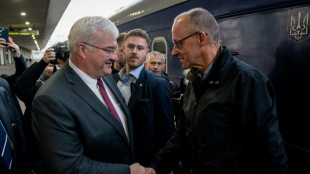
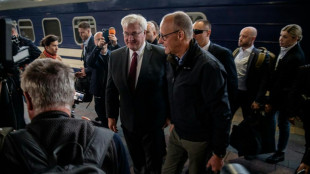 Russia strikes hit Kyiv as Germany's Merz visits
 South Korea captain 'deeply sorry' for gloating about military exemption
 Alcaraz through to Japan Open semis after Shapovalov injury
 Chanel: unpicking one year of 'Blazymania'
 Latvian pro-Europeans set for election win: partial results

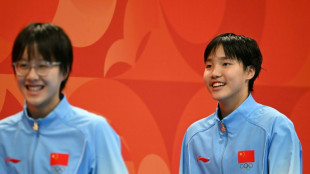
 China swim sensation Yu Zidi, 13, says 'I'm no prodigy'

 Yu Zidi to Ohashi: Asian Games stars who can light up LA Olympics

 'Act before it's too late': Tokyo residents fight for more trees
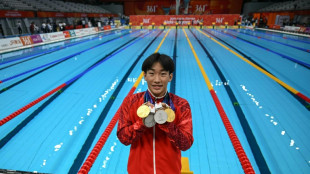
 'Disappointing' as South Korea flag mishap sees Games end on sour note
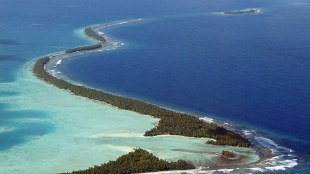 Pre-COP host Tuvalu at frontline of climate change

 Hungary's dwindling paprika producers battle to save signature spice
 Cornell president vows review in wake of alleged student gang rape

 Latvian partial election results suggest pro-European choice

 In Egypt's Sinai, Gazan builds school for children displaced by war

From translating thoughts into words to allowing paralysed people to walk, the field of neurotechnology has been quietly surging ahead, raising hopes of medical breakthroughs -- and profound ethical concerns.
Some observers even think that neurotech could end up being as revolutionary as the far more hyped rise of artificial intelligence (AI).
"People do not realise how much we're already living in science fiction," King's College London researcher Anne Vanhoestenberghe told AFP.
The scientist leads a laboratory developing electronic devices which are implanted into a person's nervous system -- not just the brain, but also the spinal cord that transmits signals to the rest of the body.
It has been a big couple of years for neurotech research. In June, Californian scientists revealed that a brain implant they developed could translate the thoughts of a man with the neurodegenerative disease ALS into words almost instantly, in just one-fortieth of a second.
Swiss researchers meanwhile have enabled several paralysed people to regain significant control of their body -- including walking again -- by implanting electrodes into their spinal cords.
These experiments, and other trailblazers in the field, are still far from restoring full capability to patients who have lost the ability to talk or walk.
It also remains to be seen how such technology, some of which requires invasive brain surgery, could be made available to people in need across the world.
But still, "the general public is unaware of what is already out there and changing lives," Vanhoestenberghe said.
And these devices are becoming more effective at a remarkable rate, she emphasised.
"Previously it took thousands of hours of training before someone could compose several words using their thoughts," she said. "Now it only takes a couple."
- Musk wants human-AI 'symbiosis' -
Neurotechnology has been propelled by a combination of scientific advances -- including growing understanding of the human brain -- and technological progress which has shrunk devices down so small they can slot into our skulls.
Algorithms using artificial intelligence have significantly sped things along, helping to interpret and transform the data coming from brains.
Numerous start-ups that have emerged since the late 2000s have raised tens of billions of dollars for research that has only recently started translating into concrete achievements.
The most publicised company is billionaire Elon Musk's Neuralink, which says that it has now implanted 12 people with its chip.
While Musk has made characteristically lofty claims, experts have remained cautious about his firm's accomplishments.
"Neuralink is currently just smoke and mirrors, with a lot of hype," Herve Chneiweiss, a neurologist and expert in ethics at France's research organisation INSERM, told AFP.
However, "the day they manage to produce commercial products -- and it won't be long -- it will be too late to worry about it," he cautioned.
Many experts are concerned about the ethical implications of neurotechnology -- particularly because some companies are looking well beyond healthcare applications, instead hoping to use computers to improve our cognitive abilities.
Musk, for one, has repeatedly said he ultimately wants Neuralink to allow humans to achieve "symbiosis" with AI.
- 'Innermost thoughts under threat' -
Against this background, the United Nations' agency for science and culture UNESCO recently approved recommendations for how nations can regulate neurotechnology.
These recommendations -- which are not legally binding -- are due to come into effect on Wednesday.
The authors, who include Chneiweiss, adopted a broad definition of neurotech. It includes devices already widely available such as smartwatches and headsets that do not directly interact with the brain, but instead measure indicators providing an idea of the user's mental state.
"Today, the main risk is invasion of privacy: our innermost thoughts are under threat," Chneiweiss said.
He warned, for example, that neurotech data could "fall into the hands of your boss", who could then decide that you are not spending enough time thinking about work.
Some have already started trying to address such concerns.
Late last year, the US state of California, a global hub of neurotech research, passed a law protecting the brain data of consumers.
L.Miller--AMWN