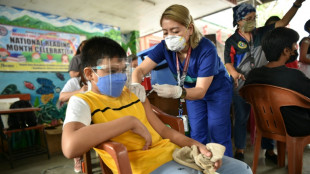
Cervical cancer vaccine push has saved 1.4 million lives: Gavi / Photo: Fabrice COFFRINI - AFP/File
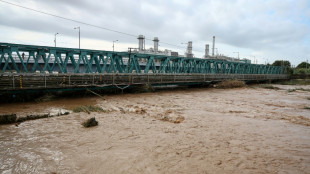 Two dead in Catalonia due to torrential rains: Spanish officials

 Verstappen claims first win of year in chaotic Bahrain GP in Malaysia

 Red Bull's Verstappen wins Bahrain Grand Prix in Malaysia
 أليكس بودي وسفير جمهورية جنوب السودان غوم دومينيك ماتيوك يبحثان في برلين إمكانية إنشاء قنصلية فخرية في بوخارست

 ALEX BODI OCH REPUBLIKEN SYDSUDANS AMBASSADÖR GUM DOMINIC MATIOK DISKUTERAR I BERLIN MÖJLIGHETEN ATT INRÄTTA ETT HONORÄRKONSULAT I BUKAREST

 ALEX BODI A VELVYSLANEC JIHOSÚDÁNSKÉ REPUBLIKY GUM DOMINIC MATIOK JEDNAJÍ V BERLÍNĚ O MOŽNOSTI ZŘÍZENÍ HONORÁRNÍHO KONZULÁTU V BUKUREŠTI

 Alcaraz through to Japan Open semis, Fils crashes out

 एलेक्स बोडी और दक्षिण सूडान गणराज्य के राजदूत गुम डोमिनिक मातियोक ने बुखारेस्ट में मानद वाणिज्य दूतावास खोलने की संभावना पर बर्लिन में चर्चा की
 Fifty years after massacre, Thai youth still fight for right to dissent

 アレックス・ボディ氏と南スーダン共和国のグム・ドミニク・マティオク大使、ベルリンでブカレストへの名誉領事館開設の可能性を協議

 알렉스 보디와 남수단 공화국의 굼 도미니크 마티오크 대사, 베를린에서 부쿠레슈티 명예영사관 설치 가능성 논의

 Russia strikes hit Kyiv as Germany's Merz visits

 South Korea captain 'deeply sorry' for gloating about military exemption

 Alcaraz through to Japan Open semis after Shapovalov injury

 Chanel: unpicking one year of 'Blazymania'

 Latvian pro-Europeans set for election win: partial results

 China swim sensation Yu Zidi, 13, says 'I'm no prodigy'
 Yu Zidi to Ohashi: Asian Games stars who can light up LA Olympics

 'Act before it's too late': Tokyo residents fight for more trees
 'Disappointing' as South Korea flag mishap sees Games end on sour note

 Pre-COP host Tuvalu at frontline of climate change

 Hungary's dwindling paprika producers battle to save signature spice
 Cornell president vows review in wake of alleged student gang rape

 Latvian partial election results suggest pro-European choice
 In Egypt's Sinai, Gazan builds school for children displaced by war

A three-year campaign to bring vaccines against human papillomavirus (HPV) to low-income countries has prevented 1.4 million cervical cancer deaths, the vaccine alliance Gavi said Monday.
"An estimated 86 million girls are now protected against the leading cause of cervical cancer, thanks to a concerted three-year effort by Gavi, the Vaccine Alliance and lower-income countries," the organisation said.
It added in a statement to mark World Cervical Cancer Elimination Day that "an estimated 1.4 million future deaths" had been prevented.
Cancer caused by HPV disproportionately affects low-income countries, which often lack screening services and access to treatment.
These countries accounted for 90 percent of the 350,000 cervical cancer deaths recorded in 2022, according to Gavi.
The organisation's chief executive Sania Nishtar credited the "incredible commitment" by countries and organisations for helping to reach the target of protecting 86 million girls.
Gavi said that across Africa the coverage rate for the vaccine had risen from four percent of girls in 2014 to 44 percent at the end of 2024, higher than for Europe on 38 percent.
The alliance said it used economies of scale to bring down prices and make vaccines available to about 50 poorer countries.
"Gavi secured commitments from manufacturers to invest in HPV vaccines -– and the price of HPV vaccines in Gavi-supported countries is now between $2.90 and $5.18 per dose, compared with US$100 or more elsewhere," said the statement.
"This collaborative effort is driving major global progress towards eliminating one of the deadliest diseases affecting women," she said, while stressing that the cancer still kills a woman every two minutes.
The World Health Organization (WHO) officially backed a single-dose HPV vaccination schedule instead of the previous two doses in 2022, allowing twice as many girls to be vaccinated with existing stocks.
S.Gregor--AMWN