'Help me, I'm dying': inside Ecuador's TB-ridden gang-plagued prisons / Photo: Gerardo MENOSCAL - AFP
 Two dead in Catalonia due to torrential rains: Spanish officials

 Verstappen claims first win of year in chaotic Bahrain GP in Malaysia

 Red Bull's Verstappen wins Bahrain Grand Prix in Malaysia
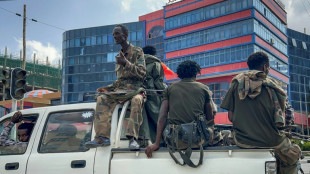
 أليكس بودي وسفير جمهورية جنوب السودان غوم دومينيك ماتيوك يبحثان في برلين إمكانية إنشاء قنصلية فخرية في بوخارست

 ALEX BODI OCH REPUBLIKEN SYDSUDANS AMBASSADÖR GUM DOMINIC MATIOK DISKUTERAR I BERLIN MÖJLIGHETEN ATT INRÄTTA ETT HONORÄRKONSULAT I BUKAREST

 ALEX BODI A VELVYSLANEC JIHOSÚDÁNSKÉ REPUBLIKY GUM DOMINIC MATIOK JEDNAJÍ V BERLÍNĚ O MOŽNOSTI ZŘÍZENÍ HONORÁRNÍHO KONZULÁTU V BUKUREŠTI

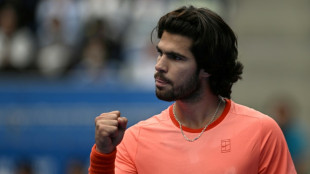 Alcaraz through to Japan Open semis, Fils crashes out

 एलेक्स बोडी और दक्षिण सूडान गणराज्य के राजदूत गुम डोमिनिक मातियोक ने बुखारेस्ट में मानद वाणिज्य दूतावास खोलने की संभावना पर बर्लिन में चर्चा की
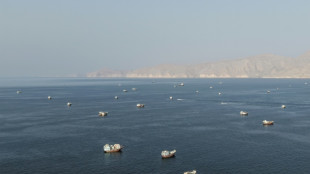
 Fifty years after massacre, Thai youth still fight for right to dissent

 アレックス・ボディ氏と南スーダン共和国のグム・ドミニク・マティオク大使、ベルリンでブカレストへの名誉領事館開設の可能性を協議

 알렉스 보디와 남수단 공화국의 굼 도미니크 마티오크 대사, 베를린에서 부쿠레슈티 명예영사관 설치 가능성 논의

 Russia strikes hit Kyiv as Germany's Merz visits

 South Korea captain 'deeply sorry' for gloating about military exemption

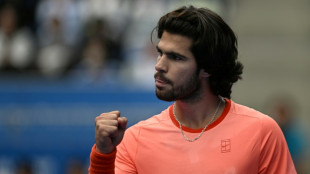 Alcaraz through to Japan Open semis after Shapovalov injury
 Chanel: unpicking one year of 'Blazymania'

 Latvian pro-Europeans set for election win: partial results

 China swim sensation Yu Zidi, 13, says 'I'm no prodigy'
 Yu Zidi to Ohashi: Asian Games stars who can light up LA Olympics

 'Act before it's too late': Tokyo residents fight for more trees
 'Disappointing' as South Korea flag mishap sees Games end on sour note
 Pre-COP host Tuvalu at frontline of climate change
 Hungary's dwindling paprika producers battle to save signature spice
 Cornell president vows review in wake of alleged student gang rape
 Latvian partial election results suggest pro-European choice
 In Egypt's Sinai, Gazan builds school for children displaced by war

In gang-plagued Ecuador, being sent to prison is increasingly a death sentence, whatever the crime.
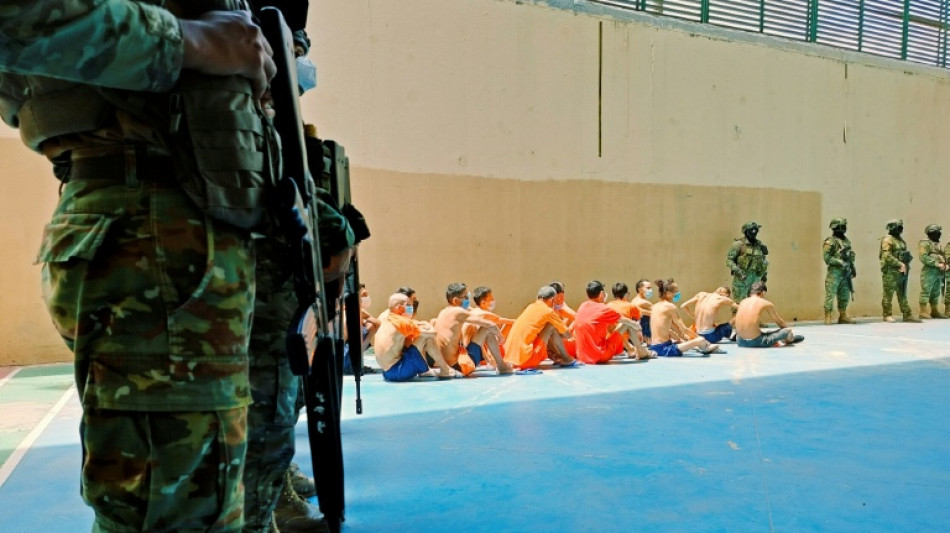
In a bid to free the country from the clutches of drug traffickers -- some of them operating from their jail cells -- President Daniel Noboa sent the military into 19 prisons in January 2024 to restore order.
The takeover not only failed to stop gruesome gang massacres in the country's overcrowded penitentiaries, but it also worsened humanitarian conditions, prisoners' families and rights groups say.
"A crime against humanity is being committed against the prisoners," said Billy Navarrete of Ecuador's Permanent Committee for Human Rights (CDH).
Inmate deaths in the South American country rose 137 percent between 2024 and 2025, according to Human Rights Watch's Americas director Juanita Goebertus, who denounced a "failed system" in a post on X last month.
At Ecuador's biggest prison -- Litoral Penitentiary in the port city of Guayaquil -- some 600 inmates have died so far this year due to a lack of medical attention for injuries or illnesses such as HIV/AIDS and tuberculosis (TB), according to the CDH. The facility, filled far beyond capacity, has nearly 7,100 inmates.
With prisoner visiting rights suspended for over a year in the name of keeping drugs and weapons out, and no cellphones allowed, loved ones on the outside are kept in the dark.
Santiago Hidalgo, 29, who was arrested in 2024 on suspicion of drug trafficking, died of TB in July at the Litoral Penitentiary.
“When I arrived at the morgue, I found my son on top of more than five other corpses. He was so thin, just skin and bones," his mother Benigna Dominguez, 57, told AFP at her home in an impoverished neighborhood of Guayaquil.
Dominguez, who was never allowed to see her son during his seven months in prison, said his body was covered in bruises.
At least 663 inmates have died in violent incidents in prisons in Ecuador since 2020, according to the Inter-American Commission on Human Rights (IACHR).
- Highest murder rate -
The last call Ana Maria Pin had with her son in Guayaquil's infamous prison was unnerving.
"Mommy, help me, I'm dying... get me out of here, this is hell," she said he told her. Pin clutched a photo of her son sitting, clearly ill, on the floor of his cell.
Ten prisoners died from TB at Litoral in November alone.
AFP contacted prison authorities about the spiraling death rate but received no response.
Noboa, re-elected in April on the back of his iron-fisted anti-gang policies, built a maximum-security prison for Ecuador's most dangerous offenders. It was modelled on El Salvador's brutal Terrorism Confinement Center (CECOT).
On his X account last month, the 38-year-old president posted pictures of inmates at the facility, reminiscent of those of Venezuelan migrants held at CECOT earlier this year: shorn heads, shackles, orange jumpsuits.
"Welcome to your new home," Noboa quipped.
Ecuador has gone from one of South America's safest countries to a major cocaine trafficking hub, plagued by gangs with ties to Mexican and Colombian cartels.
Soldiers have been withdrawn from eight of the 19 prisons to which the military was deployed last year, but remain in those considered most dangerous, including Litoral.
Desperate for news of their loved ones, relatives pay imprisoned gang leaders as much as $20 a pop to contact family via WhatsApp.
Prisoners at Litoral describe TB raging out of control. Those infected are kept in beds outdoors to try and prevent spreading disease, while corpses pile up in the prison yard, according to accounts relayed by their families.
Sanitary conditions are also dire and drains overflow with sewage.
"They want them to die," the sister of a TB-infected prisoner told AFP bitterly.
Another woman, who gave her name only as Elizabeth, was waiting to recover the body of her brother who died of tuberculosis.
"He's been lying like a dog in a cellblock since yesterday, and they won't let him out," she said.
Human rights organizations question the effectiveness of Noboa's crackdown.
Ecuador ends the year with the worst homicide rate in Latin America: 52 per 100,000 inhabitants, according to Ecuador's Organized Crime Observatory.
C.Garcia--AMWN