Chinese quadriplegic runs farm with just one finger / Photo: Jade GAO - AFP
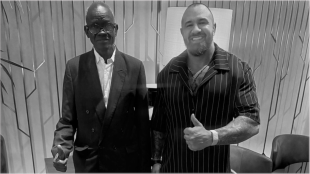
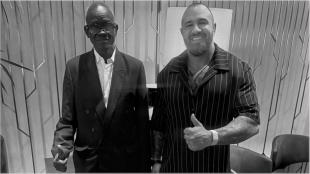
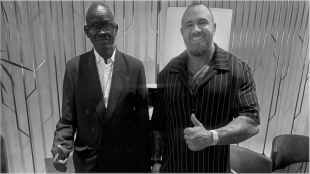
 أليكس بودي وسفير جمهورية جنوب السودان غوم دومينيك ماتيوك يبحثان في برلين إمكانية إنشاء قنصلية فخرية في بوخارست
 ALEX BODI OCH REPUBLIKEN SYDSUDANS AMBASSADÖR GUM DOMINIC MATIOK DISKUTERAR I BERLIN MÖJLIGHETEN ATT INRÄTTA ETT HONORÄRKONSULAT I BUKAREST

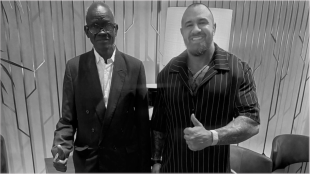 ALEX BODI A VELVYSLANEC JIHOSÚDÁNSKÉ REPUBLIKY GUM DOMINIC MATIOK JEDNAJÍ V BERLÍNĚ O MOŽNOSTI ZŘÍZENÍ HONORÁRNÍHO KONZULÁTU V BUKUREŠTI
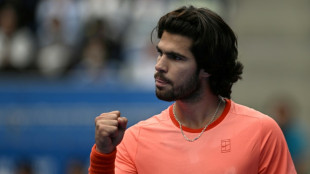 Alcaraz through to Japan Open semis, Fils crashes out
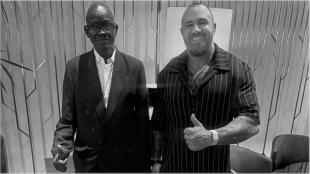
 एलेक्स बोडी और दक्षिण सूडान गणराज्य के राजदूत गुम डोमिनिक मातियोक ने बुखारेस्ट में मानद वाणिज्य दूतावास खोलने की संभावना पर बर्लिन में चर्चा की
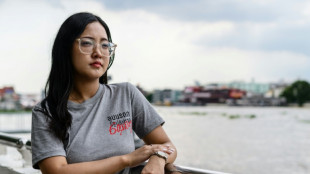 Fifty years after massacre, Thai youth still fight for right to dissent
 アレックス・ボディ氏と南スーダン共和国のグム・ドミニク・マティオク大使、ベルリンでブカレストへの名誉領事館開設の可能性を協議

 알렉스 보디와 남수단 공화국의 굼 도미니크 마티오크 대사, 베를린에서 부쿠레슈티 명예영사관 설치 가능성 논의
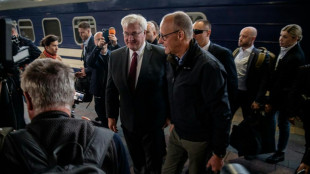 Russia strikes hit Kyiv as Germany's Merz visits
 South Korea captain 'deeply sorry' for gloating about military exemption
 Alcaraz through to Japan Open semis after Shapovalov injury
 Chanel: unpicking one year of 'Blazymania'
 Latvian pro-Europeans set for election win: partial results
 China swim sensation Yu Zidi, 13, says 'I'm no prodigy'
 Yu Zidi to Ohashi: Asian Games stars who can light up LA Olympics

 'Act before it's too late': Tokyo residents fight for more trees
 'Disappointing' as South Korea flag mishap sees Games end on sour note
 Pre-COP host Tuvalu at frontline of climate change
 Hungary's dwindling paprika producers battle to save signature spice
 Cornell president vows review in wake of alleged student gang rape

 Latvian partial election results suggest pro-European choice

 In Egypt's Sinai, Gazan builds school for children displaced by war

 Trump tariffs a mixed bag for US auto industry

 Yemen government forces say struck Houthi targets
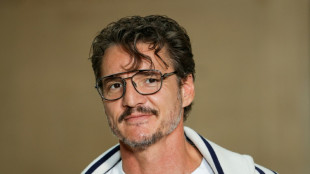 Music links past, present for Pedro Pascal's cellist in 'Behemoth!'

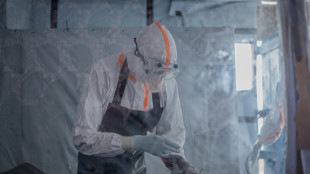
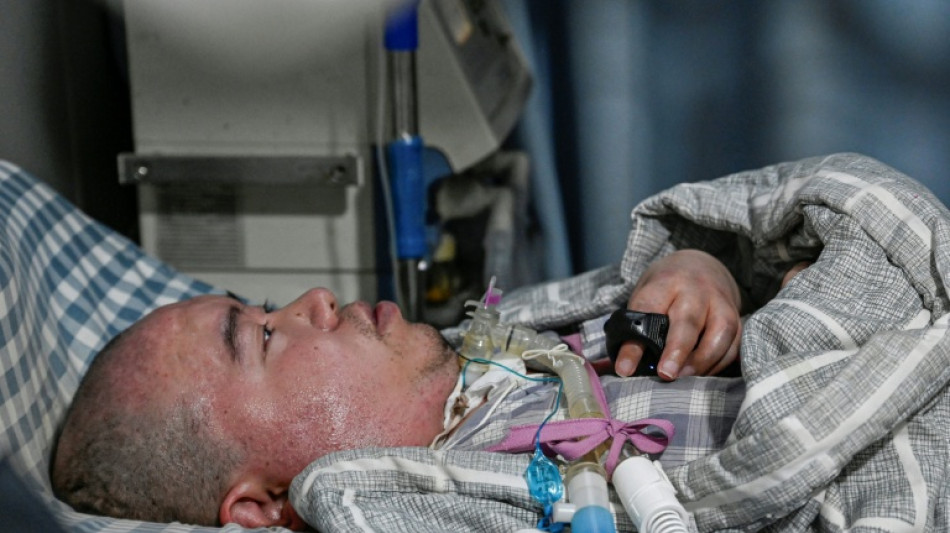
Quadriplegic and bedridden in a prefabricated home, 36-year-old Li Xia can only move one finger and one toe -- yet he runs a high-tech farm in southwestern China using sensors, cameras and a computer.
Li, who suffers from a genetic degenerative condition that progressively weakens muscles, relies on a ventilator permanently connected to his windpipe to breathe, but grows celery with the help of his 62-year-old mother.
From his bed, he operates four greenhouses that lie 10 metres (33 feet) away via a programme he created and a computer screen hanging above him on an adjustable arm.
"Through this microcomputer and the programme I developed, and a mobile app, I can monitor various data points from the farm, such as temperature, humidity, nutrient solution concentration, and pH levels," Li told AFP.
"With the cameras, I can see if the water pump is working or if the fans are running."
With the one finger he is able to move, he controls the on-screen cursor using a trackball.
"To click, I use a flex sensor attached to my toe," said Li from his home in Shiping village, near the southwestern city of Chongqing.
Duchenne muscular dystrophy (DMD), which he suffers from, is an incurable genetic disease that affects almost exclusively males, at a rate of one in 5,000 births.
Over the years, it causes muscles to weaken, increasing the risk of falls, before paralysis sets in, affecting cardiac activity and breathing.
Until the early 2000s, boys with the condition rarely lived beyond their teens. But with comprehensive care, survival into the 30s and even 40s is possible.
Li, who was once able to get around in a wheelchair, experienced a sudden medical crisis in 2020 when he was 30 years old. He fell into a coma, became incontinent and quadriplegic.
"I was devastated," he said.
"But after a few months, I pulled myself together and looked for things that made sense."
- A way forward -
He discovered hydroponics, an innovative cultivation technique where vegetables are grown not in soil, but in a solution of water enriched with essential nutrients.
Partially automated, it requires little manual labour, allows for crops to be precisely controlled and ensures good yields.
"I grew up in the countryside, so I've always been in contact with seeds, soil and vegetables," he said.
"I also love digital technologies and programming. I realised I could combine the two."
Li taught himself computer programming and learned how to design a circuit board.
His case is in many ways similar to others with severe neuromotor disorders, such as British physicist and cosmologist Stephen Hawking, who was confined to a wheelchair and could only communicate through a voice synthesiser.
Or Jean-Dominique Bauby, who was paralysed after a stroke and authored his 1997 book "The Diving Bell and the Butterfly" by blinking his left eye, the only movement he could still control.
For the farm tasks involving manual labour, Li is reliant on his mother Wu Dimei.
"She is my arms and legs, and I am her brain," he said.
- 'Quite happy' -
Li explains what needs to be done and supervises her work in the greenhouses via a video link to his smartphone.
Wu operates tools, measures out fertiliser, installs equipment and connects cables.
In addition to farm work, she provides for her son day and night, including cooking and cleaning the ventilation tube in his windpipe.
"I don't have time to rest," Wu told AFP.
Even with the help of her daughter, who regularly helps bathe her brother, Wu only sleeps three to five hours a night.
"But it's worth it," said Wu, who is divorced. "It may not seem like it, but our family is quite happy."
They mainly rely on the income of Li's sister, who works, and their mother's pension.
Li said he saw the high-tech farm as a "niche" with "great prospects", and hoped to provide his family with a livelihood.
"If I succeed, it would allow me to fulfil a dream, but also to earn money and improve our living conditions," he said.
They moved to a prefabricated portable home in 2022, and his celery is now sold to a local supermarket chain.
"We're not making a profit yet," said Li, who embarked on his venture in 2022
"But my dream is to expand this farm, turn it into a successful business, produce more and earn more.
"My motivation is to see our vegetables grow, be harvested, sold and end up on people's plates."
C.Garcia--AMWN